Inspections show a pattern of safety problems leading up to Crozer’s closure
Pennsylvania Department of Health inspectors investigated dozens of safety complaints at Crozer over the past several years.
Stroke patients at Crozer-Chester Medical Center waited hours for critical CT scan results after a possible IT glitch.
Heart attack patients were diverted to farther-away hospitals when Crozer didn’t have enough staff to run its specialized cardiac care lab.
Behavioral health patients went days without their medication being reviewed and were put in four-point restraint without a doctor’s order.
Inspections by the Pennsylvania Department of Health at Crozer-Chester Medical Center and its sister facility, Taylor Hospital, show a pattern of problems that put patients’ safety at risk in the months before the two financially beleaguered hospitals were shut down earlier this year.
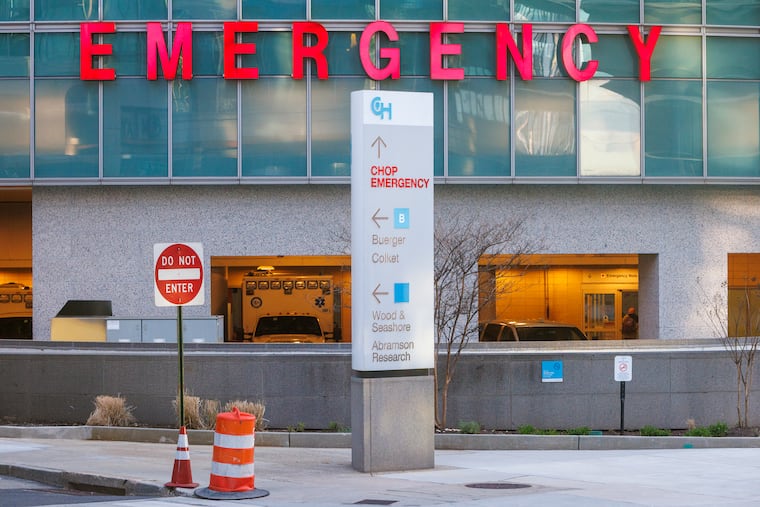
Crozer-Chester Medical Center operated the busiest emergency department in Delaware County, as well as the region’s highest-level trauma center and only 24-7 mental health crisis center.
Both Crozer Health hospitals were shut down this spring after the system’s for-profit owner, Prospect Medical Holdings, filed for bankruptcy. State and local officials made multiple attempts to save the hospitals by finding a new owner, but were unsuccessful.
Safety issues at Crozer have been well documented over the past several years by national rating agencies, such as The Leapfrog Group, and The Inquirer, which monitors publicly available state hospital inspections.
The Inquirer maintains a database of hundreds of hospital safety citations dating to 2022, and routinely publishes roundups of reports from hospitals in the Philadelphia region.
The Department of Health makes reports available 40 days after an inspection. They do not disclose details of complaints in which the hospital was found to be in compliance.
» READ MORE: Crozer Health’s closure begins with emergency departments off-limits to ambulances
Here’s a look at the publicly available details:
Aug. 5, 2024: Inspectors cited the hospital for delays in CT scans and emergency care for three patients being evaluated for suspected stroke in July. In one case, medical staff wrote in the patient’s record that they made multiple calls to radiology and had to leave a message. When staff finally got through, radiology said they had never received the images and suggested contacting the IT department. “I called and spoke with the CT tech, who states that the images were definitely sent, but she will resend and contact the radiology service to assure they are received properly and read without further delays,” a staffer wrote in the patient’s file, according to the inspection report. In all three cases, there were delays of at least two hours in reading critical scans that should be completed as soon as possible, under hospital policy. (Emergency departments at Crozer and Taylor abruptly closed again in December 2024 when radiology services were unavailable because of an IT glitch. The hospital was not cited for that incident.)
Aug. 12: Inspectors cited the hospital for putting a patient in four-point restraints on July 19 without a doctor’s order. The patient, who was in restraints for about an hour, was not examined by a doctor within that time, as required by hospital policy. Administrators retrained staff on restraint policies.
Aug. 14: Inspectors came to investigate a complaint but found the hospital was in compliance. Complaint details are not made public when inspectors determine it was unfounded.
Aug. 28: Inspectors came to investigate a complaint but found the hospital was in compliance.
Sept. 4: Inspectors followed up on citations from March and May, and found the hospital in compliance. In March, the hospital had been cited for not having a working cardiopulmonary bypass machine, requiring a heart attack patient already at the hospital to be transferred. In May, the hospital was cited for not having proper voluntary release forms for behavioral health patients.
Sept. 11: Inspectors came to investigate a complaint but found the hospital was in compliance.
Oct. 7: Inspectors visited for a special monitoring and found the hospital was in compliance.
Oct. 21: The hospital was cited for not reviewing a behavioral health patient’s medication regimen within 24 hours of being admitted, as is required by hospital policy. A patient was admitted to the geriatric psychiatry behavioral health unit on June 11 and their medication list was not reviewed until June 14. Inspectors also found that the hospital had failed to provide 1:1 observation that a doctor had ordered until the patient became so agitated they needed to be put in four-point restraints. Administrators retrained staff on medication and observation policies, and agreed to monitor patient files for compliance.
Nov. 14: Inspectors cited the hospital for inadequate staffing in its cardiac catheterization lab, which is used to quickly evaluate critical heart patients. Ambulances transporting serious heart attack patients were diverted to other, farther-away hospitals six days in November because Crozer did not have enough nursing staff for its cath lab. Administrators agreed to continue hiring efforts to provide 24-7 nursing coverage.
Nov. 20: Inspectors followed up on citations from Aug. 5, Aug. 12, and July 3, and found the hospital was in compliance. In July, the hospital had been cited for not adequately monitoring three cardiac patients and for failing to complete criminal background checks for four of five staff whose files were reviewed.
Dec. 16: Inspectors came to investigate a complaint but found the hospital was in compliance.
Dec. 18: Crozer was cited for shutting down its CyberKnife service, a type of cancer treatment, without 60 days’ notice. The hospital notified the health department on Dec. 18 that it planned to close the service on Dec. 31. The hospital agreed to review closure notification requirements with executive leadership.
Dec. 30: Inspectors visited for a special monitoring and found the hospital was in compliance.
March 13, 2025: Inspectors followed up on citations from Sept. 10, Nov. 8, Nov. 14 and Dec. 18, and found the hospital was in compliance.

The Pennsylvania Department of Health routinely inspects hospitals to ensure the facility is safe for patients and that staff are following all safety protocols. Inspectors may also visit when a hospital staff member or patient files a complaint.
Not all safety violations spark an on-site investigation from inspectors. Hospitals are required to self-report the most serious safety violations and often work directly with the state to address them. Complaint details are not made public when inspectors determine it was unfounded.
The Inquirer tracks publicly available hospital reports related to a complaint, special monitoring, and general safety inspections. The Inquirer does not track inspections for new equipment or occupancy surveys, unless problems are identified.
Inspection reports are publicly available online and are released 40 days after the report is completed.
The Inquirer is publishing roundups of state inspection reports for Pennsylvania hospitals in our coverage area.