Delaware’s first medical school will be a partnership with Jefferson
Thomas Jefferson University will open a second location for its Sidney Kimmel Medical College in Delaware in 2028.
Delaware will gain its first medical school when Thomas Jefferson University opens a second medical college campus there.
The Thomas Jefferson University Sidney Kimmel College Delaware Regional Campus will be based at the University of Delaware in Newark, and expects to welcome its first class of 40 students in fall 2028.
Delaware is one of six states without a school granting MD degrees. Gov. Matt Meyer, a Democrat, has pushed for a local medical school as a way to meet growing health needs of an aging, rural population, and physician shortages in the southern part of the state.
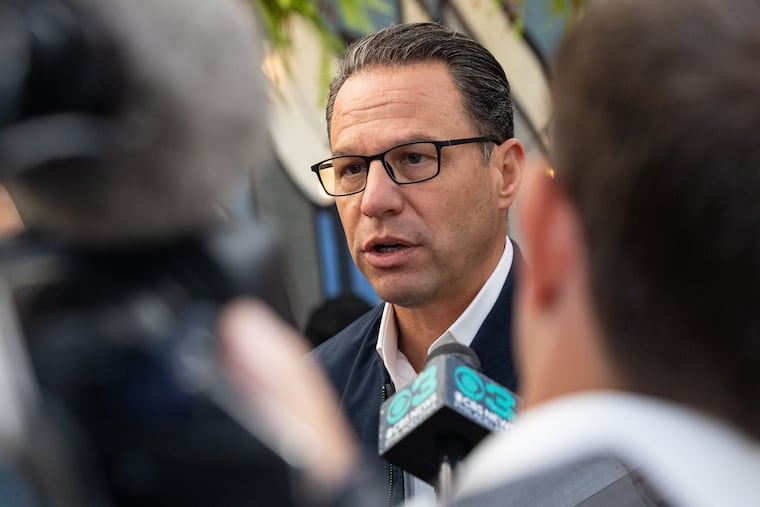
“We need to stop exporting future doctors and start educating them here at home,” Meyer said in an interview.
Jefferson’s history in Delaware
Jefferson has long set aside for Delaware students about 20 seats a year in its Philadelphia medical school through a partnership with the state. Called the Delaware Institute of Medical Information and Research (DIMER), the program was created in the late 1960s as a way to encourage local students to pursue medicine. It also reserves seats for Delaware students at the Philadelphia College of Osteopathic Medicine.
Delaware decided to pursue a partnership with an existing medical school, rather than building a new program from scratch, to move more quickly and take advantage of federal grant funding, said Neil Hockstein, an otolaryngologist who serves as chair of the Delaware Health Care Commission. Leaders considered proposals from three medical schools, including Jefferson.
A five-year federal rural health grant through the Rural Health Transformation Program has so far brought $157 million to Delaware to support the effort; the state has requested a total of $1 billion to improve access to care in Kent and Sussex Counties, where physician shortages are most dire.
The rural health grant program was created under Republicans’ spending bill last year. It will give $50 billion to programs in every state, though exactly how much each will receive over five years has not yet been disclosed.
Delaware’s grant funding will also provide tuition assistance to students who commit to practicing medicine in southern Delaware for five years after graduation.
The state selected Jefferson because of the school’s strong relationships with local hospitals and healthcare providers, and its two centuries of experience training doctors. (Jefferson celebrated its 200th anniversary in 2024.)
“Our goal is to extend our excellent medical education and make it tailored to the state of Delaware,” Said Ibrahim, dean of Sidney Kimmel Medical College, said in an interview.
Jefferson’s Delaware campus
Students at Jefferson’s Delaware campus will receive the same education as those attending school in Center City.
Jefferson expects to name an assistant dean dedicated to the Delaware campus by the end of this year and will seek accreditation for the new campus. The school will also have its own faculty.
The first cohort of students will complete 18 months of preclinical education at Jefferson’s space at the University of Delaware. The state is helping Jefferson find a long-term location.
Clinical training will largely focus on Kent and Sussex Counties, where students will partner with providers and health systems specialized in rural health.
The goal is for students to establish connections within the community that will make them more likely to set down permanent roots after completing their training.
Jefferson CEO Joseph G. Cacchione said he is eager for the health system and medical school to forge stronger connections in Delaware.
“More than ever, training physicians is about not only high tech, but ensuring that it remains high touch,” Cacchione said. “The way you do that is by being present in the communities.”
Editor’s note: This school was updated to clarify the number of states without MD degree granting schools.