Main Line Health’s new CEO Ed Jimenez talks about community and growth opportunities
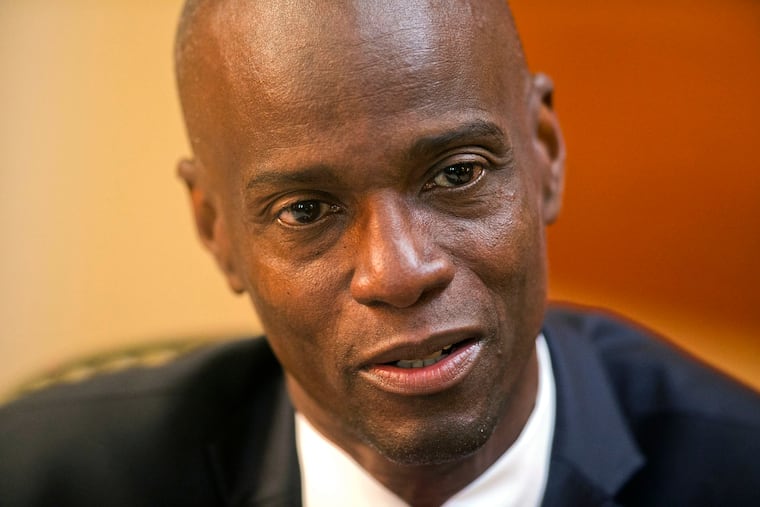
Jimenez started last month, succeeding Jack Lynch, who had led the nonprofit system for 20 years.

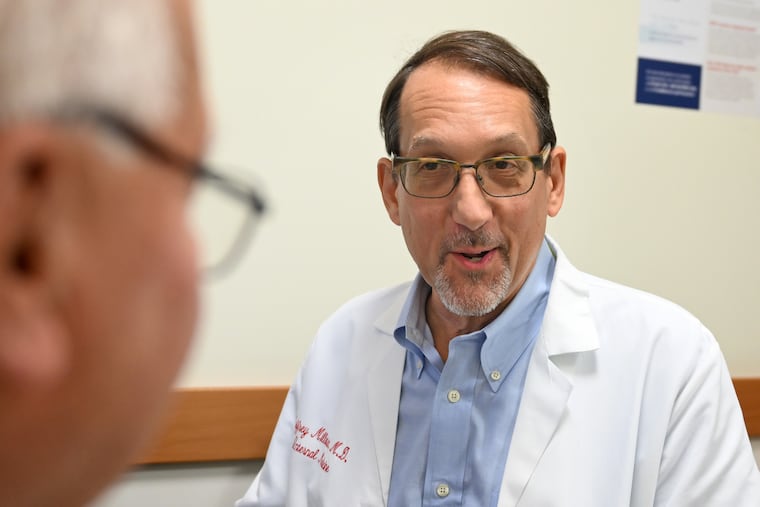
Ed Jimenez took over last month as CEO of Main Line Health as the nonprofit in Philadelphia’s western suburbs was at a turning point: The four-hospital health system was finishing a break-even fiscal year, after several years of steep losses that started with the COVID-19 pandemic.
Main Line’s budget for the year that started July 1 calls for a modest profit, but Jimenez sees a road map for long-term growth and a return to the strong profitability the system was long known for.
What Jimenez loves about Main Line is its combination of advanced medical capability and deep connections to the community it serves. “This is rarified air that we all enjoy as residents of these communities,” he said.
Jimenez succeeded Jack Lynch, who had led Main Line for 20 years.
Jimenez, 54, and his wife just bought a house in Villanova — picked because it’s central to all of Main Line’s operations.
The couple recently moved there from New Jersey, where Jimenez was CEO of University Hospital, a 500-bed academic medical center in Newark. He had that job for two years, after 18 years as an executive at the University of Florida’s health system in Gainesville.
Jimenez spoke with an Inquirer reporter last month about what attracted him to Main Line, his strategy for growth and profitability, and the local competition.
Community connection and elite care
Main Line’s community connections remind Jimenez of working early in his career as a hospital administrator at Valley Hospital in Paramus, N.J., where he was born and his three children were delivered.
“You go to Northern New Jersey, people cherish Valley. They adore what it means for its community,” he said.
At his other career stops, the sense of community did not feel as strong. People came from all over for treatment at Memorial Sloan Kettering in New York City. UF Health drew patients from all over Florida.
What he thinks he found at Main Line: a health system with deep community connections, where generations have seen the birth of their kids, and where generations have worked.
Those strong community ties are coupled with what Jimenez described as “the elite capabilities” associated with academic medical centers. Plus, Main Line has residency programs training the next generation of doctors at its hospitals and scientists at the Lankenau Institute for Medical Research.
Growth strategy in a competitive market
Despite Main Line’s strong presence in Chester, Delaware, and Montgomery Counties, Jimenez recognizes the competitive pull of Philadelphia’s academic medical centers, such as the Hospital of the University of Pennsylvania and Thomas Jefferson University Hospital.
“If we go to suburban communities all over the country, there’s this idea that one must go to the city for something complex or something different,” Jimenez said.
There’s a huge growth opportunity in keeping more of those patients home, Jimenez said. A consulting firm, BCG, formerly known as Boston Consulting Group, concluded the same thing in an analysis done for Main Line a couple years ago.
Jimenez is not suggesting that patients can receive every kind of care within the Main Line system. “We’re not going to do transplants, and we’re not going to do bone marrow transplants, but most cancer care can happen on the Main Line,“ he said. Cardiac surgery is another growth area, he said.
What Main Line must do
Main Line already has a significant network of six outpatient facilities offering a wide range of care and compares well to competitors, Jimenez said. But he thinks it has to do more with meeting what the community wants and needs.
Main Line had two projects underway when Jimenez arrived.
In 2019, Main Line acquired the 73-acre St. Charles Borromeo Seminary campus in Wynnewood for $43.5 million and has been working on a development plan that includes some medical offices. The site is across Lancaster Avenue from Main Line’s Lankenau Medical Center.
“We’re in a bit of a summer hiatus,” Jimenez said of the work toward Lower Merion Township approval of a project there.
Another large outpatient clinic is in planning near Downingtown, a location that would extend Main Line’s reach farther west, well beyond its westernmost hospital in Paoli.
Another key move to increase access for patients is hiring more doctors, Jimenez said.
If Main Line can offer shorter wait times for specialists, some patients might not be tempted to call Penn or Jefferson in the city, he said.
Fallout from Crozer’s closure
Jimenez downplayed the significance of Delaware-based ChristianaCare winning the bidding war in the Crozer Health bankruptcy auction for the right to take over leases at five outpatient centers in Delaware County.
If Main Line had prevailed, Jimenez said, it would have had overcapacity in Glen Mills, where Main Line already has a substantial outpatient center. Two of the Crozer facilities that ChristianaCare plans to take over are nearby.
ChristianaCare, whose main hospital is in Newark, Del., has big growth plans for Southeastern Pennsylvania. In addition to the Crozer acquisitions, it has three micro-hospitals in development in Delaware and Chester Counties.
Crozer’s closure means there’s business for a new entrant like ChristianaCare to gain — without taking patients from any of the incumbent systems, Jimenez said.
To Jimenez, the question is what happens when the Pennsylvania patients that ChristianaCare picks up need to spend a night in the hospital: “Will people of the community think that they should go, ultimately, out of state for medical care?”