A Northeast Philly health clinic could take years to open. Residents say they need it sooner.
Expanding healthcare access in the Lower Northeast is a “primary priority” for the city, said Sharon Gallagher, a spokesperson for Mayor Cherelle L. Parker.
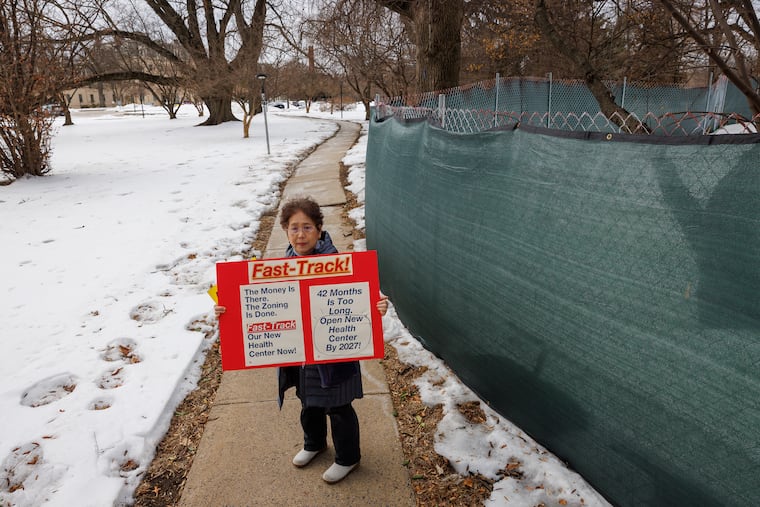
Northeast Philadelphia residents hoped their yearslong fight for more primary care access in the neighborhood was coming to an end, when city officials requested bids from contractors late last year to build a clinic on the grounds of Friends Hospital in Lawndale.
Then they saw the city’s construction timeline, showing the $45 million project will not be completed until 2030.
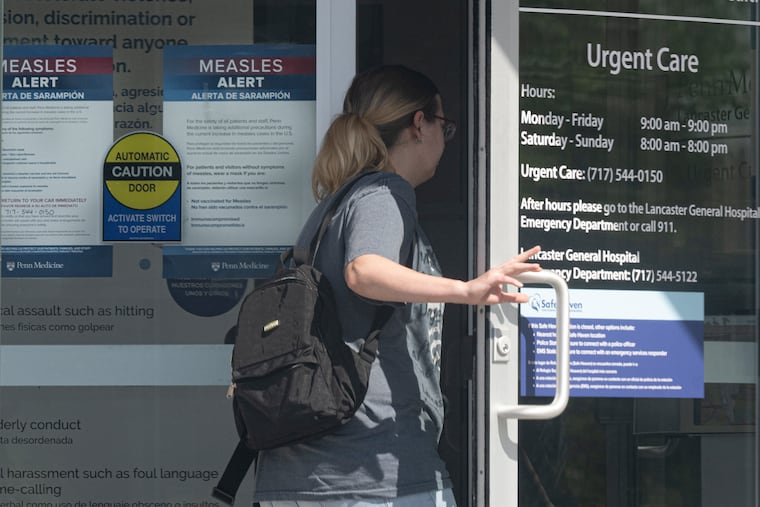
Residents say that’s too long to wait. Wait times for appointments at Health Center 10, the area’s only city-run primary care clinic, can stretch for months.
“That’s a really painful thing to hear, you know?” said Mingchu Pearl Huynh, the founder of the Northeast Philadelphia Chinese Association and a board member at Health Center 10. “The money is there, the law is approved, the proposal is out there, but the timeline is no good.”
Huynh’s organization has floated an alternate proposal, asking the city to direct contractors to start prepping the site for construction while architects complete the facility’s interior plans. They say it will shave about a year off construction time.
City health officials met last month with Huynh and other advocates who have circulated a petition asking the city to speed up the timeline.
Expanding healthcare access in the Lower Northeast is a “primary priority” for the city, said Sharon Gallagher, a spokesperson for Mayor Cherelle L. Parker.
The city’s plan would have construction begin at the Friends Hospital health center in 2027, and finish just over two years after that, Gallagher said. She did not immediately respond to a request for comment on the alternate proposal.
A third health center for the neighborhood, at Frankford Transportation Center, is in the early planning stage, she said.
Gallagher said the city has identified the need for the new clinics in the Northeast since at least 2018.
In community meetings held over the proposal in 2023, some residents said they were concerned about plans to demolish a 170-year-old building on the Friends Hospital campus to make way for the new clinic.
The Historical Commission eventually gave the go-ahead for demolition, and City Council approved zoning for the project in 2024.
‘A huge problem’
West and North Philadelphia each have two health centers. South Philadelphia has a city-run primary care clinic and an urgent care clinic within less than a mile of each other.
Northeast Philadelphia’s lone city-run clinic, Health Center 10, serves a region with few healthcare options.
City-run clinics accept patients regardless of their insurance status and charges on a sliding scale, a lifeline in the Northeast. Overall, about 41% of patients at all city-run health clinics are uninsured, a 16% increase since 2017, the city said in its request for proposals for the new clinic.
Likewise, in 2023, about 40% of Health Center 10’s clients had no insurance.
The Northeast is also home to some of the highest concentrations of people who have immigrated to Philadelphia. By law, they cannot qualify for government-funded Medicaid health coverage until five years after they obtain a green card. Those who aren’t able to afford private insurance rely on clinics like Health Center 10.
At a community dinner earlier this year, Huynh said, she sat next to a man who had recently immigrated to Philadelphia with his family. He told her he had no idea where to get healthcare, and that he couldn’t afford insurance.
“What do you do when you get sick?” Huynh asked him.
“We don’t get sick,” he said.
Though it’s the only option for some, many Health Center 10 patients say they appreciate the quality of the care they receive.
“People rave about the health centers — not just because of the quality of care, but the wraparound comprehensive care you get there. There’s doctors, dentists, pharmacies on site, specialists,” said Adam Goldman, the executive director at the Philadelphia Unemployment Project, a nonprofit that has partnered with Huynh and other neighbors to advocate for more health options in the Northeast.
“[The Northeast] is such a big part of the city’s population, and the fact they only have one health center is a huge problem,” he said.
Huynh, born to parents of Chinese descent in Vietnam, immigrated to the United States as a refugee in 1984. She moved to Philadelphia in 2012, became a patient at Health Center 10 shortly after, and worked as an interpreter there for years. She has stayed on as a patient, now with private insurance.
Even as an existing patient, Huynh has struggled with long wait times for appointments.
“It’s very frequent that my appointment gets canceled and when it’s rescheduled, it takes 50 days to two months,” she said.
‘It has an impact on everyone’
Next year, about 300,000 Pennsylvania residents will risk losing federally funded Medicaid coverage because of new eligibility criteria, including provisions for some adults to meet work requirements and reapply for Medicaid every six months, instead of once a year.
That could leave many more Philadelphians relying on city health centers for care, said Carol Rogers, who serves as a board member for city health centers.
When patients lack insurance and regular access to primary care, she noted, they often end up requiring costly treatment at hospitals for otherwise treatable conditions.
“We have to advocate for someone to move this timeline up, so people do not have to suffer from treatable healthcare problems that will cause them lifelong problems,” she said.
Rogers noted that patients who can’t get appointments at their closest city-run health center often transfer to others elsewhere in the city, increasing the patient load across the system.
“It has an impact on everyone, the shortage of care in this one area of the city.”
Editors note: This article has been updated to correct Carol Rogers’ title.