Temple pushes back opening of new women’s hospital to September
Temple announced it will delay the opening of the new hospital and transition labor and delivery to Sept. 3 to provide more training to staff.
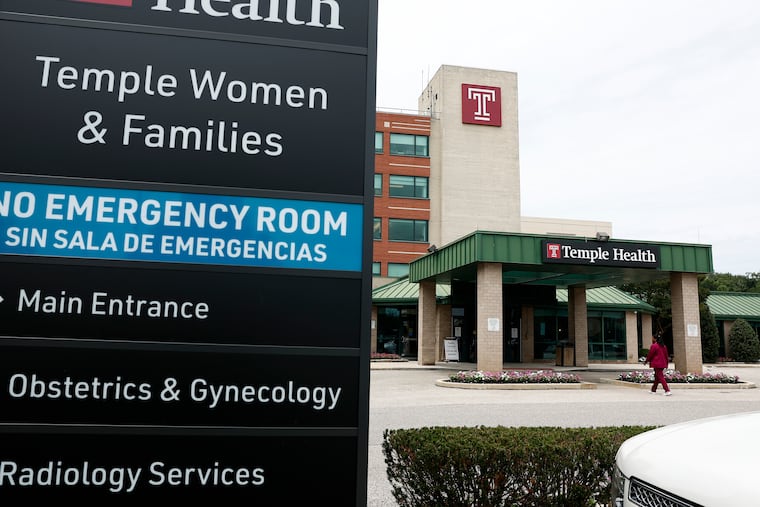
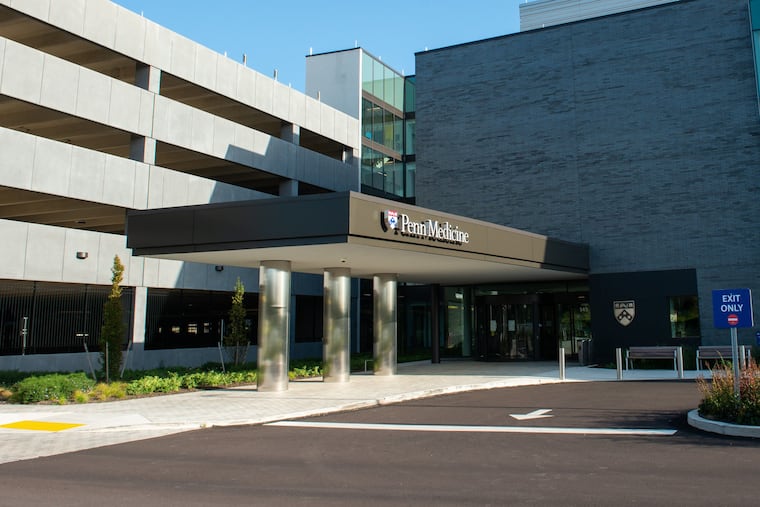
Temple Health is delaying plans to relocate its maternity labor and delivery services to a new women’s hospital in Crescentville, about 20 minutes from the main Philadelphia campus, to do more staff training.
Doctors and nurses have raised safety concerns about eliminating labor and delivery at one of the city’s busiest safety-net hospitals, where at least 2,000 babies are born a year.
Temple is also in the process of addressing “minor recommendations” from a Pennsylvania Department of Health inspection earlier this week. Administrators declined to say what inspectors flagged but said it was unrelated to the delayed opening.
Temple had planned to stop offering labor and delivery at its main campus on July 22 and transition those services to the new Temple Women & Families Hospital, located at the former Cancer Treatment Centers of America that it purchased for $12 million in 2021. The new facility will include a larger neonatal intensive care unit, radiology, mammography, and other women’s health services.
The health system had begun sharing informational fliers in the community alerting people to the change, posted an alert on its website, and scheduled media tours of the state-of-the-art building.
On Wednesday, Temple announced it will delay the opening of the new hospital and transition labor and delivery to Sept. 3 to complete more training for staff. As of September, labor and delivery emergencies will still be handled at the main campus, which has a Level 1 trauma center.
“We are committed to dedicating more time to practice simulations and education to everyone involved, and our decision to move the opening date to Wednesday, September 3rd was related to those additional training needs,” Claire Raab, a Temple Health physician and chief executive of Temple Faculty Physicians, said in a statement. “This additional time will ensure that every process is streamlined, efficient, and perfectly aligned for patient safety and optimal care.”
Two nurses and a doctor who spoke with The Inquirer said they are concerned that emergency staff at the main campus won’t know how to handle labor and delivery emergencies — such as a breech baby or a gunshot wound victim who goes into labor prematurely — without support from their specialized colleagues. Emergency staff remaining at the main campus said they did not receive enough training.
“The fear is the unknown, and the liability that comes with the unknown, and the uncertainty of not having the expertise,” said Maureen May, a longtime NICU nurse at Temple and president of PASNAP, which represents nurses and techs at Temple’s main campus.
May said the union has voiced its concerns to Temple leadership. She said she thinks delaying the opening will give Temple time to provide more training, including drills to practice specific potential emergencies.
A new state-of-the-art women’s hospital
The new hospital will free up space at Temple’s crowded main campus, while dedicating more resources to maternal health. Maternal health has been a focus for Temple and Philadelphia’s other leading health systems in recent years, as they work to reduce maternal mortality rates, which are higher among Black patients than white.
Temple leaders sought feedback from the community about which maternity services are most needed, and worked with providers to plan the project.
In addition to labor and delivery services, the new facility will include a neonatal intensive care unit, family medicine, pediatrics, and a behavioral health unit dedicated to prenatal and postpartum anxiety and depression. The hospital will also have a community health worker program that works with patients for one year after their baby’s birth.
The goal is to “ensure that our patients have access to the highest quality care in a patient-centered environment, and are able to achieve the best outcomes regardless of their social and economic circumstances,” Temple Health’s chief executive, Michael A. Young, said in a news release in 2021.
“It’s going to be great for the community,” May, the nurse union leader, said this week. “We want this to be successful.”
Larger, more private rooms will mean patients can have more visitors, she said.
Extra space will also allow more babies to remain in the room with their mothers, which could be especially beneficial for newborns who are born addicted to opioids or other substances, May said. Research has found that babies in substance withdrawal improve faster and become healthy enough to go home sooner when they are in constant close contact with their mother, she said.
An on-site office for WIC, the Special Supplemental Nutrition Program for Women, Infants, and Children, will enable families to sign up for breastfeeding support and healthy food services before leaving the hospital.
Safety concerns
At the same time, May said, staff are concerned about the transition.
Many patients in Temple’s service area do not receive adequate prenatal care, which means the first time some receive medical care is when they turn up at the hospital in labor.
Currently, patients who arrive at the emergency department in labor are typically transferred to the labor and delivery floor.
After the stand-alone women’s center opens, hospital staff are concerned about whether they will be able to care for patients who may continue to arrive at the hospital with a labor emergency, such as a breech baby, premature labor, a gunshot wound, or a brain bleed.
Temple has said it plans to continue treating such emergencies at its main campus, but declined to offer details about what specialized resources it planned to retain.
May recalled a woman who arrived at the emergency department unresponsive, and staff did not initially know she was pregnant until they scanned her abdomen.
“When we have a mother who requires a higher level of care, minutes and seconds are life,” May said.