The Cheltenham High hazing incident is another failure of adult leadership. When does this stop?
It’s obvious now that Cheltenham's former football coach and assistants weren’t capable of doing the one thing any adult working in a school should put first: Keeping students safe.
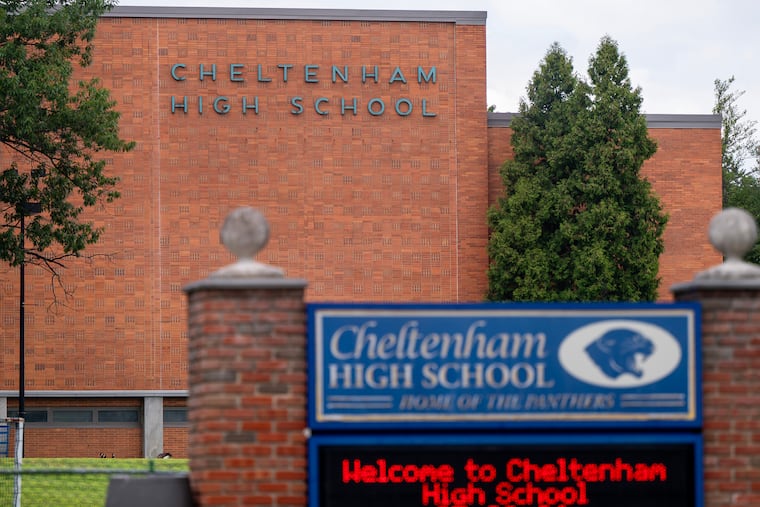
The questions that cut to the heart of the horrible hazing incidents within Cheltenham High School’s football program are the same questions that everyone always asks in these situations: Where were the adults? Who allowed this behavior to happen? How did the chop-busting and rites of passage that have long been intrinsic to sports escalate to the point that four coaches, including former head coach Terence Tolbert, and six players have been indicted for two alleged assaults that took place in the team’s locker room?
Even a glance at the details is enough to turn your stomach. Players — as many as 19 of them — allegedly held down a 15-year-old sophomore member of the team, stepped on his chest and groin with their cleats-clad feet, and tried to poke a broomstick into his butt. The coaches traded inculpating texts about it, according to Montgomery County District Attorney Kevin Steele. The Cheltenham School District canceled the football team’s season last year and again this year. Parents, many of whom reportedly had warned the district against hiring Tolbert in the first place, are angry. And everyone, inside the program and out, is left wondering how in the hell we got here.
» READ MORE: Cheltenham High’s hazing case exposes a loophole in Pennsylvania law. Harrisburg should close it. | Editorial
A less egregious incident, in the Central Bucks High School West football program in 2014, is instructive here. In that situation, a preseason initiation ritual progressed each year from giving players haircuts — sometimes in the shape of male or female genitalia — to licking mayonnaise off teammates’ nipples and groins to simulating sex with a stuffed toy pig to playing “Slap/Lick/Fondle,” a game that ended with underclassmen touching other players’ private parts.
The Central Bucks School District canceled West’s football season and removed its head coach, but what matters most is that the district acted before the hazing reached the same severity as what allegedly happened at Cheltenham. You’d think such an episode would have been a warning siren for coaches and athletic administrators throughout the region. But after a while, the siren goes silent or the people who need to hear it most go deaf, and vigilance wanes, and the pattern repeats itself.
» READ MORE: Cheltenham superintendent Brian Scriven resigns after locker-room assaults lead to community outcry and charges
Something to lose
It is easy and of course correct to lament that youth and high school sports too often have taken on an outsized and inappropriate importance for too many coaches and parents and athletes. But one of sports’ greatest benefits to young people is that it gives them a stake in something bigger than themselves, a stake in something that matters to them, and they learn to develop and modify actions and habits to preserve sports’ place in their lives.
Amid the C.B. West hazing story, for instance, Phil DiGiacomo, who was a star running back on two of the school’s state-championship teams in the late 1990s, told me that, when he played, the Bucks’ success served as an effective deterrent against bad behavior. Yes, Mike Pettine, the program’s legendary head coach, and his staff ruled with a measure of iron-fist discipline that likely wouldn’t fly today, and even those old-school coaching techniques and West’s on-field dominance didn’t prevent every instance of player misconduct. Still, DiGiacomo said, the athletes themselves knew that, just by suiting up for West, they were continuing a special tradition, and they stood to lose a chance to call themselves champions if they did something stupid or malicious. So most of them didn’t.
“When we were there, there was no hazing,” DiGiacomo said. “It’s kind of funny because if anyone ever got picked on, it got straightened out by an older guy real quick, mostly because we feared Pettine — that, and we were too damn tired to do anything else.”
A high school team doesn’t have to win 59 straight games and three consecutive state titles, as those West teams did, to be a point of pride for its players. It just has to provide them a rewarding experience, and they — and their coaches — have to feel that they have something to lose if it doesn’t. That element appears to have been missing entirely from the Cheltenham football program in recent years. In fact, it seems not to have been even a consideration for the school’s administration.
In his previous stint as a head coach, for Abington in 2023, Tolbert had won just one game. The school district decided not to renew him as coach, and sources have told The Inquirer that Tolbert’s toleration of a toxic atmosphere within and around the Abington program, including bullying by players and the use of slurs by coaches, were the driving forces behind his departure.

Mike Sielski alerts
Cheltenham’s leadership either was unaware of these red flags or was willing to look past them, and for what? The program hasn’t had a winning season since 2022, but come on. Was Tolbert thought to be such a great coach that only he could restore the program to respectability? What qualities did he have that the people who hired him considered so essential? It’s obvious now that he and his assistants weren’t capable of doing the one thing any adult working in a school should put first: Keeping students safe.
The courage to take the right steps
The most infuriating aspect of stories such as this is the excuse that coaches can’t be held responsible for all their players’ mistakes. That’s true as far as it goes, but there are steps coaches can take to establish the right kind of culture, to model good behavior, to let the athletes in their care know what will be tolerated and what won’t.
One longtime area football coach told me Wednesday morning that he was fortunate to have two assistant coaches who were special-education teachers, who spent a lot of time around kids who had been the objects of ridicule. These coaches brought students from the school’s autism-support classes to be managers and statisticians and scorekeepers, and they let everyone know: These kids are part of this program. These kids are accepted members of this team. Treat them with respect.
Those are the kinds of gestures that seem small but can make a major difference, that mitigate the risks that coaches have accepted for decades. Coaching high school sports is a damn hard job, and it’s difficult because, at its best, it requires a measure of moral courage: To say no, to explain why, to stand by that decision. In this Cheltenham ugliness, we see once again what happens when that strength is lacking. The necessary guardrails fall away, if they were ever installed at all, and only after the damage comes to light does it become clear that a school and its students have been saddled with coaches and educators who aren’t willing to do the right thing or, worse, don’t even know what the right thing is.