Cheltenham High’s hazing case exposes a loophole in Pennsylvania law. Harrisburg should close it. | Editorial
A Montgomery County grand jury says that reclassifying hazing as a form of child abuse would give mandatory reporting rules more teeth. Lawmakers should listen.

As they prepared a list of charges in connection with a pair of hazing incidents involving Cheltenham High School’s football team, the members of a Montgomery County grand jury closely scrutinized the figures and institutions that often place vulnerable young people in positions where they can be victimized in the first place.
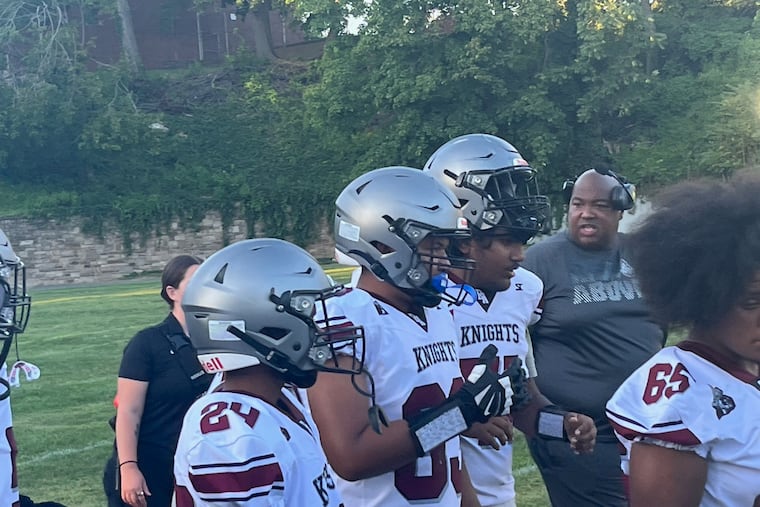
There were the players themselves — as many as 19 of them took part in one of the assaults — who, on two separate occasions last summer, the grand jury found, beat a 15-year-old teammate and attempted to insert a broomstick into his anus.
There were the coaches, whom the jurors said allowed a hazing culture to flourish, discouraged the victim from reporting his injuries, and engaged in a cover-up that was remarkable both for its clumsy execution and brazen audacity.
Finally, there were school administrators, who, despite conducting three separate inquiries, were so inept that they were still unclear about how many times the student was attacked, and took no steps to exclude the head football coach (who would eventually be charged with leading the cover-up) from taking part in their investigations.
“This level of incompetence didn’t just fail one child,” the jury wrote. “It put every young man on the football team at risk.”
Notably, though, the jury found, the victim may not have been helped by another factor: the law itself.
In Pennsylvania and practically every other state, the so-called mandatory reporting guidelines — rules that require teachers, coaches, school administrators, and others who work with youths to inform the authorities of suspected harm — do not include hazing in their definition of what constitutes child abuse.
As horrifically illustrated by the case in Cheltenham — and so many other high-profile hazing incidents involving adolescents — this must change.
As the grand jury noted, allegations of child abuse generally must be reported when the accused are adults or “certain juveniles” — such as caregivers, family members, and those living in the same household — or when the accusation involves crimes such as rape, sexual assault, or indecent exposure.
“Hazing should be considered a form of reportable child abuse to protect children,” the grand jury wrote. “If hazing was a reportable offense, the Cheltenham High School administration would not have had the opportunity to mishandle the juvenile victim’s disclosure and the ensuing investigation as poorly as they did.”
The failures at Cheltenham High School come less than a decade after legislators in Harrisburg enacted a sweeping overhaul of the commonwealth’s anti-hazing laws. That change was largely prompted by the alcohol-related fraternity hazing death of Timothy J. Piazza, a 19-year-old sophomore at Penn State, in 2017.
The measure, known as the Timothy J. Piazza Antihazing Law, was signed by Gov. Tom Wolf in 2018. It increased the range of penalties for hazing and required both secondary schools and higher education institutions to adopt anti-hazing policies and publicly report violations. (Lawmakers in Trenton — Piazza was a native of Hunterdon County, N.J. — authored their own version of the legislation in the Garden State; it took effect in 2021.)
Despite the adoption of new laws, the cycle of hazing persists.
Set against the painful legacy of Piazza’s death in University Park, hazing continues to be a problem at Penn State. In May, administrators suspended a chapter of the Lambda Chi Alpha fraternity; it is the ninth Greek organization currently serving a suspension for hazing violations on the university’s flagship campus.
Earlier this month, prosecutors filed felony hazing charges against a strength coach at Bucknell University in connection with the death of a player in 2024. And in April, former Eagles player DeSean Jackson, now the head football coach at Delaware State University, was sued by a player after a hazing incident.
» READ MORE: Cheltenham High’s hazing scandal isn’t the outlier you think it is | Jonathan Zimmerman
While some of the most high-profile hazing cases involve colleges and universities, researchers say that the seeds of mistreatment are often planted in high school — or earlier. (A 17-year-old Cheltenham student, who witnessed last summer’s locker room attacks, told the Montgomery County grand jurors that he had seen that kind of child-on-child violence on other teams “multiple times”; he’s been playing since he was 5.)
According to one study, 47% of college students said they experienced hazing before they ever set foot on a college campus. “There’s a bit of a normalization that happens when they’re already experiencing — and perhaps expecting — that type of behavior, if they’ve already gone through that in high school,” Meredith Stewart, of the advocacy group Stop Hazing, said in an interview with members of this board.
To end the grim experience and bleak expectations of adolescents being harmed in sports teams, youth clubs, and other organizations, lawmakers should craft legislation to reclassify hazing as a form of reportable child abuse.
Unless Harrisburg takes action to close this perilous gap in the state’s anti-hazing protections, the cycle of violence will keep churning — and more of Pennsylvania’s young people will continue to be placed at risk.