Rum, grog, and rebellion: How America’s founders drank through 1776
From rum punch and grog to all-day tavern sessions in Philadelphia, a new history explores how alcohol shaped the Founding Fathers and the American Revolution.
The Founding Fathers generally went about the business of independence with a half load on. That’s not a knock. It’s just how things got done in those fiery days of rebellion.
The 56 delegates of the Second Continental Congress who gathered in Philadelphia 250 years ago were virtual strangers. And treason can’t be easy on the nerves. Drinking helped.
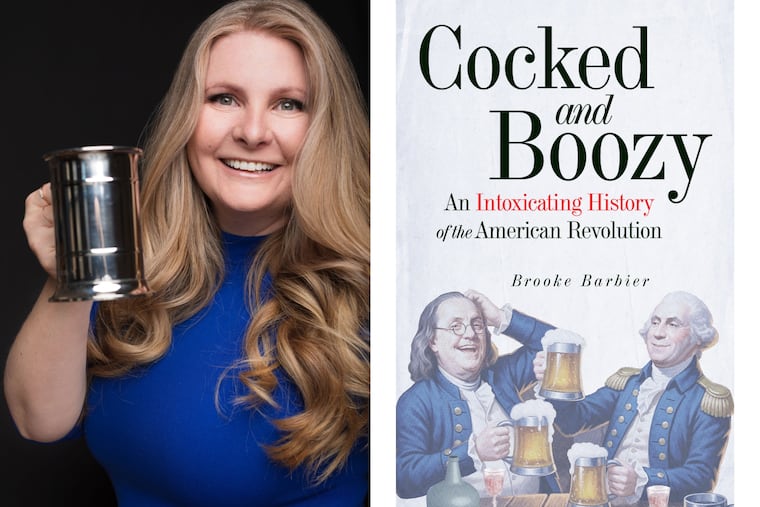
“They were human beings,” says Brooke Barbier, author of Cocked and Boozy: An Intoxicating History of the American Revolution, a rip-roaring account of the critical role booze played in America’s revolutionary history. “They were able to find commonalities that they may not have realized otherwise. Strangers are getting together and tackling really heavy problems, like a growing imperial crisis. Drinking is one way to turn strangers into colleagues and eventually friends.”
Barbier knows her history — and booze. The Boston-based historian with a Ph.D. in American history from Boston College is the author of two previous highly engaging books on the Revolution and runs a popular colonial tavern tour in Beantown. Her research for Cocked and Boozy — which publishes June 9 and is available for preorder — brought her to Philly, where she bent her elbow at the now-shuttered City Tavern, the delegates’ favorite fancy watering hole, and the Man Full of Trouble, Philly’s only surviving colonial-era bar. Poring through thousands of pages from the founders’ boozy account books, diaries, and letters, she also dug through 18th-century tavern records at the Historical Society of Pennsylvania.
She found a story worth telling.
“The more that I sought out references to alcohol, or the influence of alcohol, the more I knew that there was a story to tell here that was often not told by other historians,” she said.
The book dedicates an entire chapter to the founders’ well-oiled spring and summer in Philly in 1776, when the huzzahs never seemed to stop. It also details an unforgettably rollicking trip Paul Revere took to the City of Brotherly Love in 1774. But it’s not all rum, punch, and porter. Barbier powerfully shows how sitting around a table with a tankard in their hands steadied the founders on their rocky path toward independence.
“John Adams said, ‘We must not blush to confess that molasses was an essential ingredient to American independence,” she says.
Molasses is the main ingredient in rum, Barbier reminds.
In this interview she discussed the hardcore drinking habits of colonial Americans, which Founding Father got his drink on the most, and recipes and recommendations for a variety of 18th-century cocktails fit for Memorial Day bashes and barbecues.
People spend $15 on mocktails today. Colonial people drank.
The delegates drinking in Philadelphia is in line with what colonists drank broadly in British North America. Women drank a variety of alcoholic beverages and children even consumed small beer. The amount they drank, while imprecise, is nearly double what we drink today. This isn’t because water was unsafe. That’s a common myth.
I thought it was the water!
The water was fine. They were just accustomed to drinking beer or cider or wine or rum. We have accounts of the earliest colonizers saying that the water is safe. In fact, one guy says, “The water is safe until we can make beer.”
What were the founders guzzling on an average day?
They may be inclined to have a small beer, a low-alcoholic beer with breakfast. The midday meal was when they started drinking. The congressional delegates would adjourn at 3 p.m. or 4 p.m. every day, and then we have delegates saying, “We just drink and eat.”
Philly feted these guys. They were patriotic rock stars.
People threw parties for them. One delegate said that he drank all the time because he doesn’t want to turn down invitations. These 50-something delegates coming into Philadelphia was a big deal for the city, and the city did a really good job of entertaining them.
The City Tavern was their spot, right? If you had a boozy time machine, is that where you’d go?
Many of the delegates met there every day. The likelihood of you bumping into someone who impacted the founding of our nation in City Tavern was very high. But I’d also want to visit a grog shop by the waterfront just for vibes.
Who was the biggest drinker among the Founding Fathers?
Thomas Jefferson would rival almost anyone else’s drinking habits. He particularly loved wine. He likes to experience the world. We just hear so much from him about his passion for wine and the various drinks he’s trying in Philadelphia. Franklin would be so fun to drink with because he’s so witty. The conversation would flow easily. He composed drinking songs in his lifetime.
What are some of your favorite 18th-century drinking terms?
‘Oil’d.’ ‘Pigeon Ey’d.’ ‘Soaked, in his cups.’
Okay, now for the drinks. Adams loved Philly-brewed porter and something called a whipped syllabub?
It’s sort of a boozy milkshake. You would flavor whipped cream typically with lemon. And then put that on top of cider or sherry, and you would often eat it with a spoon. Martha Washington’s recipe book had two recipes for syllabubs.
What about rum punch?
Rum punch was really one of the most common drinks that you would find in the 18th century. I would make sure to bring a straw because people would drink directly from the rim of the punch bowl and pass it around.
And the Stone Fence?
A Stone Fence will mess you up. It’s cider and rum. It’s easy today to imagine that you’ve run into a stone fence if you’ve had too many of them.
Brandied peaches?
Thomas Jefferson has a recipe to make brandied peaches. It’s written in French. He basically says, “When you add the brandy, step back or you’ll ignite.”
I don’t drink anymore, but my favorite is the cherry bounce.
Oh, I love it. Now is the time to make a cherry bounce. Cherries are in season. You put them in a jar with some sugar and whiskey and a vanilla bean, and you let it sit for five months. Come the holidays, it’s this deep burgundy color. I’ve started tripling my recipes every year and bring it to holiday parties.
For our Memorial Day revelers: Best beachside or rooftop 18th-century beverage?
The most refreshing is grog. Grog is rum, sugar, lime juice, and ice shaken until it’s extremely cold.
Do you find it transporting to sip these colonial cocktails?
When you’re drinking something based on a recipe from 250 years ago — well, that can be really powerful.
Cheers!
‘Huzzah!’
“Cocked and Boozy: An Intoxicating History of the American Revolution by Brooke Barbier” (Chicago Review Press, 2026)
Rum Punch
Brooke Barbier’s modern recipe for rum punch:
Modern Version, serves 1:
4 oz green tea (decaffeinated, if possible)
3 tablespoons turbinado sugar (white sugar is fine, too)
2 oz rum
1 oz lemon juice
Just after your tea is done steeping, stir in the sugar to help it easily dissolve. Once cool, add the rum and lemon juice and stir. Pour over lots of ice — crushed ice is particularly lovely with punch. Top with grated nutmeg (fresh or preground).