Blair's book, like its author, stirs dissent
In "A Journey," the former prime minister defends going to war in Iraq and reopens domestic political wounds.
LONDON - It's a political memoir with celebrity trappings - secrecy, security, a multimillion-dollar deal, and, crucially, controversy.
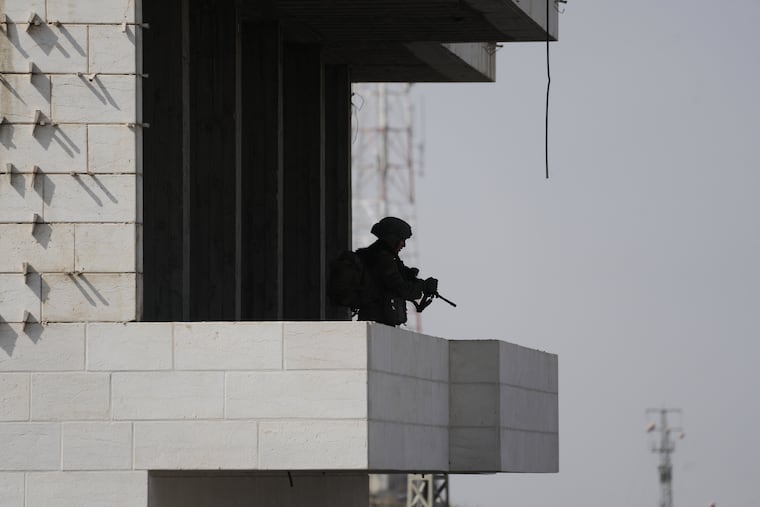
Tony Blair's A Journey was stirring political passions even before it hits bookstores Wednesday, with excerpts revealing that the former British prime minister has cried for soldiers and civilians killed in Iraq, but still thinks it was right to invade and topple Saddam Hussein.
The decision to go to war remains Blair's most divisive legacy. In excerpts released by the publisher late Tuesday, Blair writes: "I . . . regret with every fiber of my being the loss of those who died."
"Tears, though there have been many, do not encompass it," he says.
But, he writes, "I still believe that leaving Saddam in power was a bigger risk to our security than removing him."
"I can't regret the decision to go to war," he says.
Blair also reopens domestic political wounds, saying he found his rival and successor, Gordon Brown, difficult and maddening.
British booksellers are reporting heavy interest in the book, for which Blair was paid an estimated $7.5 million. He is donating the proceeds to a charity for injured troops.
Billed by publisher Random House as a "frank, open" account of life at the top, A Journey is being published in a dozen countries, alongside an e-book and an audio version read by Blair. It was in the top 10 on Amazon's British best-seller list - though only at 4,000 on the U.S. site.
"Initial sales will be huge," said Jonathan Ruppin of the Foyles bookstore chain. "But whether those sales are sustained will depend on how frank and open it is."
Blair - who is scheduled to be in Washington on publication day, attending Israeli-Palestinian peace talks in his role as an international Mideast envoy - has said he "set out to write a book which describes the human as much as the political dimensions of life as prime minister."
A Journey promises to give readers behind-the-curtain insights into major world events, from the death of Princess Diana to the 9/11 attacks and the invasion of Iraq.
It is unlikely to resolve the conflicting views and emotions Blair evokes.
For many Americans, he remains a well-regarded ally who stood shoulder-to-shoulder with the United States in the fight against international terrorism. He is due to receive the 2010 Liberty Medal from former President Bill Clinton in Philadelphia on Sept. 13.
At home, he is a more polarizing figure. Swept to power in 1997 on a wave of popular enthusiasm, Blair left office a decade later reviled by many for taking Britain into the U.S.-led Iraq war, and viewed as a liability by much of his own Labor Party.
"He began as a leader who was a friend of everyone, and he finished as a friend of almost no one in Britain," Blair biographer Anthony Seldon said.
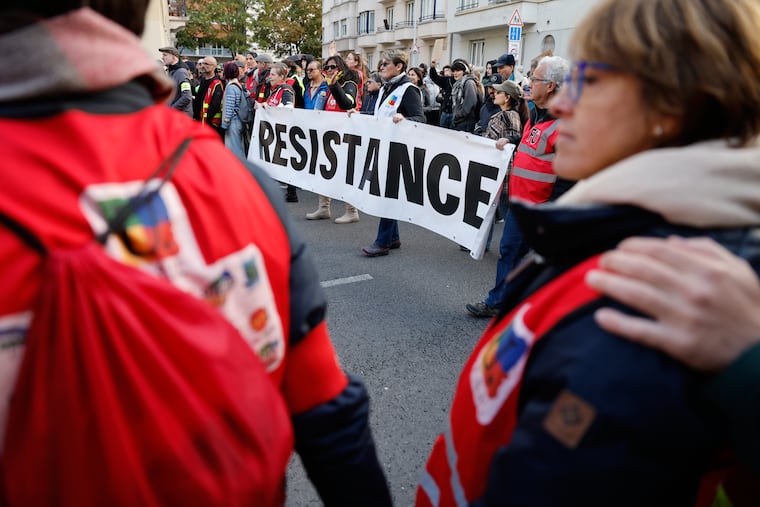
Antiwar groups say they will picket Blair's book signings Saturday in Dublin, Ireland, and next Wednesday in London. Both are high-security affairs at which buyers will have to surrender their bags, cameras, and mobile phones - and are barred from asking for personal dedications.
Blair, 57, stepped down in June 2007 after a decade that included a historic peace accord in Northern Ireland, the war in Iraq, and the continuing conflict in Afghanistan.
He was Labor's most successful leader for decades, moved the left-leaning party toward the center and brought it back to power after 18 years in opposition.
But when he left, after years of increasingly open hostility with Brown, his party was divided.
Blair has been at the center of many books. He was also the inspiration for the former prime minister dogged by allegations of war crimes in Robert Harris' thriller The Ghost, which was turned into a film by Roman Polanski.