Lawmakers plan to block Trump nominees over Ukraine satellite network restrictions
The move would escalate a bipartisan confrontation over the White House’s increasingly conciliatory approach toward Russia.
WASHINGTON — Republicans and Democrats in the Senate have told top White House officials they will block President Donald Trump’s nominees pending on Capitol Hill until the administration ensures the restoration of crucial satellite communications capabilities used by Ukraine’s military, according to three people familiar with the discussions.
The move, described on condition of anonymity because it has yet to be publicly announced, would escalate a bipartisan confrontation over the White House’s increasingly conciliatory approach toward Russia. It would play out in the lame-duck congressional session scheduled for after the midterm elections, when Republicans are expected to seek the confirmation of dozens of Trump’s nominees before the current Congress ends.
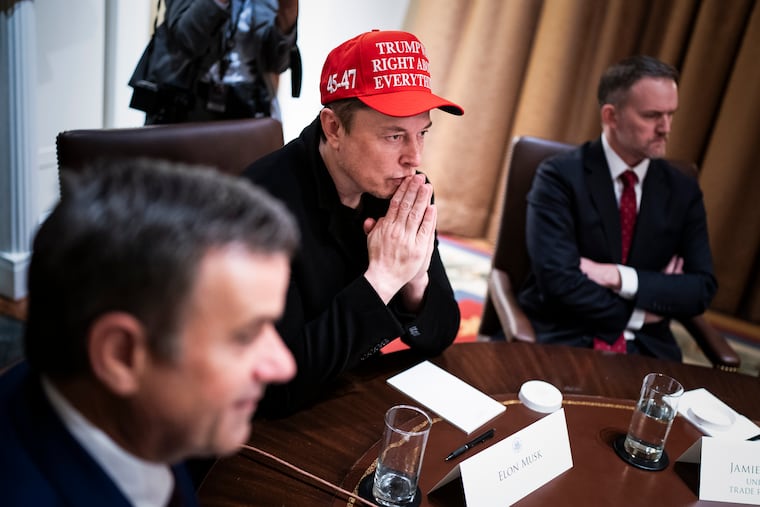
The standoff comes after Ukrainian officials reported last week that they had encountered new limits on their ability to operate the military drones that have become essential to their war against Russia, and suspected that a Trump administration official might have deliberately throttled the Starshield satellite communications network that enables them to function. It was not clear whether such an action was taken or by whom, but Trump last week called Elon Musk, the billionaire whose SpaceX runs the network, and asked him to restore Ukraine’s full access, according to a senior administration official and a person briefed on the exchange.
The episode has highlighted a widening gulf between the White House and Congress over Russia, with even senior Republicans increasingly willing to challenge Trump’s policy positions. And they pointed to a potential change in posture after the midterm elections, when control of Congress could shift to Democrats and lawmakers in both parties may be more aggressive about using their leverage and oversight on the matter.
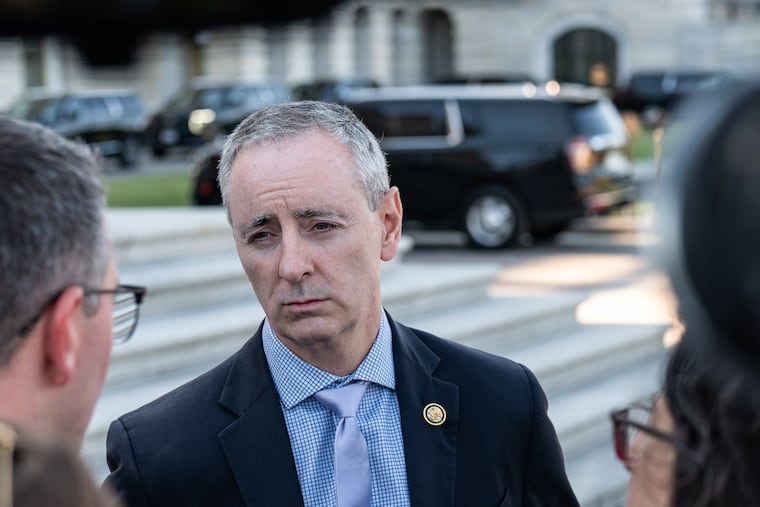
Rep. Brian Fitzpatrick, a Pennsylvania Republican fighting to defend his seat in a highly competitive district, threatened to pursue the firing of U.S. officials responsible for the disruptions and budget cuts for their agencies, saying he doubted the problems had been accidental.
“I’m personally not buying the coincidence argument,” Fitzpatrick, a former FBI agent who worked on Russian counterintelligence in Kyiv, Ukraine’s capital, said in an interview, citing mounting hostility by Trump toward Ukrainian President Volodymyr Zelensky.
Fitzpatrick recently spoke with Zelensky and said he was concerned about delays in the delivery of ballistic missile interceptors, disruptions in early-warning intelligence, and Starshield restrictions.
Similar concerns were raised during a separate bipartisan call with Zelensky this week organized by Sens. Richard Blumenthal (D., Conn.) and Thom Tillis (R.,N.C.). They said the Ukrainian leader told them that crucial critical satellite services remained degraded, including on systems traveling faster than 100 mph, hampering Ukraine’s ability to intercept Russian drones.
“Funding Russia’s war machine, disabling Ukraine’s satellite communications, and crippling its air defense are all impediments to peace,” the senators said in a joint statement.
The disruptions have also endangered U.S. personnel in Ukraine, according to a U.S. official who traveled to Kyiv this month and witnessed Russian drones and missiles overhead. The official said warnings of incoming attacks arrived so late that U.S. diplomatic personnel were unable to reach hardened bunkers and were instead instructed to shelter in hallways. At least 230 U.S. military and diplomatic personnel remain in Ukraine, relying on Ukrainian air defenses for their protection.
A Senate aide who agreed to speak on condition of anonymity to discuss sensitive information said the Foreign Relations Committee had approved several transfers of air defense interceptors that had yet to reach Ukrainian inventories, raising concerns about delays in assistance already cleared by Congress. Staff members also are considering potential investigations of SpaceX over the satellite disruptions and have asked companies involved in Russian diesel transactions to preserve documents in anticipation of possible congressional investigations, the aide added.
Starshield service abruptly cut out last week, sending Ukrainian drones en route to their targets falling to the ground. The outage risked disastrous repercussions on the battlefield and thwarted Ukrainian efforts to disrupt Russian logistical routes in occupied Ukraine.
As of Friday, the service continued to face major disruptions, commanders and officials said, with the speed limit still in place and some troops reporting connectivity problems even at slower speeds. Washington still has not provided any answer to Ukraine as to why the service was cut, several officials briefed on the matter said.
Zelensky has repeatedly raised alarms that the outages are leaving civilians vulnerable to Russian drone attacks.
“Starshield/Starlink speed restrictions remain in place. Every day matters for Ukraine, because every Ukrainian life matters,” Denys Sienik, Ukraine’s chargé d’affaires in Washington, wrote on the social platform X. “Our people are waiting for positive news, hoping that the restrictions will be lifted and our defenders will have the capabilities they need to protect lives.”
Sen. Roger Wicker (R., Miss.), chair of the Armed Services Committee, separately pressed Trump this week to accept Zelensky’s offer to suspend attacks on Russian petroleum infrastructure in exchange for U.S. targeting assistance against Russian missile launches.
“President Trump can lower prices at the pump today by simply agreeing to this deal!” Wicker said in a statement on social media. “MR. PRESIDENT, PLEASE TAKE THIS WIN!”
This article originally appeared in the New York Times.