New signs point to deal on saving Mideast talks
JERUSALEM - In the clearest sign that a deal may be emerging to keep the troubled U.S. Mideast peace push alive, a top Palestinian official said Thursday that his side would accept an American proposal for Israel to curtail settlement construction for two more months.
JERUSALEM - In the clearest sign that a deal may be emerging to keep the troubled U.S. Mideast peace push alive, a top Palestinian official said Thursday that his side would accept an American proposal for Israel to curtail settlement construction for two more months.
Israel indicated it, too, was edging toward a compromise.
The country's ambassador to Washington confirmed for the first time that the United States is offering "incentives" for Israel to extend a just-expired settlement slowdown.
In an apparent attempt to placate hard-liners opposed to further concessions on settlements, Prime Minister Benjamin Netanyahu also came out in favor of a controversial loyalty oath to Israel as a Jewish state. Such an oath is opposed by Arab Israelis.
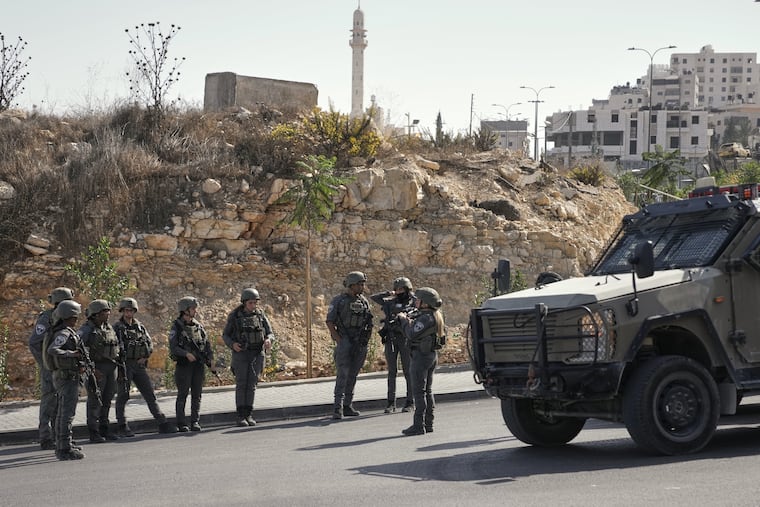
The Palestinians have threatened to walk away from the talks if Israel resumes settlement construction on lands they claim for a future state.
An Arab League gathering this weekend is expected to recommend support Friday for whatever the Palestinians decide. A resolution to call off the talks would be a critical setback, but diplomats are hoping for a more ambiguous statement that would leave room for compromise.
With the clock ticking, U.S. mediators have been trying to broker a compromise.
Palestinian negotiator Nabil Shaath said in an interview Thursday that the Palestinians accepted a U.S. proposal for a 60-day extension of the Israel settlement slowdown in hopes that final borders between Israel and a Palestinian state will be negotiated during that time.
Once borders are set, Israel can resume construction on territories it expects to keep, while halting construction on territories set aside for a new Palestinian state.
If no agreement is reached, "then this moratorium should be extended," Shaath said.
In principle, the Palestinians demand a full halt to all settlement activity, saying that continued construction on lands they claim indicates that Israel isn't serious about negotiating peace. But Shaath signaled they are prepared to accept the partial freeze Israel maintained for 10 months before its expiration Sept. 26.
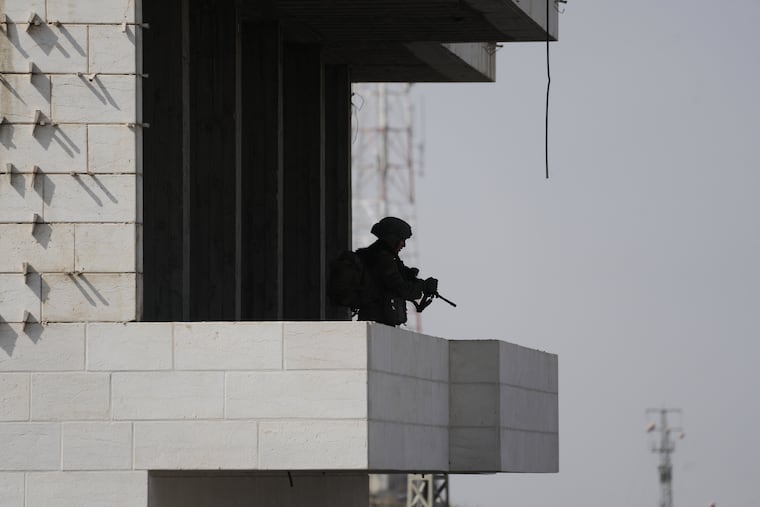
About 300,000 Jewish settlers live in the West Bank, in addition to 180,000 in Jewish neighborhoods in East Jerusalem. The Palestinians claim both areas, with East Jerusalem as their future capital.
Netanyahu, fearing that his hard-line coalition could be fractured by further moves against settlers, has said the settlement slowdown will not be extended. At the same time, he is under heavy pressure from the Americans to keep the negotiations afloat.
In a videotaped interview posted on the Washington Post's website, Israel's ambassador to the United States, Michael Oren, confirmed that the Obama administration has offered "incentives" for Israel to extend the expired curbs on settlements.
He did not elaborate, but Israeli officials have said they are seeking a package of "assurances," including U.S. diplomatic support at the United Nations, new military aid, and backing for key Israeli positions in the peace talks.
Oren said he expected a resolution within 48 hours, a time frame that coincides with the Arab League meeting.
In Washington, State Department spokesman P.J. Crowley said the administration was counting on the 22-member Arab League to grant "continued support" for the new negotiations.
After months of U.S. shuttle diplomacy, President Obama personally launched peace talks directly between the Israelis and the Palestinians - the first in nearly two years - at the White House on Sept. 2.
He hopes to broker an agreement within a year that will tackle all of the core issues in the Israeli-Palestinian conflict: final borders, the fate of millions of Palestinian refugees whose families were displaced during the creation of Israel in 1948, and resolving the conflicting claims to Jerusalem.
Before addressing those explosive issues, though, the impasse over Jewish settlements will have to resolved.