A hit-and-run left a woman unable to live alone. So her niece bought her house and moved in.
ynsey Lehr grew up knowing that her beloved Aunt Donna survived a near-deadly hit-and-run as a teenager.
The details of the tragedy were part of the tight-knit family’s history.
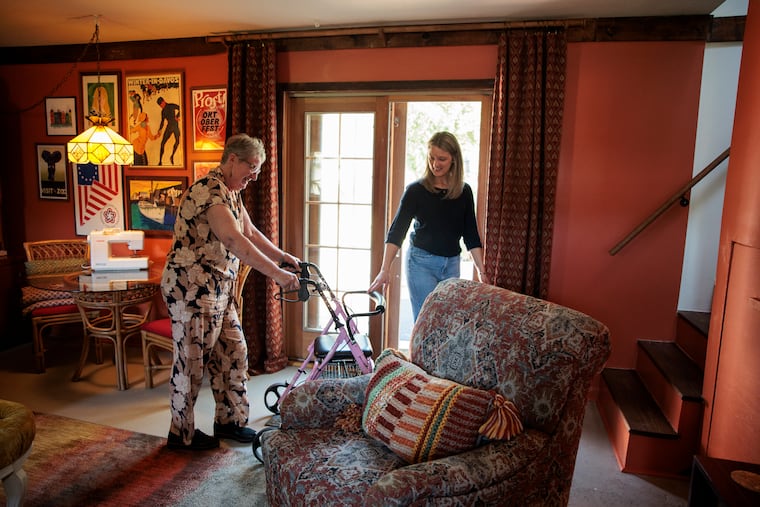
Donna Eiser had just finished her freshman year at East Stroudsburg University and aimed to become a physical education teacher. Then one night in August 1974, she was hit by a car a few blocks from her Bensalem home. She spent the next six months in the hospital, relearning how to speak and move. The crash left her permanently disabled, unable to return to school or work, and in need of long-term care.
Lehr’s large family, most of whom lived nearby, rallied. Lehr and her two siblings grew up next door.
“We grew up knowing that there are people who need to be looked out for,” Lehr, 35, said. “She was always one of our pals.”
Her grandmother lived with Eiser and acted as her primary caregiver for the next 43 years, until the grandmother’s death in 2018.
Then the family needed to come up with a plan for Eiser’s future. The Bensalem house was left in a trust to Eiser, and the family wanted to sell it so she could profit from the sale, but Eiser could not live on her own or afford rent elsewhere.
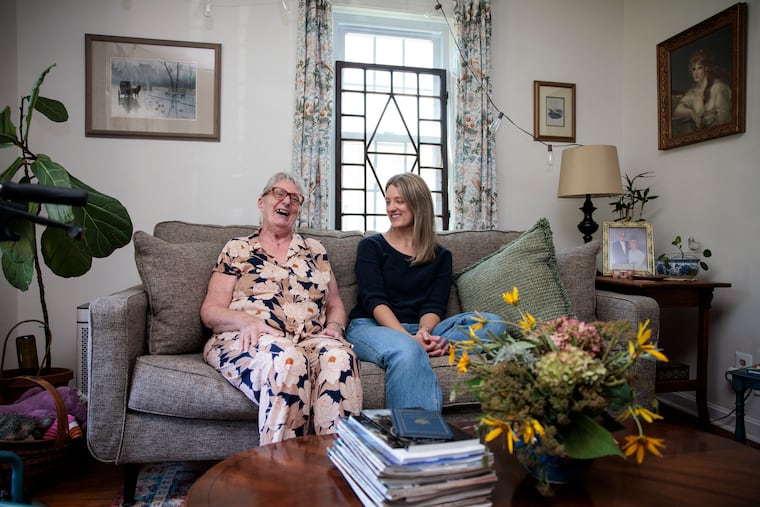
Lehr, a graphic designer at Dietz & Watson in Philadelphia who was still living with her family next door, decided to buy the house and move in with her 71-year-old aunt. She became the 24/7 on-call person; Lehr’s mother shares the rest of the caregiving with her.
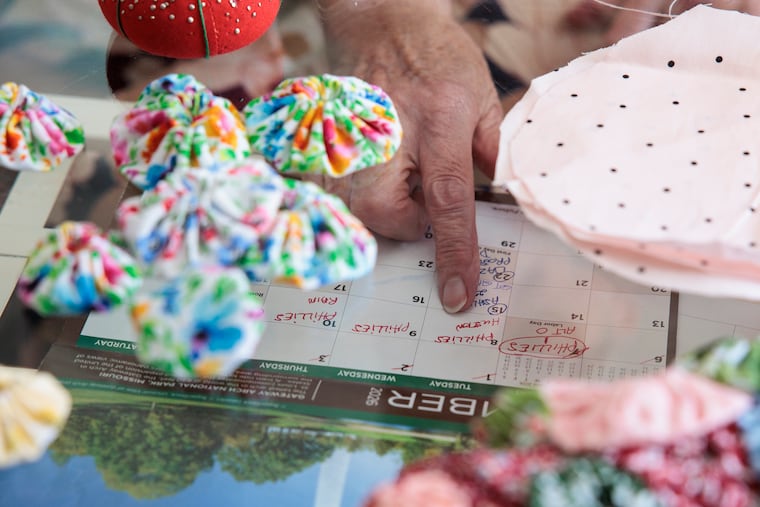
These days, Lehr and Eiser can often be found at home together, sewing, playing Yahtzee, and listening to the Beatles.
“My life definitely looks different than some of the people around me,” Lehr said. “While it’s a responsibility, it’s a joy.”
The following, as told to Zoe Greenberg, has been edited for length and clarity.
On deciding to buy the house
Lehr: I couldn’t bear the thought of my aunt losing her mother and then losing her home. The emotional toll just would have been too much. Consistency and routine in her life are important. I was also ready to spread my wings a little bit, even though I was buying right next door.
Eiser: My mother passed away, my father passed away, and I’m disabled. I need someone to help me. So since Lynsey lives right next door, and I’m her godmother and her aunt, she decided to come over and live with me. That helps me out a whole lot.
On becoming a full-time caregiver at 30
Lehr: I didn’t consider not doing it, just because she was my priority. She still is. I don’t know that we’ll stay in the house forever, but I know she’ll be with me forever. She’ll be with one of us forever. At the time it felt like a big responsibility, but it didn’t feel like the alternative was an option I wanted to consider.
On being both niece and caregiver
Lehr: It’s a hard balance sometimes. I don’t want her to feel that I’m treating her like a child, because she’s not. But there are definitely times when I have to ask her to do the dishes or pick up laundry. I still find her playing a mother role to me, and she always did. As my godmother, she took it very seriously to be a spiritual guide and an emotional guide. I think ultimately we’re friends. I don’t know that there’s any kind of hierarchy.

- She left the dating parlors and courting buggies of Lancaster behind. Now she’s learning to date from scratch.
- ‘Sex to me is like having anchovies — yeah, I suppose I could, but I’d really rather not.’
- They became ‘chosen brothers’ in a maximum-security prison. Then one got out.
- They’ve been happily married for nearly 20 years. They just live 3,000 miles apart.
- He lives with his wife — and his husband, and his partner, in a 6-person polycule
On forgoing a romantic partner
Lehr: I am not in a romantic relationship, and a part of me feels like this may occupy a lot of my time that I would have normally dedicated to finding myself a romantic partnership. My pursuit of that is secondary to this.
Eiser: I always thought maybe I could, but I can’t handle that. It’d be nice to go out every now and then, but when you find someone who wants to be controlling or wants to have their own way, I say no.
On making it work financially
Lehr: I could not do any of this without my family support. I have an income and I pay my bills, and then my aunt fortunately gets help from Social Security, so she contributes a bit of that for her room and board. Because of her disability benefits, she’s not allowed to accumulate any kind of savings. We make it work.
On comparing her life to her peers
Lehr: I have a lot of friends who have young kids, and I think that the caregiving responsibility is similar. There’s a part of me that mourns living alone because I have friends who have their own apartments, or fewer responsibilities. In a way, that life does sound desirable.
It’s kind of a slow life, especially with her mobility issues. We have to consider what is within her comfort level and we do spend a lot of time at home. But we’re content with that.
On their 36-year age difference
Eiser: It’s OK to have a young roommate. Sometimes I think, “How come I can’t do what she’s doing?” The older you get, the harder it is.
Lehr: Honestly, I think Aunt Donna’s younger at heart than I am. She’s so creative, she’ll come up with these outlandish projects. Yesterday, she mentioned out of nowhere that she wanted to be a corn on the cob for Halloween. Now we’re planning logistically how that’s going to work.
This story is part of a series about life partners across the Philadelphia area.
If you want to share your story about who you’re navigating life with, romantically or otherwise, write to lifepartners@inquirer.com. We won’t publish anything without speaking to you first.
