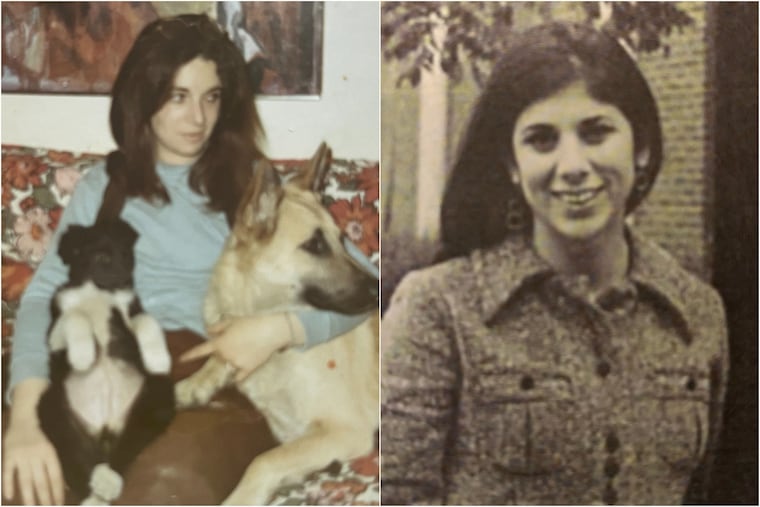
n the fall of 1966, Susan Dannenberg and Michele Mathes moved into a small room together on the third floor of the Delta Phi Epsilon sorority house at the University of Pennsylvania. It was not clear whether they would make it as roommates. Mathes was an analytical pre-law student focused on the future, while Dannenberg was a struggling art student with a penchant for bringing home small rodents as pets.
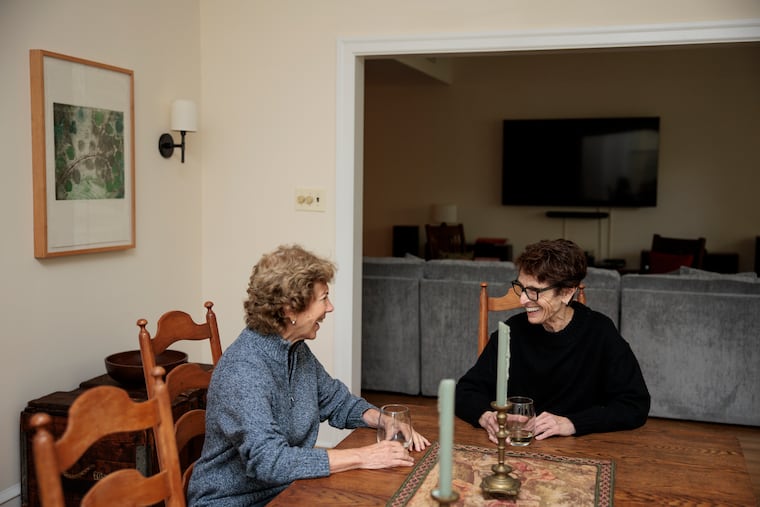
Sixty years later, the two women, both now 79, have once again moved in together.
In the intervening decades, they married, raised children, built careers, got divorced, and lived alone. But they remained connected and always thought they might end up as housemates once more.
“I’ve never had to explain myself to her,” Mathes said.
This time, instead of a cramped sorority room, they are sharing a spacious apartment in Chestnut Hill, where they each have their own bedroom and bathroom.
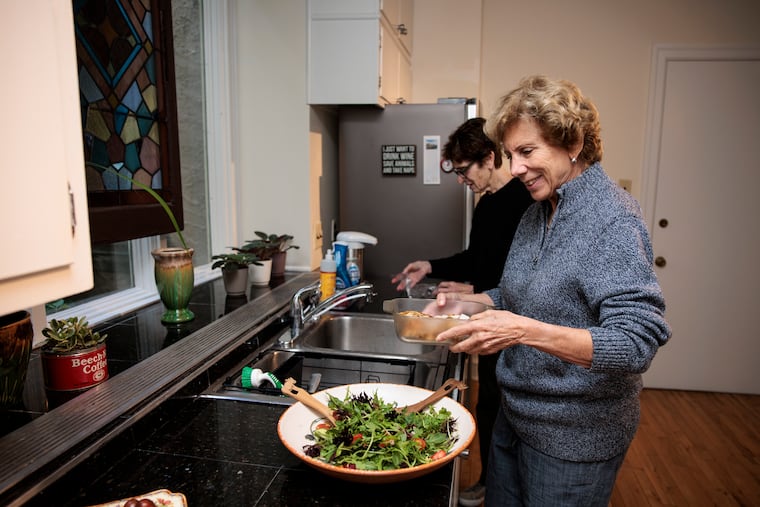
In pooling their belongings, Mathes brought the books, music, and handwoven rugs; Dannenberg brought furniture from 50 years of flea market scavenges. (They each brought a male Tuxedo cat.) They opened a joint bank account to pay for their rent and other shared expenses.
They see their non-romantic living arrangement as a way to spend the older years of their lives in companionship, doing exactly what they want to do.
“It’s not just about being roommates,” Mathes said. “We give special priority to figuring out how you meld two lives.”
The following, as told to Zoe Greenberg, has been edited for length and clarity.
On being roommates 60 years ago
Dannenberg: At the end of every day, no matter what went on, we would get the hardbound dictionary out, and we would pick out a word that neither of us knew. We would learn that word, and we would commit to use it the following day.
Mathes: The following year we were in different rooms. But every night, after everyone else was asleep, Susan and I would sit on the stairs and sing show tunes.
On their marriages
Dannenberg: In both my marriages, each of my husbands was aware that I had a strong relationship with Michele, and accepted that was a big part of my life. It was hard to navigate sometimes. I never believed that anybody else had a relationship like this. What other people meant when they said “best friend” didn’t capture the complexity and the depth of this relationship.
Mathes: You have to understand that by the time we got married, we had such an incredibly strong friendship. It didn’t detract from the marriage, but it coexisted with the marriage. It was braided into the marriage.
On difficult years of friendship
Dannenberg: From about 1977-87, I withdrew from Michele. Those years were challenging. I was so deep in my own struggles that I can’t say I even saw other people’s lives.
Mathes: My life was going swimmingly at the same time that Susan was struggling. So that made it very difficult. I was hurt. Susan was not in touch, but she was still Susan, and I was still me.

- They’ve been happily married for nearly 20 years. They just live 3,000 miles apart.
- He lives with his wife — and his husband, and his partner, in a 6-person polycule
- They used to date. Now they’re best friends raising her child together.
- A hit-and-run left a woman unable to live alone. So her niece bought her house and moved in.
- To get closer to God, these six women moved into a ‘house of discipleship’
On making plans to be roommates again
Dannenberg: Fifty years ago, I remember thinking: At some point the best way to live is for women to live with women. I was married at the time. Everybody was married at the time. We made a commitment to each other that we were going to do the work it took to be in a place where the two of us could live these years together.
On what they worried about before moving back in together
Mathes: Because we are very different, I had some concerns about how accommodating we could be to each other. Part of my baggage going back to the way I grew up was I felt that I was run over a lot. I was concerned because Susan is very orderly and likes to do things a certain way.
Dannenberg: My concern is the flip side — I worry that I’m going to make a misstep, and Michele’s going to get angry.
On their new daily ritual
Dannenberg: We’re figuring out our own desires, how to spend our time and how we can do it together. We have a ritual at 4 o’clock. We stop what we’re doing. I pour a nice glass of wine. Sometimes Michele will have a little bit of wine, but more likely iced tea. We call it cocktail hour.
On sparing their children (and themselves)
Dannenberg: My son will always say, “If something happens to you, mom, you can always come live with us.” Living with them would not be my dream. I would have to re-locate, and I wouldn’t want them to be responsible for looking after me. I think it’s such a relief to them that Michele and I have each other.
Mathes: We’d both taken care of parents who had become frail or ill. I wanted another stage where I’m living the way I want to live — not to support other people, or take care of responsibilities. You’re old enough to reflect back on your life. I want to live with someone I love in an environment where we can decide what we want to do, and have that be the last part of my life. And that’s what we’re doing.
This story is part of a series about life partners across the Philadelphia area.
If you want to share your story about who you’re navigating life with, romantically or otherwise, write to lifepartners@inquirer.com. We won’t publish anything without speaking to you first.
