East Whiteland directs data center developer to stop work on Superfund site
The township and EPA will review health and safety plans.
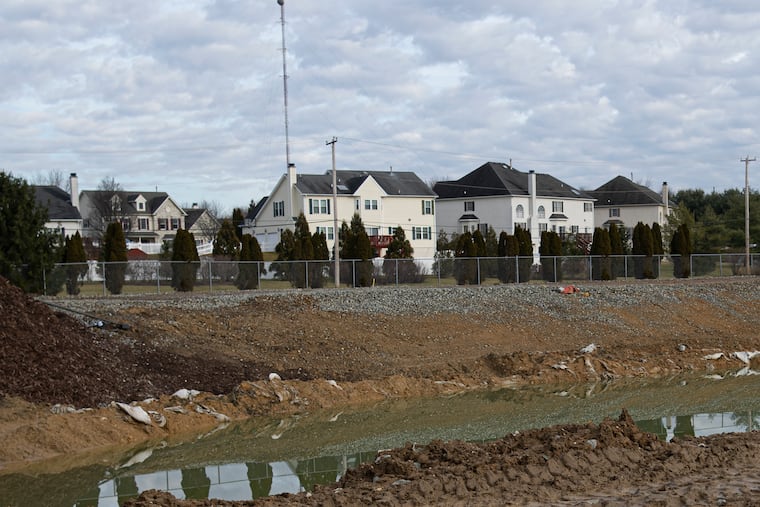
The developer of a sprawling proposed data center on an East Whiteland Superfund site must temporarily halt any work that disturbs the soil as the municipality reviews plans, the township said Thursday.
“Any work involving earth disturbance of any kind must cease,” the township said.
The stoppage was requested “until greater clarity is provided with respect to the ongoing review” of the soil and health and safety plans by the township and U.S. Environmental Protection Agency.
The EPA said in a statement that it had nothing to do with the work stoppage.
Permits needed for the development such as fencing, construction trailers, and signage are still valid.
Township residents have raised concerns that the planned 1.5-million-square foot data center will be built on top of the Cyprus Foote Mineral Co., which was contaminated by chemicals such as lithium, arsenic, and hexavalent chromium.
The developers, Green Fig LLC and Sentinel Data Centers, have said the site has been cleaned.
A representative for the developers said they agreed to the stoppage “so that [the township] had a few more days to satisfy its questions.”
Site work had been underway since early June, after the developers saw success in court when a judge dismissed residents’ challenges to the project.
Residents told The Inquirer they saw dust plumes rising from the site last month. It resurfaced concerns about what contamination may still exist on the land that previously housed the 79-acre Foote Mineral, which was added to the Superfund list in 1992.
Contamination likely started as soon as 1941 when the company began crushing ores and minerals. Lithium metal, lithium chemicals, and inorganic fluxes were part of the process.
Cleanup so far has included capping contaminated quarries, stabilizing waste areas, and maintaining a long-term monitoring program for an evolving groundwater plume. Pollutants included lithium, boron, and low-level radiation.
The work stoppage is another wrinkle in the ongoing saga of the project, which first secured approvals in 2018 and 2024. The project has seen staunch opposition from residents since it resurfaced last year with amended plans.
This story has been updated to clarify that the EPA had no role in the decision to order a work stoppage.
This suburban content is produced with support from the Leslie Miller and Richard Worley Foundation and The Lenfest Institute for Journalism. Editorial content is created independently of the project donors. Gifts to support The Inquirer’s high-impact journalism can be made at inquirer.com/donate. A list of Lenfest Institute donors can be found at lenfestinstitute.org/supporters.

Want to get Inquirer Chester County straight to your inbox every week? Sign up here for our guide to the news, stories, and events shaping life in your community.