Lehigh County ‘evicted ICE.’ Some say the move hurts human trafficking investigations.
A division of DHS owed Lehigh County $115,000 in rent, but local officials cared about more than the missed money.
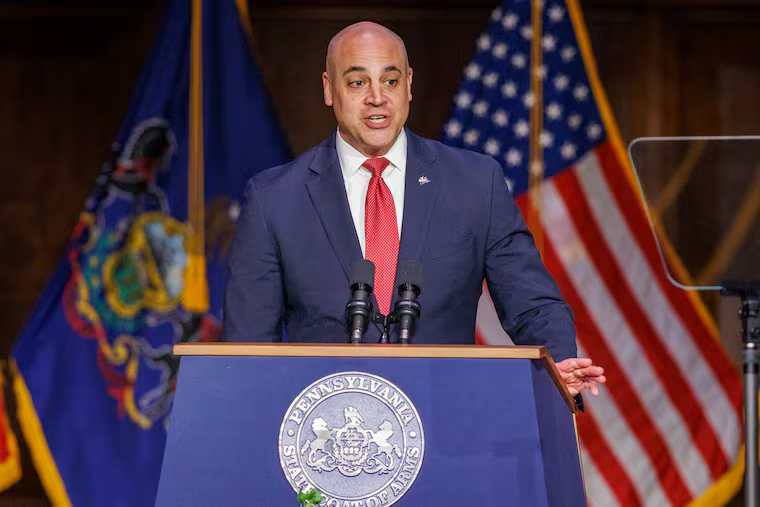
Lehigh County Executive Josh Siegel was ready to tackle housing issues and strengthen access to the ballot box when he took office at the start of the year.
But in the early days of the Democrat’s tenure, he was forced to address an unusual situation, a clerical oversight that unexpectedly put him at odds with some advocates for victims of human trafficking and in the middle of a national debate.
A federal law enforcement division that investigates these cases owed the county three years of back rent for office space in Allentown, exceeding $115,000.
The unpaid rent, however, was not Siegel’s main concern.
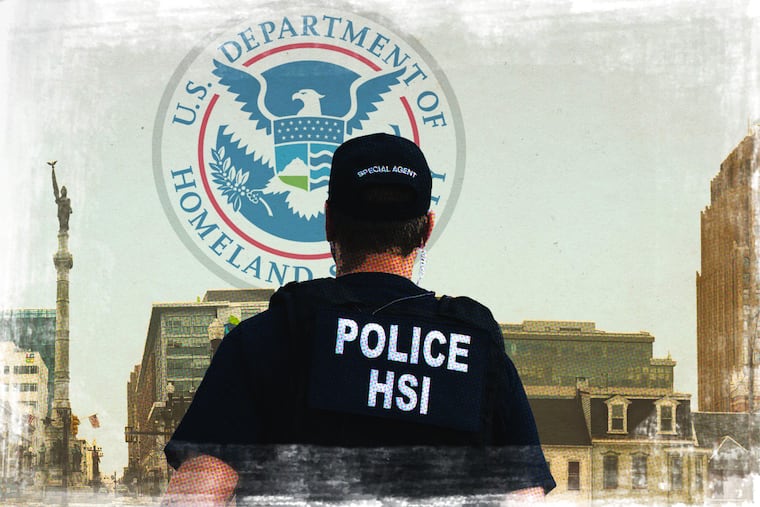
It turned out the county was essentially leasing office space to Homeland Security Investigations, a division of U.S. Immigration and Customs Enforcement. The lease issue arose amid increased public scrutiny of ICE operations, as diverse cities such as Allentown and Bethlehem report a flurry of immigration enforcement.
Yet, Homeland Security Investigations has been a welcome partner in fighting human trafficking in Lehigh County, where the hard-to-quantify problem can feel intractable.
Unable to separate the work of the division from its position within ICE, Siegel opted to give Homeland Security Investigations a 30-day notice to leave the Allentown office space by late February.
In a news conference announcing the decision, County Controller Mark Pinsley said the county was evicting ICE. That framing rippled beyond the local media market, drawing attention from Philadelphia outlets that do not often cover Lehigh County, and national ones such as NewsNation and Fox News.
“It comes back down to just overall public perception,” Siegel told The Inquirer. “As far as an agency goes, I don’t think there’s an organization or an institution in this country less reputable, credible, or trustworthy right now than DHS and ICE writ large.”
The fight over what would have typically been a minor rent dispute illustrates how immigration enforcement has increasingly become a local issue and how complex conversations about the agency have become.
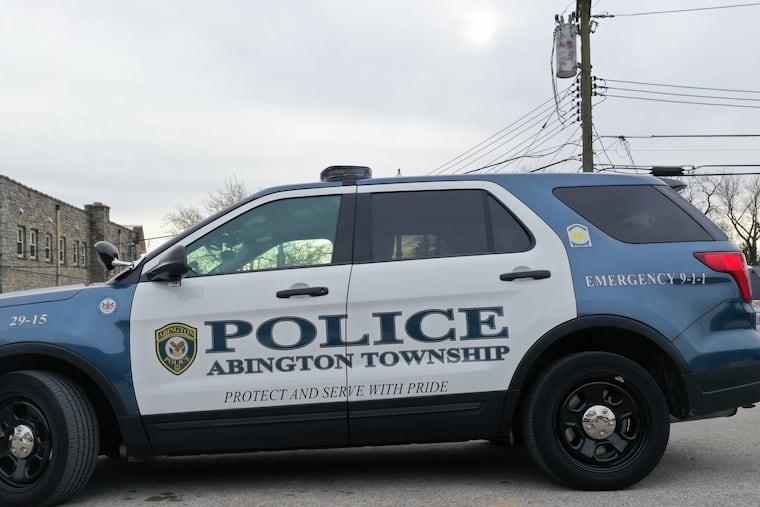
A Homeland Security Investigations spokesperson took issue with the “evict ICE” framing in a statement to The Inquirer after the move-out, noting that a formal lease agreement was never finalized and that when the county asked workers to vacate, they did. No formal eviction proceedings were initiated.
“Homeland Security Investigations (HSI) will continue to maintain its presence in the Lehigh Valley and serve the people of Pennsylvania without interruption, as we always have,” the statement read, though the spokesperson did not address new agency office spaces.
Still, much has changed since Lehigh County asked Homeland Security Investigations to leave its property.
The United States launched airstrikes on Iran, and Kristi Noem, who took much of the blame for the unpopular ICE surge in Minneapolis, was fired as DHS secretary. Her replacement, Markwayne Mullin, has ushered a shift in enforcement, one that is less aggressive and relies more on partnerships with local police.
Even so, the conversations around immigration enforcement remain thorny as ever, with many lines drawn in the sand, and as lawmakers in Philadelphia and its collar counties look for ways to restrict enforcement activity.
» READ MORE: More county and local governments are banning ICE from using their property. Philly could be next to act.
Human trafficking in Lehigh County
Once the home to Bethlehem Steel, the Lehigh Valley, made up of Lehigh and Northampton Counties, was one of the many industrial economic engines of the Rust Belt.
The economic landscape looks much different today, drawing tourism with attractions like the Crayola Experience and Dorney Park & Wildwater Kingdom. Its proximity to major highways also makes it a warehouse and distribution hub. Allentown, for example, is within two hours of both Philadelphia and New York City.
But the very access to highways that gives the valley its edge in shipping is what contributes to its dark underbelly.
The scope of human trafficking is difficult to gauge — 430 defendants statewide were charged with at least one human trafficking offense between 2020 and 2024, according to Pennsylvania court data, though that number excludes federal convictions. Ten came from Lehigh County, which local law enforcement says does not reflect the size of the problem.
“It’s extraordinarily hard to prosecute on a local level because we don’t prosecute the victims, the people who are being trafficked,” said Lehigh County District Attorney Gavin Holihan. “We have to go after the higher-level people, and as local prosecutors and local law enforcement, it’s almost impossible.”
Working with Homeland Security Investigations has been a tremendous aid, Holihan said.
“[Homeland Security Investigations] has resources, they have connections, they have a reach far beyond what local law enforcement can do, and they share that with local law enforcement,” he said.
The Republican, who was censured by his own party last year for endorsing Siegel, a Democrat, in the county executive race, was caught off guard by the announcement that the county was going to end the lease arrangement.
“My office was in the middle of a jury trial involving human trafficking of a 12-year-old girl,” Holihan said, noting Homeland Security Investigations assisted in that investigation. “Her mother sold her to a drug dealer at an airport in Lehigh County and the drug dealer then sexually assaulted her.”
Prosecutors argued Julie Acosta of Catasauqua left the girl alone with Joshua Martel in exchange for $100 and two bags of methamphetamine. Martel was sentenced to 21 to 50 years in prison last year after he pleaded guilty to rape of a child and trafficking.
A jury found Acosta guilty of all charges, including rape of a child, trafficking in individuals, and intimidation of a witness.
Holihan said law enforcement often has to make multiple “contacts” with victims before they are ready to confide, if they ever do. That is part of the reason Holihan has advocated for Homeland Security Investigations to have a physical presence in the region. He even offered to pay the back rent using drug forfeiture funds, to no avail.
County Commissioner Ron Beitler, who switched his registration from Republican to Independent in February, saw the move to evict as ultimately shortsighted and politically motivated.
“Yes, people can (and I think should) be concerned about ICE overreach nationally but at the same time still recognize this local HSI office is not and has not been participating in detention or related activities,” he said in a Facebook post.
A line blurred
Siegel considered the work that Homeland Security Investigations does before moving to end the landlord-tenant relationship.
He ultimately decided the line that once distinguished the ICE arm handling immigration enforcement and HSI had been “blurred, if not altogether erased,” with one of President Donald Trump’s first executive orders of his second term.
In it, the secretary of homeland security was instructed to ensure the primary mission of Homeland Security Investigations was enforcing immigration laws, including those related to illegal entry.
When ICE arrested 17 people at a Bethlehem construction site in June, the news release listed HSI from Philadelphia and Allentown as a partner in the operation, which included the IRS and the FBI, among others.
A Homeland Security Investigations spokesperson maintained that the division and Enforcement and Removal Operations have distinct missions and said, “Any suggestion that [Homeland Security Investigations] has abandoned its core investigative work is inaccurate.”
“[Homeland Security Investigations] special agents assigned to the Allentown office focus primarily on investigating transnational criminal organizations and individuals involved in the exploitation of vulnerable victims in Lehigh County and the surrounding area,” the spokesperson said in a statement.
According to the spokesperson, an Allentown Homeland Security Investigations task force investigation led to the 5½-year sentence of a 30-year-old Reading man in January. He was accused of participating in a conspiracy to distribute heroin, cocaine, and other drugs in Monroe and Berks Counties.
That month, an Allentown Homeland Security Investigations investigation led to the arrest of a previously convicted sex offender in Reading “for alleged federal child exploitation offenses involving the production of child sexual abuse material.”
Even so, Siegel has stood firm, arguing that the typical person does not distinguish between the ICE arm that is in charge of enforcement and the arm that handles investigations around human trafficking and other crimes.
“The very people that [the county] would want to help are the folks who are most likely to be absolutely terrified in this moment by ICE and DHS,” Siegel said.
Evicting ICE and moving forward
With Homeland Security Investigations officially out of county-owned property, Siegel is thinking ahead.
In February, the federal government purchased warehouses slated to be turned into detention centers in Schuylkill and Berks Counties for nearly $120 million and $87.4 million, respectively. Lehigh County borders both counties.
Homeland Security Secretary Mullin put a pause on buying new properties for detention purposes after he was sworn in and began to review the plans this month.
Still, should the conversions move forward in Pennsylvania, the facilities could hold up to 9,000 people total.
Siegel worries those people could come from the so-called Latino Corridor, where six of the eight cities in Pennsylvania with the highest Latino populations are connected by Route 222. The Lehigh Valley accounts for three of those cities: Allentown, Easton, and Bethlehem.
Preparing for the worst-case scenario, Siegel has a series of resolutions and legislation he aims to introduce in coming months. One ordinance would restrict the sheriff from unilaterally entering into a partnership with ICE, known as a 287(g) agreement, which allows local law enforcement to undergo ICE training and assist in removal operations. Another would limit county employee cooperation with DHS unless compelled by a judicial warrant.
A third would declare county-owned facilities could not be used for immigration detention.
Further down the line, Siegel would like to introduce a database similar to what New Jersey Gov. Mikie Sherill launched in February, where people can report and submit videos of ICE agents engaging in misconduct.
In late March, Pinsley, the controller, whose office flagged the ICE lease issue and called for eviction, proposed another measure that would place certain former ICE agents under further scrutiny when applying for some law enforcement jobs in the county. Pinsley argues that the ICE officers trained by the agency after Trump’s second inauguration could result in greater misconduct settlements for the county.
As for the county executive’s relationship with the district attorney, Siegel said the two have since sat down and communicated on a number of other public safety issues.
On the Homeland Security Investigations matter, however, Siegel said, “I think we’ve agreed to respectfully disagree.”