Philadelphia City Council just adopted some of the nation’s most aggressive policies aimed at restricting ICE
The legislation, with some of the most stringent restrictions in the nation, now goes to the mayor, who has largely kept a low profile on immigration issues.
City Council on Thursday approved a high-profile legislative package aimed at restricting immigration enforcement in Philadelphia, placing the city at the forefront of local resistance to President Donald Trump’s nationwide deportation campaign.
The seven bills, which were authored by progressive Councilmembers Kendra Brooks and Rue Landau, ban law enforcement agents from obscuring their identities with masks, prohibit federal authorities from using city property as staging or processing areas for immigration enforcement, and codify the city’s long-standing status as a so-called sanctuary city.
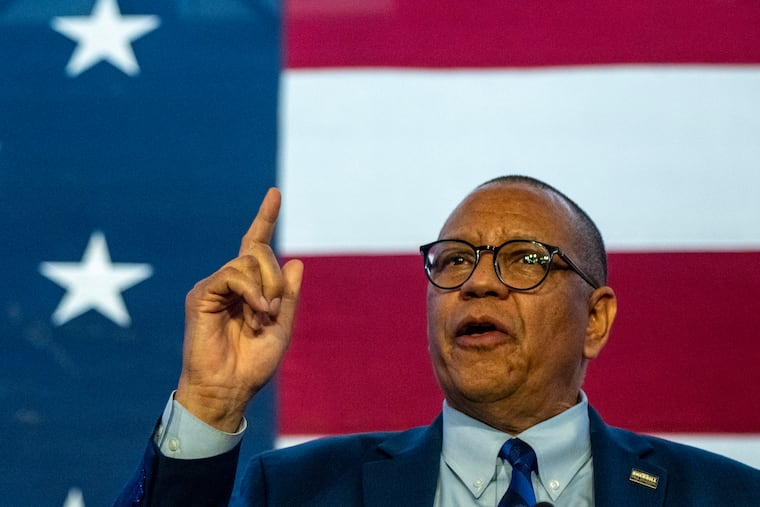
“This legislation shows that Philadelphians are not afraid to stand up to the Trump administration,” Brooks, a member of the Working Families Party, said in a speech. She added that the proposals were backed by “dozens of community organizations who wanted to see Philly government take action on the violence and fear that ICE has brought to our communities.”
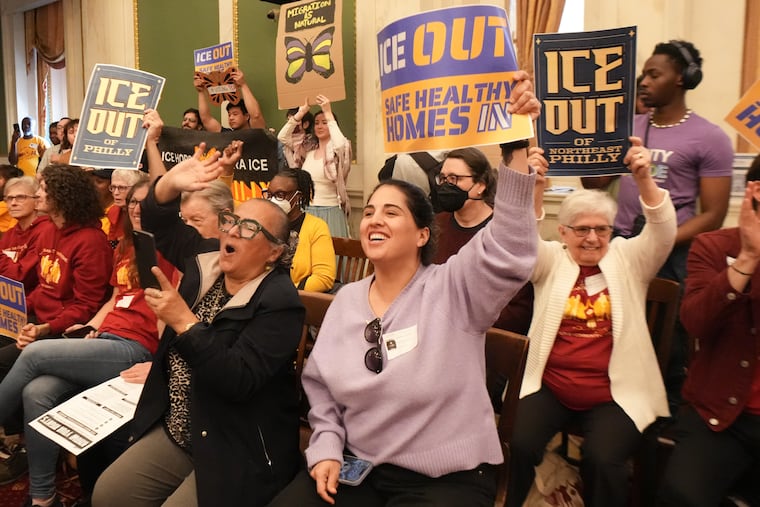
Supporters carrying “ICE Out of Philly” signs erupted in applause after lawmakers approved most of the package in a series of 16-1 votes with Brian O’Neill, Council’s lone Republican, opposed.
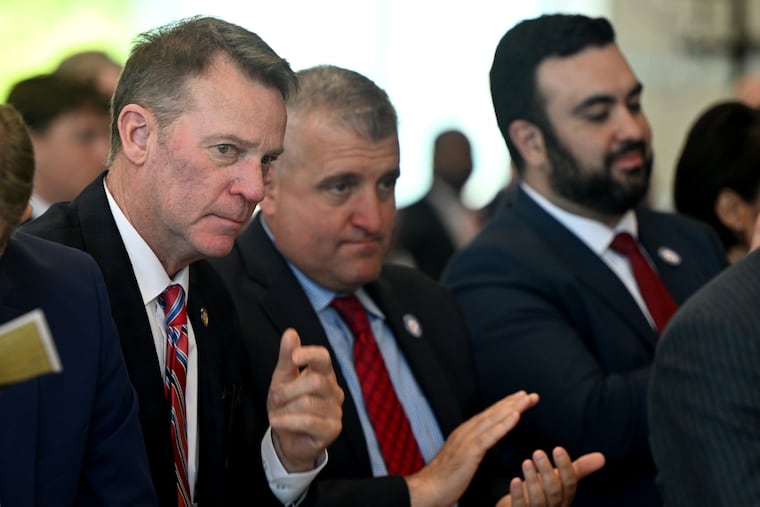
Councilmember Mike Driscoll, a Democrat, joined O’Neill in voting no on two of the measures: the bill banning officers from wearing masks and another aimed at preventing immigration enforcement officers from accessing “nonpublic areas” of “Safe Community Places” such as recreation centers and courthouses. Those were approved 15-2.
Driscoll said he supports the spirit of all the bills and believes there are “systemic” problems with ICE that the federal government should address. But he said he voted no on the two bills due to concerns about legal issues, including the separation of powers between local and federal agencies.
» READ MORE: Unmasking ICE in Philly could test the limits of local power over federal agents
“As local officials, our responsibility is to advance efforts that strengthen protections for Philadelphia’s immigrant communities and ensure families feel safe,” he said. “We vetted and approved legislation that carefully weighed all relevant factors — including potential legal challenges — while upholding and protecting the rights of immigrants.”
The legislation includes some of the most aggressive measures aimed at restricting U.S. Immigration and Customs Enforcement in the country, and Thursday’s votes could thrust Philadelphia into the national conversation around immigration under Trump.
“Philly is now on the map,” Landau, a Democrat, said in a speech. “The entire country and possibly the world is watching us as having some of the strongest ICE Out protections.”
» READ MORE: Philly City Council members will soon consider seven ‘ICE Out’ bills. Here’s what the proposals would do.
That is a scenario Democratic Mayor Cherelle L. Parker has for months sought to avoid with a strategy of rarely discussing immigration or speaking confrontationally about Trump while maintaining the immigrant-friendly policies adopted by previous Philadelphia mayors.
The mayor’s office did not immediately respond to a request for comment Thursday.
When the bills were approved in committee, administration officials testified that some provisions could be “legally problematic.” But the mayor’s team also indicated the administration would not stand in the way of the proposals, which had already garnered support from a supermajority of Council.
Council President Kenyatta Johnson said he had “no concern at all” that Trump would target Philadelphia due to the legislation.
He also said he believed the city would prevail in any legal challenges.
“We have a strong legal team, and if it is challenged, then we will be successful and we’ll be vindicated,” Johnson told reporters after the votes. “The city of Philadelphia will stand together and advocate and fight for some of the most vulnerable population of individuals who live here.”
» READ MORE: Philly Council advances bills restricting ICE in the city as Mayor Parker signals she won’t stand in the way
The legislation now heads to Parker’s desk. The mayor can sign the proposals into law, allow them to become law without her signature, or veto them. Parker has never vetoed a bill.
One measure would effectively codify the city’s longstanding policy of not complying with ICE detainer requests, in which federal agents request that local jails help facilitate the arrest of people suspected of being unauthorized immigrants, unless the agency secures judicial warrants.
That policy, established by former Mayor Jim Kenney in a 2016 executive order, is the primary reason Philadelphia is widely seen as a sanctuary city. Enacting it into law prevents future mayors from ending the policy without Council approval.
Other provisions of the legislation would:
Create a new protected class, effectively banning discrimination based on immigration status.
Prohibit data-sharing agreements between the city and ICE.
Ban law enforcement officers, including Philadelphia police, from concealing their identities, except under special circumstances such as medical needs.
Prevent ICE from using city-owned property to set up staging and processing areas.
Ban city officials and government contractors from conditioning city benefits on immigration status.
The Rev. Christopher Neilson, president of Christianity for Living Ministries and a member of the New Sanctuary Movement of Philadelphia, said the bills’ passage meant that the city was “fulfilling its name of brotherly love and sisterly affection.”
“The next steps are working to ensure not only the implementation but the embracing, embodying, and expressing of the spirit of the legislation in the citizenry,” Neilson said in a statement.
Landau and Brooks introduced the bills shortly after federal agents fatally shot Renee Good and Alex Pretti during an immigration enforcement surge in Minneapolis. The proposals sailed through Council with little opposition after 15 of the 17 members signed on as cosponsors. No one testified against the proposals when they were heard in committee last week.
It is possible that some of the package will be challenged in court, legal experts have told The Inquirer. This week, a federal appeals court blocked a California law adopted last year that required masked federal agents to wear visible identification.
Vanessa Stine, a senior staff attorney at the American Civil Liberties Union’s Pennsylvania chapter, applauded Council’s approval of the bills and said they were rooted in constitutional law.
“Strong local policies make a difference and are legally sound,” Stine said in a statement. “They decrease mass deportation and are grounded in the Fourth and Tenth Amendments.”
Staff writer Anna Orso contributed to this article.