No Kings rallied for the third wave of anti-Trump protests in Philly and around the country
Scores of No Kings demonstrations took place Saturday across the Philadelphia region in response to President Donald Trump’s administration.
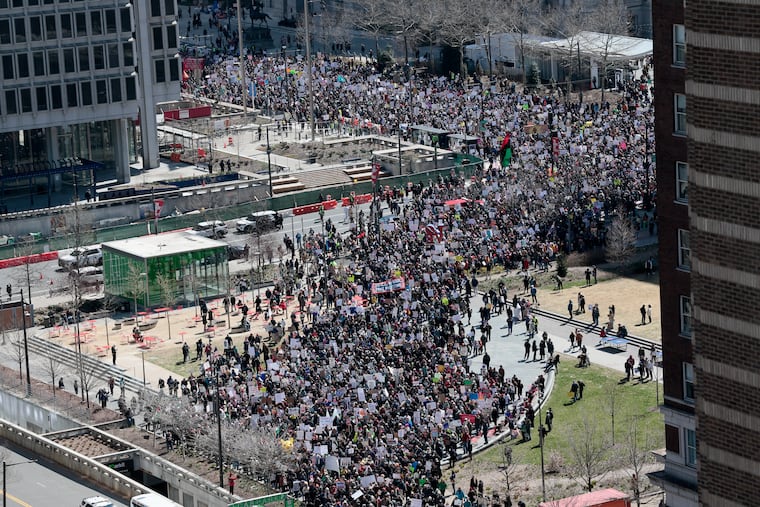
In step with demonstrators nationwide Saturday, thousands took to streets across the Philadelphia region — from Center City, to Ardmore, to Camden — denouncing President Donald Trump, his policies, and his administration.
It was the third No Kings protest in roughly nine months, signaling the breadth of dissent and concern over what protesters see as Trump’s authoritarianism and his attempts to consolidate and expand his power. Protesters condemned the gamut of the president’s agenda, including escalating immigration enforcement, the war in Iran and rising gas prices at home, and the dismantling of foreign aid programs.
“The people in power are making decisions that they won’t have to live through,” said Electra Powers, who brought her Grays Ferry family to the demonstration outside Philadelphia City Hall. “The future they’re setting up for our kids is horrible.”
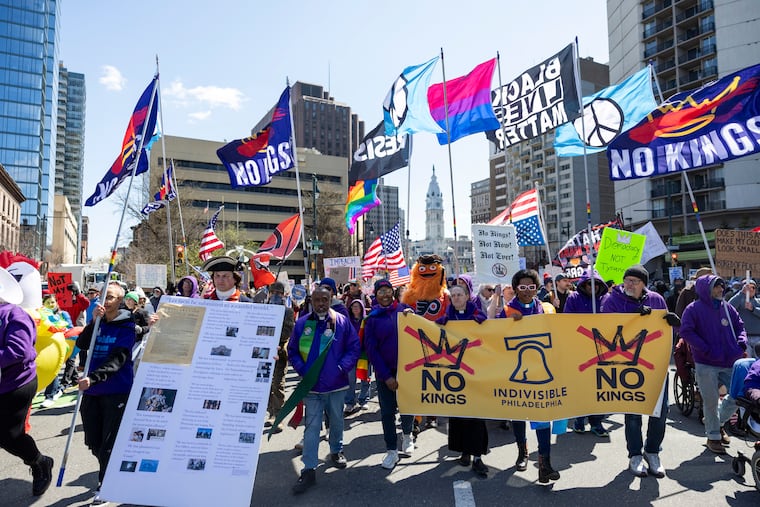
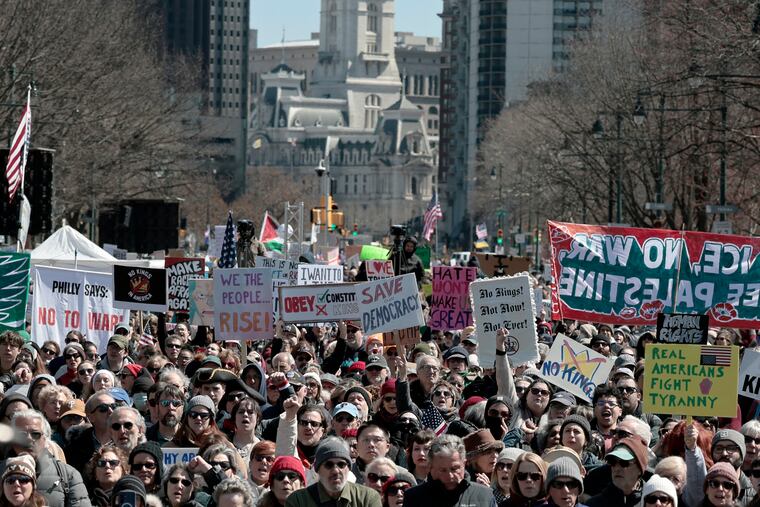
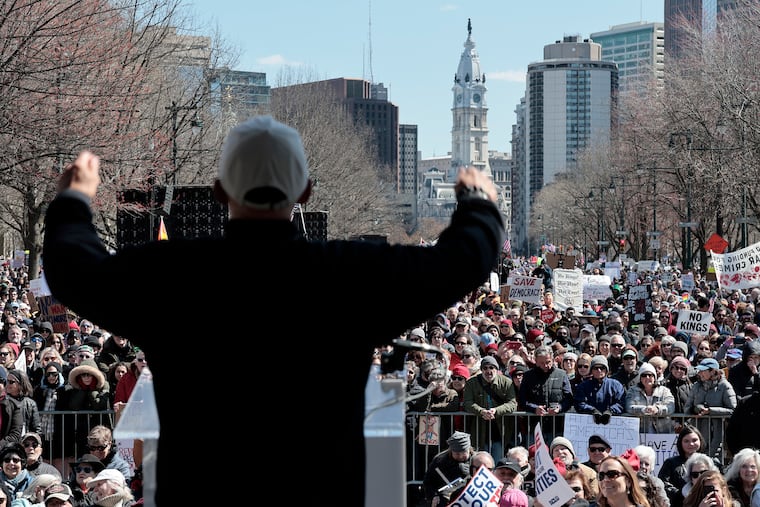
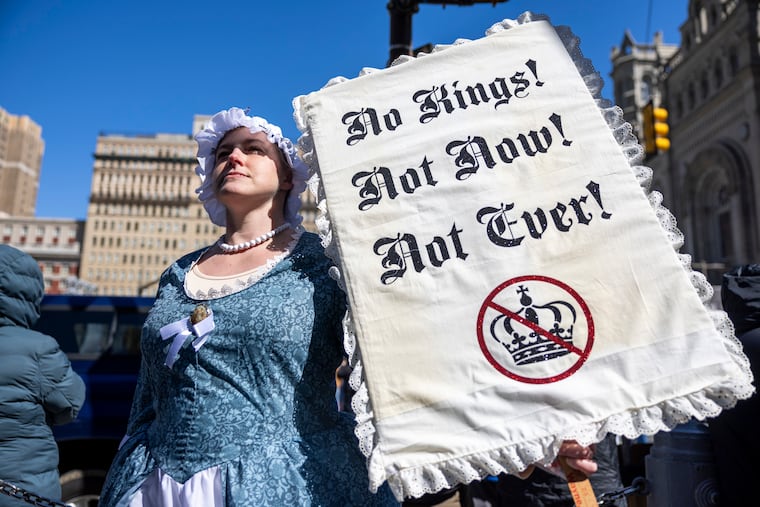

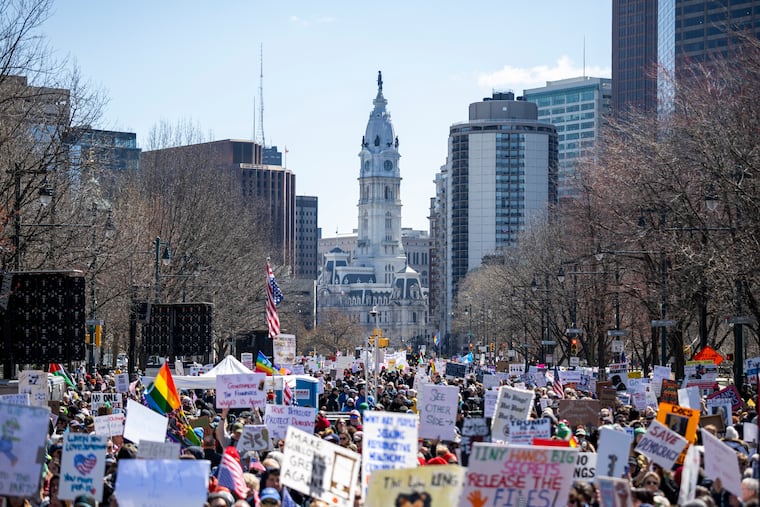
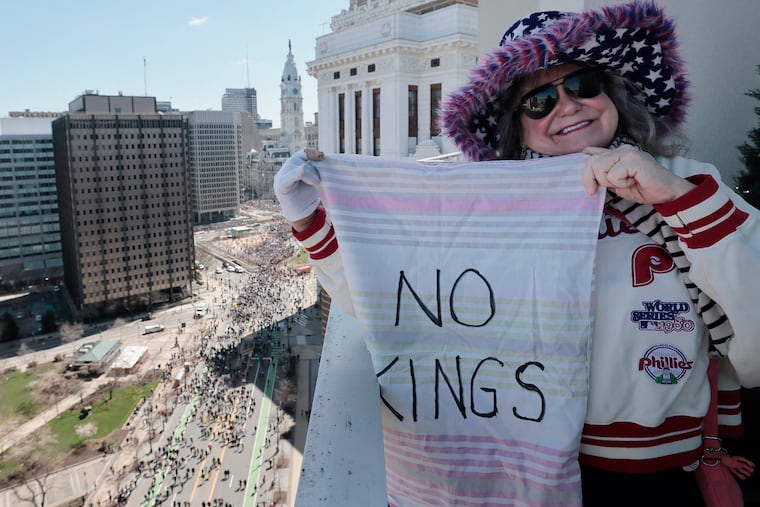
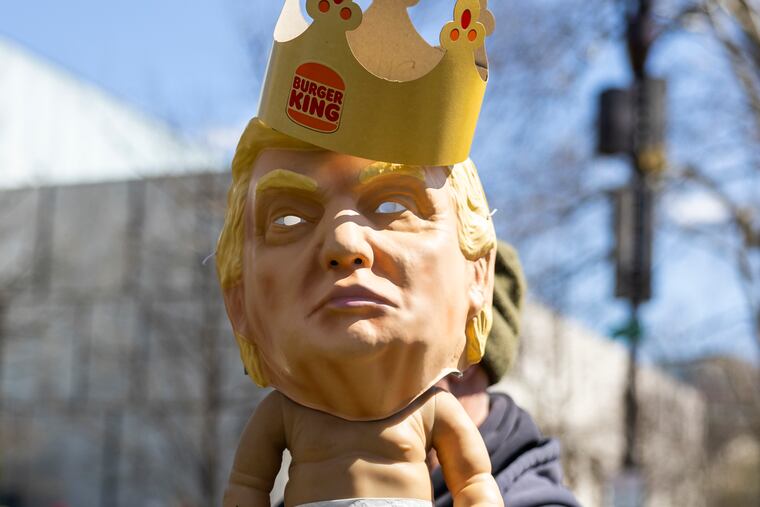
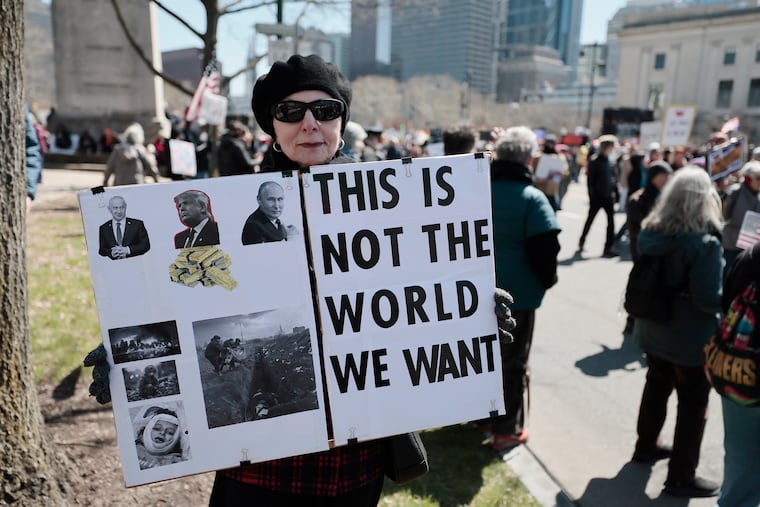
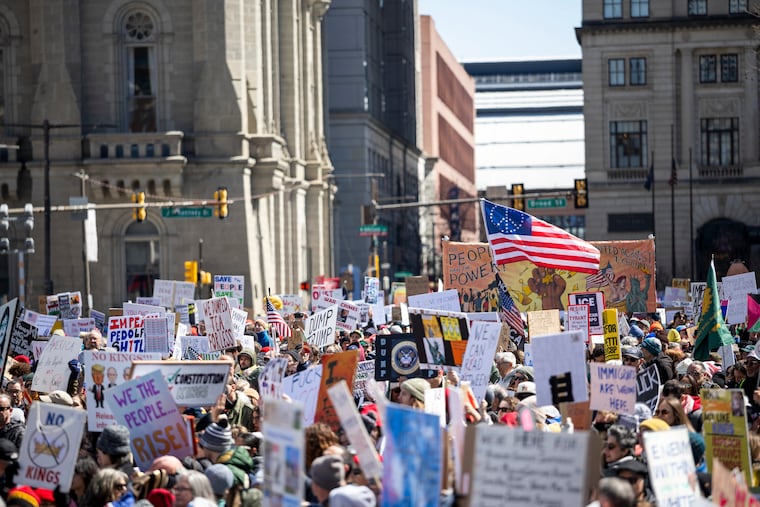
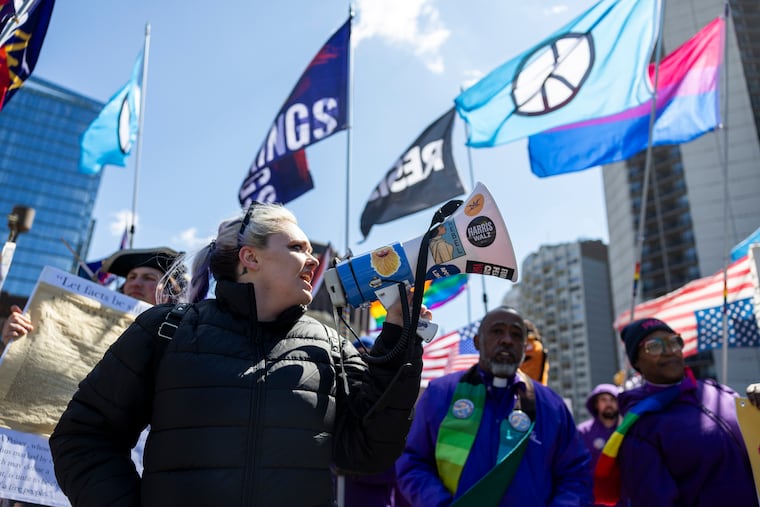
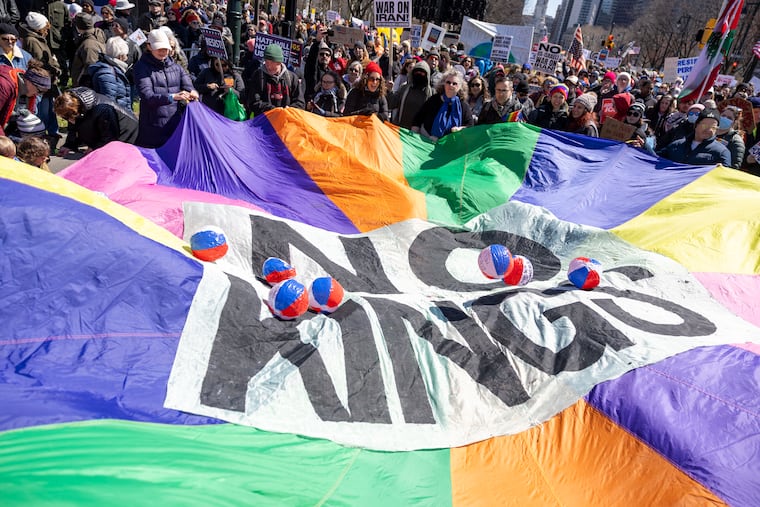
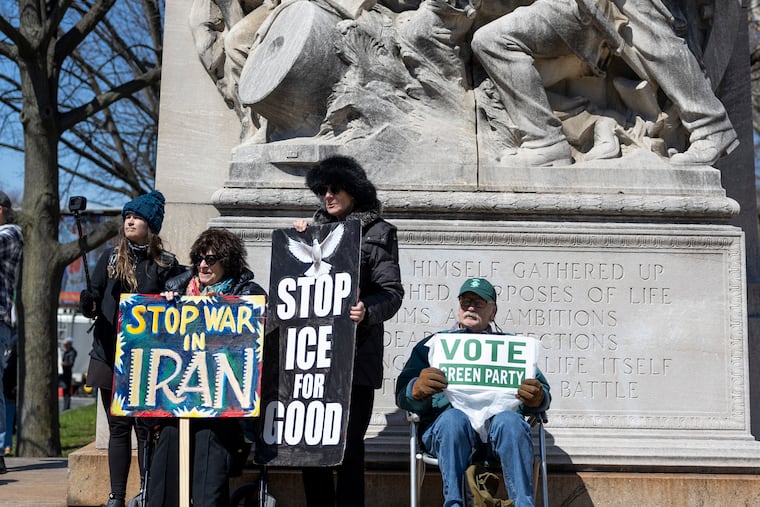
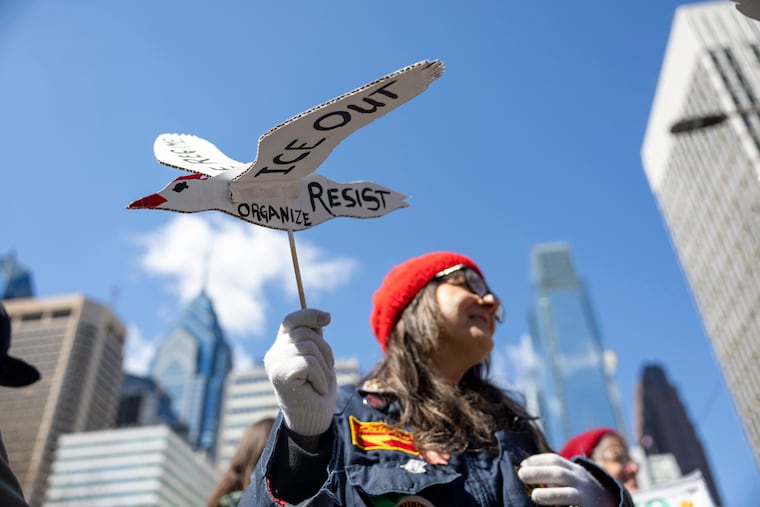
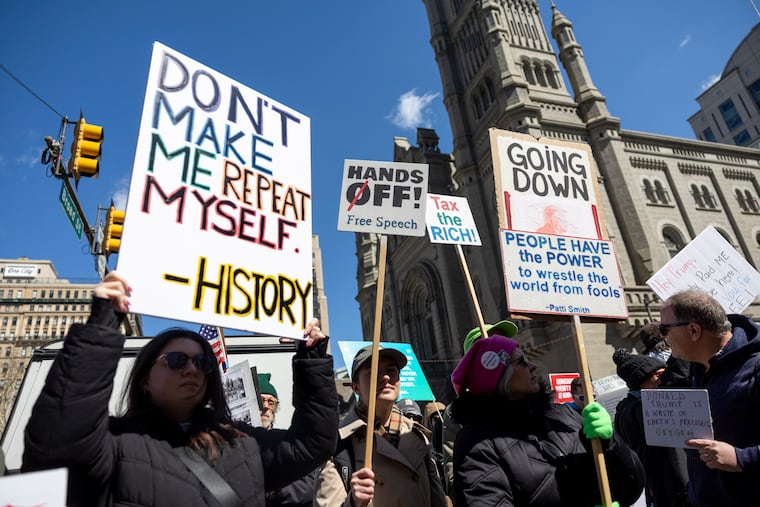
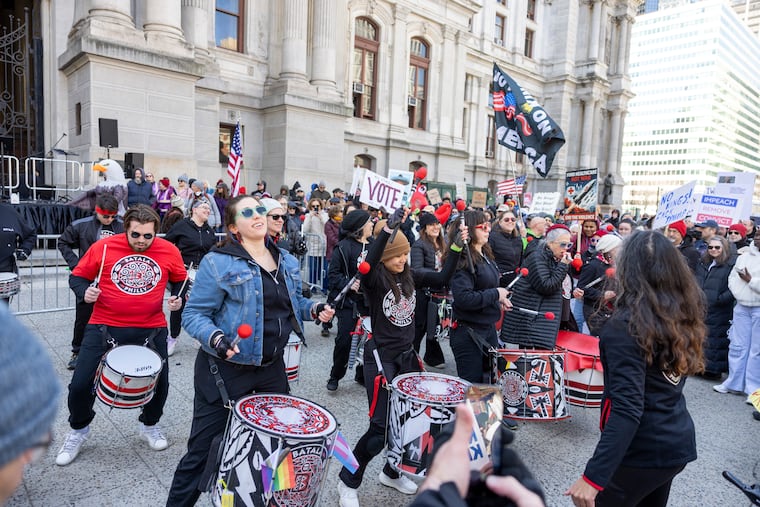
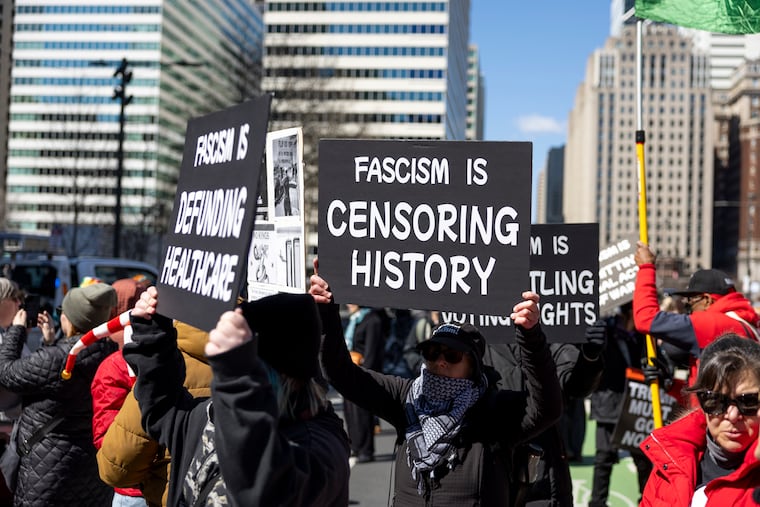
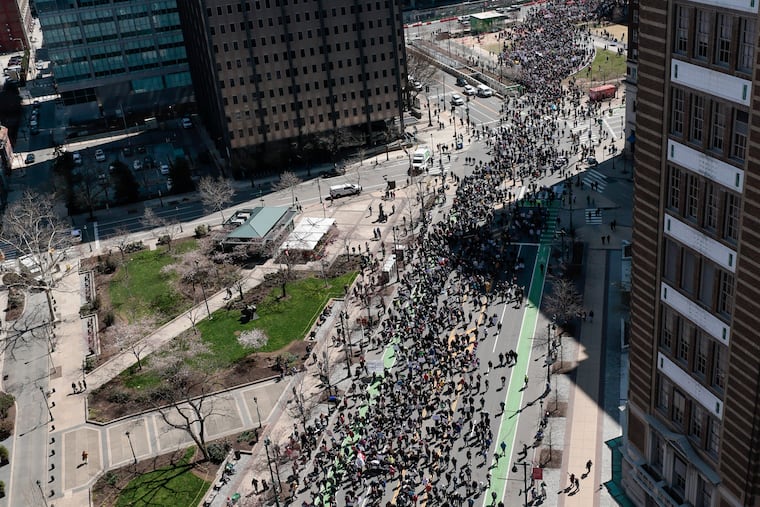
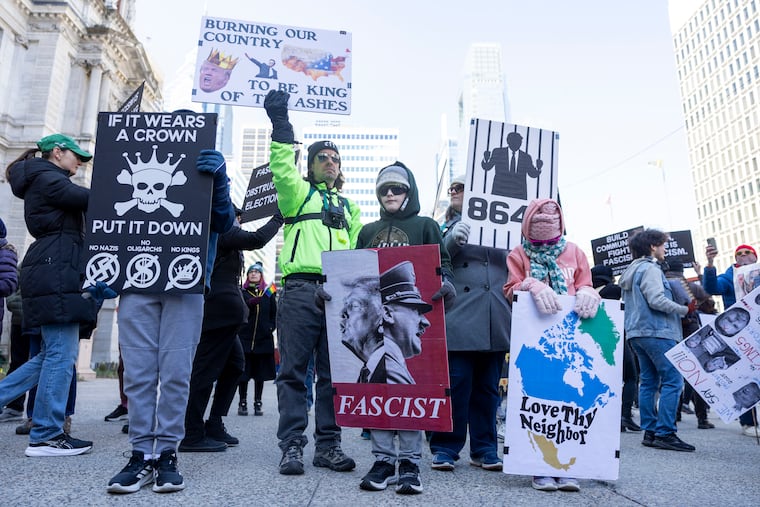
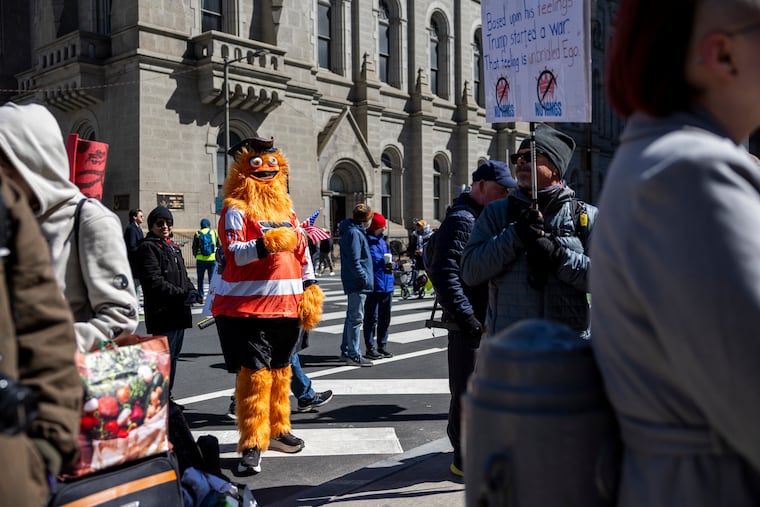
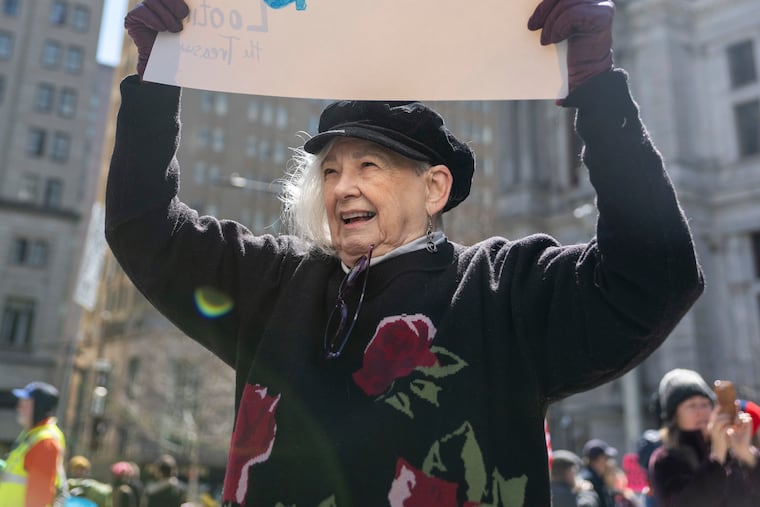
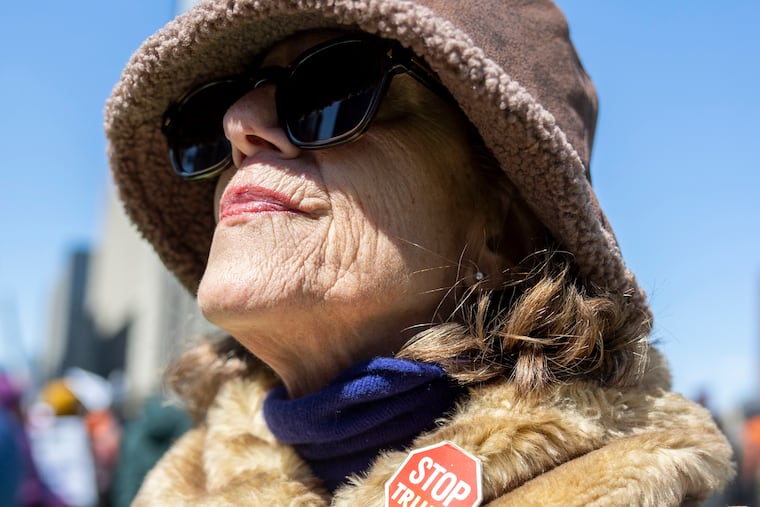
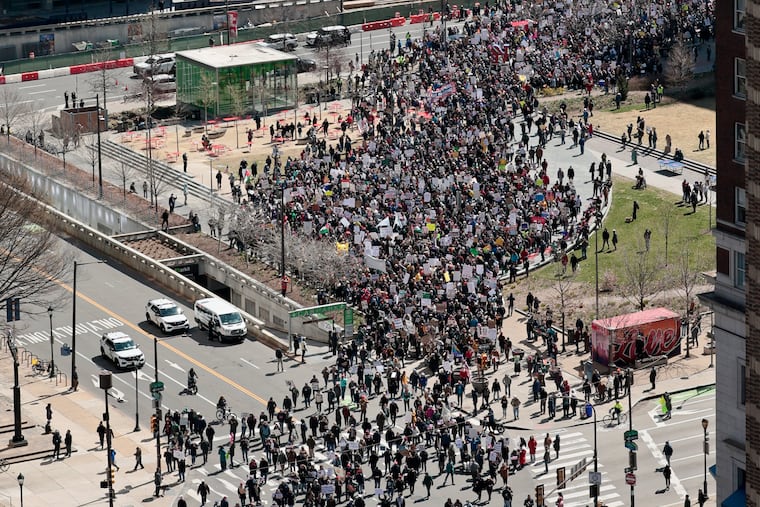
On a brisk March afternoon, chants reverberated throughout Center City, drums beat in time, and homemade signs swung as participants marched down the Ben Franklin Parkway.
Near City Hall’s north entrance, Meoshe McQueen unfurled a large American flag, a tribute to her father, she said, who served as an airman in World War II.
“My father fought for equality and justice,” the North Philly native said. “The world we live in today threatens that. We want fairness, regardless of a person’s color, creed, or race. None of that matters.”
More than 3,100 No Kings events were planned Saturday, spanning every state and most continents, according to organizers, who expected historic turnout. The movement’s flagship event was being held in Minnesota, an epicenter of resistance to Trump’s immigration crackdown and the site of two fatal shootings by federal agents. New Jersey’s own Bruce Springsteen performed his anti-ICE protest song, “Streets of Minneapolis," there.
“We need a world where kids can be safe, and not hauled off based on the color of their skin,” said Pamela Schott of Jenkintown, who held up a sign pleading for “peace and safety” for her grandchildren.
Energy was also building in pockets of the region where Trump has more political capital, and those who oppose the president feel their voices drowned out.
“I grew up in an America where I saw change for the good,” said Betsy Tucker of Bucks County. “Now, I’ve seen that change ripped away.”
Michelle Dupree, 67, was one of the first of roughly 150 people at the Northeast Philly No Kings rally at Bustleton Field. She had hoped more people would show up in the Northeast.
She was tired. But not defeated.
“It’s important to me,” she said, waving her sign for the modest, but steady stream of drivers, who registered their approval with a honk or three. “My knees hurt. My back hurts. It’s so frustrating to be at home and to watch the news — you want to scream. You want to be heard.”
Olivia Hayes was among a couple thousand ralliers in Ardmore. Hayes was cheered by reports of robust crowds at No Kings events in other suburban spots, like Wayne and nearby Havertown. For a few hours, at least, a sense of pride pierced the anger and hopelessness, she said.
“It’s great to see such a community,” she said. “When you’re in your day-to-day life, and not around so many people, it can be hard to have hope.”
Across the river, Camden hosted its first No Kings protest (previous events were held in Collingswood and Haddon Heights). The change in locale was driven by increased immigration enforcement and presence in the area, said Michele Messer, of Cooper River Indivisible. Camden city’s population is about 54% Hispanic, according to U.S. Census data. Last month, a nearby ICE operation made a group of Camden County fourth graders and fifth graders run away from a bus stop in a panic, according to the Lindenwold School District.
“We’re a united front,” she said, “no matter where you land on the political spectrum, we need to work together and build coalitions to fight back against what this administration continues to try to pile on us.
“And the stronger that fabric, the stronger we’ll be.”
In a statement to the Associated Press, the White House dismissed the nationwide protests as the product of “leftist funding networks” with little real public support.
Center City attendees said the sense of urgency is growing.
“We wanted to show our support for the movement,” Peter Maiolino said. “If we weren’t outraged last time, we definitely are now.
“Things have only gotten worse.”
In a video message to the crowd, U.S. Rep. Brendan Boyle — who was stuck in Washington, D.C., as congressional leaders haggle over the partial government shutdown, which has forced Transportation Security Administration employees to work for weeks without pay — encouraged people to continue their protest, even after the rally concluded.
“This is a fight we cannot lose, but we need to be crystal clear about what is that stake in this country,” Boyle (D., Philadelphia) said. “Our president is more concerned about building his ‘big beautiful ballroom’ than he is about the poor and working-class people in this country.”
Avenging The Ancestors Coalition (ATAC) leader and attorney Michael Coard echoed Boyle’s sentiments, calling the attendees “the revolution.” ATAC stewarded the President’s House Site on Independence Mall, a slavery memorial removed — and later partially restored by court order — in what some have called an attempt by the Trump administration to sanitize history.
“When I say fascism, I want you to know that I say it without hyperbole,” he said. “Today America is where Italy was in 1926, but we are not going to do the same. We are going to fight a good fight and we are going to win.”
The No Kings’ trajectory has been atypical compared to other social movements, where enthusiasm historically wanes over time, according to Billie Murray, an associate professor of communication at Villanova University. No Kings has, instead, gained momentum: Organizers say more than 5 million people took to the streets in June, followed by more than 7 million in October. Organizers projected 9 million people would participate Saturday.
“The issues don’t seem to be getting resolved,” Murray said, “people see that as a motivating factor — ‘We have to keep pushing, we have to keep trying, we have to keep organizing.’ … People aren’t seeing the change that they want to see.”
The Associated Press contributed to this article.
This article was updated to clarify the route of the march in Center City

