Trump signs executive action to pay TSA employees after Congress fails to agree on DHS funding
The Senate voted early Friday morning to fund much of the Department of Homeland Security, taking a step to reopen large parts of an agency that has been partially shut down for more than a month.
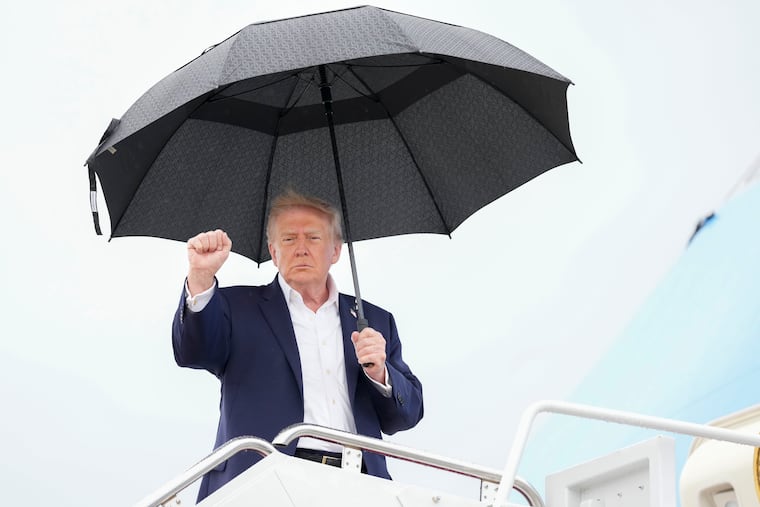
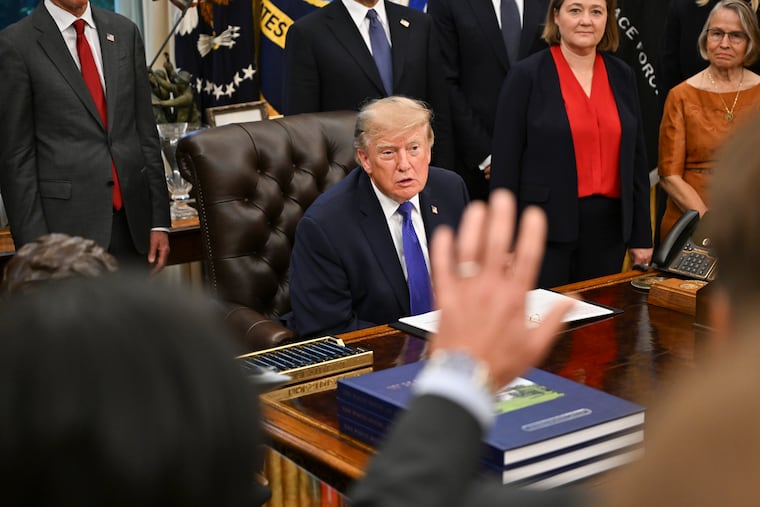
WASHINGTON — President Donald Trump on Friday signed a promised executive action that will pay Transportation Security Administration employees, after a deal that sought to do the same stalled in Congress.
Trump signed the action with an eye toward easing long security lines at many of the nation’s top airports.
“America’s air travel system has reached its breaking point,” Trump said in the memo authorizing the payments. He added, “I have determined that these circumstances constitute an emergency situation compromising the Nation’s security.”
Trump said his administration would use “funds that have a reasonable and logical nexus to TSA operations” for the payments.
In a statement Friday, Homeland Security Secretary Markwayne Mullin said TSA workers “should begin seeing paychecks as early as Monday.”
On Thursday night, as lawmakers grappled with the issue, a senior administration official said the money would come from the tax bill Trump signed last year. The official spoke on condition of anonymity because they weren’t authorized to discuss it publicly. They compared the move to actions Trump took during a past shutdown to pay troops.
House rejects bill passed by Senate
House Republicans are rejecting a Senate-passed bill to fund most of the Department of Homeland Security, a revolt that risks delaying a resolution to the funding impasse now in its 42nd day that has created long lines at many of the nation’s airports.
“This gambit that was done last night is a joke,” House Speaker Mike Johnson said Friday.
Johnson said that instead House Republicans would seek to pass a bill that would fund the entire department at current levels until May 22.
House Republicans are angry that the bill passed early Friday by the Senate does not fund Immigration and Customs Enforcement and Border Patrol. Democrats refused to fund those departments without changes to immigration enforcement practices.
“We’re going to do something different,” Johnson said, challenging the Senate to take up the House’s continuing resolution on Monday, assuming does pass the House, which is uncertain.
Senators have already left town after acting in the early morning hours to end the partial shutdown, so it would take time for them to return if the House ends up passing a different measure than the one that cleared the Senate in the early morning hours Friday.
That would mean the DHS shutdown that has jammed airports and imposed financial hardship on thousands of federal workers would continue for the foreseeable future.
With pressure mounting to resolve the 42-day stalemate over funding for Homeland Security, the endgame emerged in the final hours before TSA workers were to miss another paycheck. President Donald Trump said he would sign an order to immediately pay the TSA agents, saying he wanted to quickly stop the “Chaos at the Airports.” The deal did not include any of the restraints Democrats have demanded as they sought to rein in the Republican president’s mass deportation agenda.
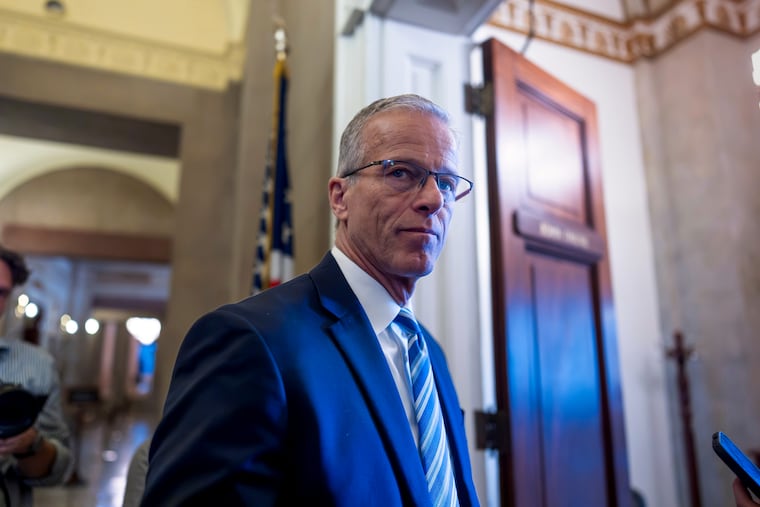
“We can get at least a lot of the government opened up again, and then we’ll go from there,” said Senate Majority Leader John Thune, (R., S.D.) “Obviously, we’ll still have some work ahead of us.”
Senate Democratic Leader Chuck Schumer of New York said the outcome could have been reached weeks ago, and he vowed that his party would continue fighting to ensure Trump’s “rogue” immigration operation “does not get more funding without serious reform.”
What’s in and out of the funding package
Senators worked through the night on the deal that would fund much of the rest of the department, including the Federal Emergency Management Agency, the Coast Guard and TSA, but without funding for Immigration and Customs Enforcement as well as the Border Patrol.
While Democrats were successful in blocking more funding for ICE and the Border Patrol, they did not get the new limits on immigration enforcement they were demanding. Immigration enforcement has remained largely uninterrupted by the shutdown because the GOP’s big tax cuts bill that Trump signed into law last year funneled billions of dollars in extra funds to DHS, including $75 billion for ICE operations.
Conservative Republicans have panned their own party’s proposals, demanding full funding for immigration operations. Many have vowed to ensure ICE has the resources it needs in the next budget package to carry out Trump’s agenda.
“We will fully fund ICE. That is what this fight is about,” Sen. Eric Schmitt, (R., Mo.) said. “The border is closing. The next task is deportation.”
On-again, off-again talks collapse
Earlier Thursday, Thune announced he had given a “last and final” offer to the Democrats. But as the day dragged on, action stalled out.
Democrats argued the GOP proposals have not gone far enough at putting guardrails on officers from ICE, Customs and Border Protection, and other federal agencies that are engaged in the immigration sweeps, particularly after the deaths of two Americans protesting the actions in Minneapolis.
They want federal agents to wear identification, remove their face masks and refrain from conducting raids around schools, churches or other sensitive places. Democrats have also pushed for an end of administrative warrants, insisting that judges sign off before agents search people’s homes or private spaces — something new Homeland Security Secretary Markwayne Mullin has said he is open to considering.
Trump had largely left the issue to Congress but warned he was ready to take action, threatening to send the National Guard to airports in addition to his deployment of ICE agents, who are now checking travelers’ IDs.
The White House had floated the extraordinary move of invoking a national emergency to pay the TSA agents, a politically and legally fraught approach. Instead, Trump’s order would pay TSA agents using money from his 2025 tax bill, according to a senior administration official who wasn’t authorized to discuss it publicly and spoke on the condition of anonymity.
If the Senate package is approved by the House and signed into law, the action Trump announced to pay TSA agents may be temporary or unneeded.
For the House to take up the bill Friday, lawmakers will have to overcome some procedural hurdles. Namely, a resolution establishing the terms for considering the bill will likely need some support from Democrats, but they were being cautious about their stance.
“It sounds like, at this point, this is exactly what we asked for, so I think it would be difficult to vote against that,” said Rep. Mike Thompson, (D., Calif.)
Airport lines grow as TSA workers endure hardships
The funding shutdown has resulted in travel delays and even warnings of airport closures as TSA workers missing paychecks stop going to work.
Multiple airports are experiencing greater than 40% call-out rates of TSA workers, and nearly 500 of the agency’s nearly 50,000 transportation security officers have quit during the shutdown. Nationwide on Wednesday, more than 11% of the TSA employees on the schedule missed work, according to DHS. That is more than 3,120 callouts.
Everett Kelley, the president of the American Federation of Government Employees, said the union is grateful the TSA workers will be paid but added Congress must stay in session to pass a deal “that funds DHS, pays all DHS workers, and keeps these vital agencies running.”
At George Bush Intercontinental Airport in Houston, Melissa Gates said she would not make her flight to Baton Rouge, Louisiana, after waiting more than 2½ hours and still not reaching the security checkpoint. She said no other flights were available until Friday.
“I should have just driven, right?” Gates said. “Five hours would have been hilarious next to this.”