South Philly will soon have a new path to the Delaware with the Washington Avenue Connector
With visible changes to the area, the Washington Avenue Connector is nearly complete.
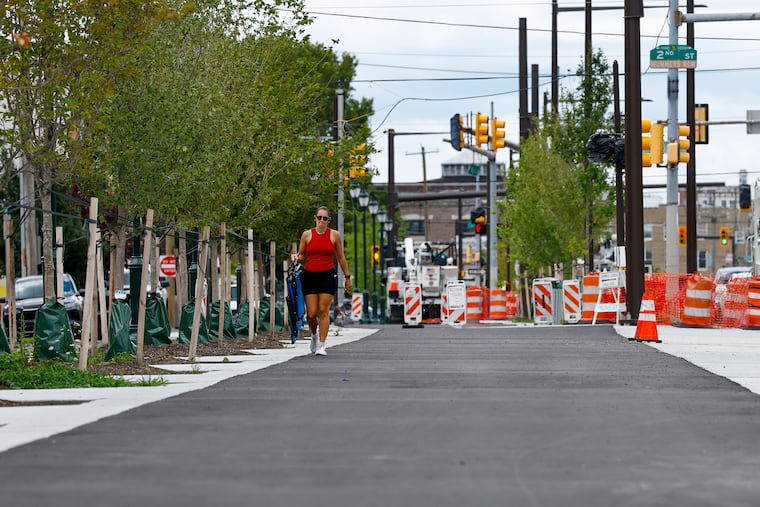
A new pedestrian and bicycle route connecting Jefferson Square Park to the Delaware River is expected to be completed this month, with the asphalt median largely in place and other construction continuing.
Along portions of the unfinished route, new plantings soften the expanse of pavement, offering an early glimpse of the connection planners hope to create: a path that makes the river feel less like the far side of a highway and more like part of the neighborhood.
For now, the stretch of Washington Avenue between the South Philadelphia neighborhood park and Columbus Boulevard remains an overwhelming landscape of asphalt and concrete, with a multilane roadway separating pedestrians from the riverfront trail to the east.
The Washington Avenue Connector is intended to change that. Plans from the Delaware River Waterfront Corp. and the City of Philadelphia call for a tree-lined route planted with seasonal flowers, a curb-separated shared-use path, and safer crossings to guide pedestrians and cyclists from Fourth Street to the Delaware River Trail. The $9.5 million project — funded by the city, the state, and grants provided to the waterfront corporation — is one piece of an ambitious plan to revitalize Philadelphia’s riverfront by making it more accessible to pedestrians and cyclists and encouraging investment by nearby businesses.
The connector is “meant to bridge this gap of the physical and psychological connection that I-95 created when it was built and sort of cut off certain neighborhoods from the waterfront,” said Joe Forkin, president and CEO of the Delaware River Waterfront Corp.
Although waterfront connector projects often extend only about a block, the Washington Avenue Connector will reach four blocks inland, extending to Jefferson Square Park and connecting the waterfront with nearby South Philadelphia homes and businesses.
The project is designed to transform the area not only aesthetically, but also by making it safer and easier to navigate on foot or by bicycle, said Lizzie Woods, senior vice president for strategic planning and real estate development at the Delaware River Waterfront Corp.
Designers had to contend with what Forkin described as “a crazy tangle of transportation infrastructure.”
From Race Street to Walnut Street, the highway creates a physical divide between the waterfront and Old City. Farther south, the barrier is less absolute but still discourages people from approaching the river.
“That’s where there’s more of a psychological barrier,” Forkin said. “You can get through it, you can approach the neighborhood and you can approach the waterfront, but it’s not always very welcoming to do so.”
Forkin pointed to the Race Street Connector, completed in 2016, as an example of how a redesigned route can change the way people move between a neighborhood and the river. He said he once rarely saw people turn to walk to the river. Today, he said, there is a steady flow of pedestrians between Old City and the waterfront.
The Washington Avenue project will create a curb-separated path along the south side of the road, running from Fourth Street to Columbus Boulevard and connecting directly with the Delaware River Trail. On the north side, a parking-protected bicycle lane will carry cyclists westbound and connect with improvements the city previously installed west of Fourth Street.
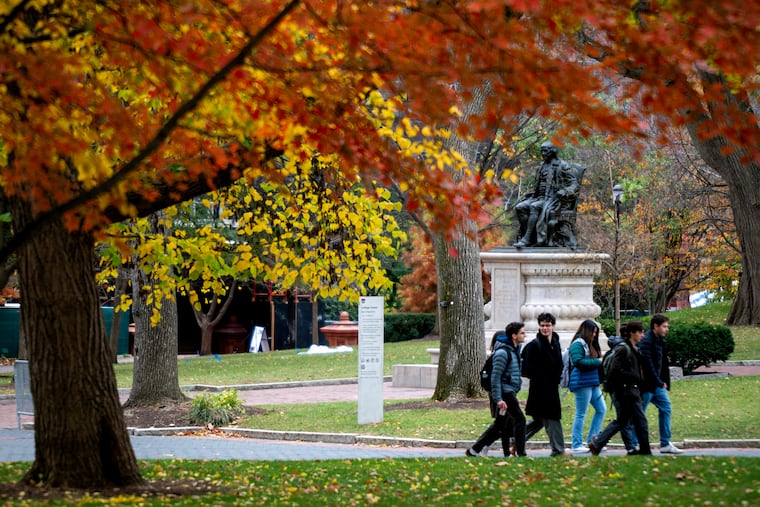
At Jefferson Square Park, the slip lane between Third and Fourth Streets will be closed and converted into a plaza intended to function as a “front porch” for the park. The project also includes curb extensions and pedestrian islands designed to shorten street crossings and give people a protected place to pause. By forcing turning vehicles to travel more slowly and make wider turns, planners say, the changes should improve pedestrian safety.
New traffic signals have been installed but are not yet operational between Fourth Street and Columbus Boulevard on Washington Avenue. The improvements are intended to make crossings clearer and safer while keeping vehicle traffic moving at a more consistent speed. A dedicated left-turn lane at Front Street and Washington Avenue will also address a longstanding request from the Pennsport community.
At Washington Avenue and Columbus Boulevard, another under-construction plaza will mark the entrance to the waterfront. Trees, flowers, and other plantings are meant to signal the transition from the city street to the river’s network of parks and trails.