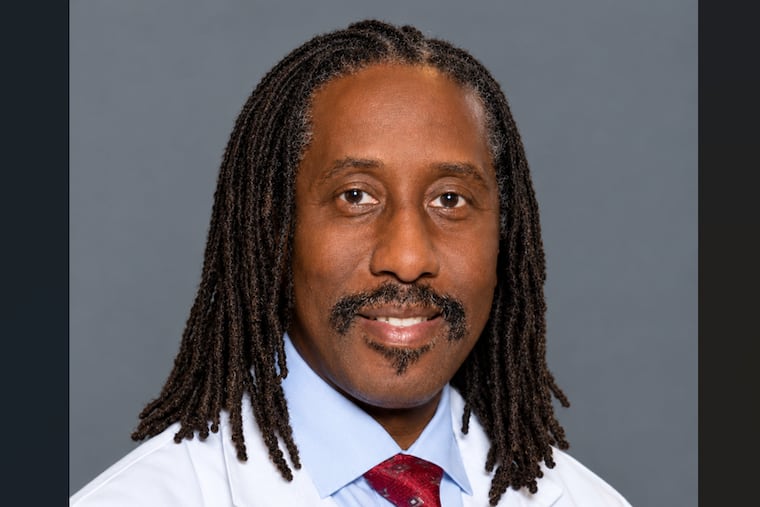
Benjamin W. Nero, celebrated groundbreaking Black orthodontist, has died at 89
He was the first Black graduate of the University of Kentucky College of Dentistry and one of the nation’s first Black orthodontists.

Benjamin W. Nero, 89, of Riverside Township, Burlington County, award-winning first Black graduate of the University of Kentucky College of Dentistry, first Black dental school graduate in Kentucky, first Black intern to complete the orthodontic residency at the old Albert Einstein Medical Center, author, mentor, education advocate, philanthropist, and star quarterback, died Sunday, Sept. 27, of complications from a stroke at an assisted living center in Voorhees.
In 1967, Dr. Nero became the first Black graduate at the Kentucky College of Dentistry and the first Black dental school graduate in the state. Three years later, he became the first Black intern to complete a challenging three-year residency at what is now Jefferson Einstein Philadelphia Hospital.
In 1971, he purchased a Center City practice from Knowlton Atterbeary,one of the nation’s few Black orthodontists, and spent the next 50 years peering into mouths, affixing braces, and counseling thousands of dental patients. Like Atterbeary, Dr. Nero was the area’s only Black orthodontist for years, and he treated three generations of several families.
“My daughter’s smile is attributed to Dr. Nero,” the mother of a former patient said online.
He also enjoyed mentoring other dentists and students, and, affable and engaging, even steered some of his patients into dental school. “I am honored to think that I provided some of the inspiration for them to pursue dentistry as a career,” he said in a 2019 interview with the Kentucky College of Dentistry.
Dr. Nero was a co-founder and onetime president of the New Era Dental Society, and he traveled to Haiti to provide dental care to underserved patients. In 2017, he won a Distinguished Alumni Award from the Kentucky College of Dentistry and was invited to lecture at what is now Kentucky State University as part of its Living Legends Series.
Alumni at the Kentucky College of Dentistry created the Dr. Benjamin Nero Student Inclusive Excellence Award and the Drs. Nero and Biggerstaff Diversity Scholarship Endowment. Jeffrey P. Okeson, dean of the College of Dentistry, called Dr. Nero “an enduring source of inspiration to many within our profession.” Dental school classmate Jack Frick said: “He has made this planet a better place for his family, his patients, his friends, and the community.”
» READ MORE: Dr. Nero's memoir is one by seniors with lessons worth sharing
Dr. Nero grew up picking cotton on a 51-acre farm in rural Mississippi. “I was the only guy in my class who hated for school to be out,” he told KUT-FM radio at the University of Texas at Austin in 2016. “As soon as school was out I had to go the cotton field.”
He was the star quarterback and captain of the high school football team, and he led his segregated squad to a state championship game. He went on to be a star quarterback at Kentucky State and earned a degree in biology.
He also earned a training camp tryout with the old Los Angeles Chargers pro football team in 1960. But he left the team, he said, after being told he couldn’t play quarterback because he was Black.
He co-authored his 194-page memoir, That’s the Way It Was, with local journalists Claude Lewis and John Timpane in 2016, and it detailed his family history from enslavement in the 1800s to modern America. Actor Morgan Freeman, a high school classmate in Mississippi, wrote the forward to the book, and director Pilar Timpane made an award-winning short documentary, A House for My Mother, in 2025 that was based on the book.
Dr. Nero said on Amazon.com: “I hope my story can serve as an inspiration for the younger generations to stay committed to their goals, never give up, and always strive to make the most of their talents.”
Dr. Nero’s book and career were featured in The Inquirer and other publications, and he appeared on a local TV show and at public speaking events. Friends called him “a special man” and “a noble spirit” in online tributes.
John Moore, a fellow graduate of the Kentucky College of Dentistry, said: “I have always thought that it is too bad that there aren’t more people in the world like Ben.”
Benjamin Williamson Nero was born Aug. 24, 1937, in Greenwood, Miss. His father taught Sunday School, and Dr. Nero embraced his own faith, took on student leadership roles at Broad Street High School, and graduated in 1956.
“He was one of the favorites of teachers,” Freeman said in A House for My Mother.
Dr. Nero studied chemistry and English as well as biology at Kentucky State. He acted in college theatrical productions and was active in civil rights protests and other campus events.
He married Donita White, and they had a son, Benjamin Jr., and lived in Gladwyne. After a divorce, he married Noella Folkes, and they lived in Riverside Township. He had previously been married and divorced twice.
Dr. Nero enjoyed reading, traveling, and playing baseball, tennis, and golf with his son. He went to Eagles games for five decades and played baseball with Mike Schmidt and other Phillies at Dream Week workouts.
» READ MORE: Why did best-selling author Carol Saline email The Inquirer’s obit writer?
He was warm and modest, his family said, and had an appealing sense of humor. They said: “He viewed himself not as self-made but as the beneficiary of people who had loved, taught, challenged, and carried him.”
His son said: “He was the strongest, coolest, smartest man in the world. He was a student of life and loved to learn. He was the best. The best.”
In addition to his wife, son, and former wife, Dr. Nero is survived by other relatives. Four sisters and three brothers died earlier.
Services were held earlier.
Donations in his name may be made to the Drs. Nero and Biggerstaff Diversity Scholarship Endowment, Linda Epling, Director of Philanthropy, 770 Rose St., Lexington, Ky. 40536.