Jonathan Yardley, Pulitzer-winning book critic at Washington Post, dies at 87
Often described as prickly, acerbic, and curmudgeonly — terms he did not disavow — he had a blunt, plainspoken style that sometimes reached rhapsodic heights when he was moved by a book.
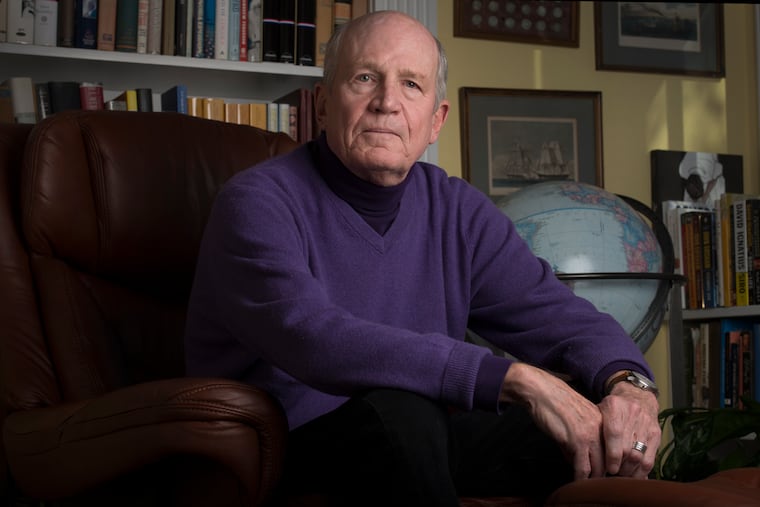
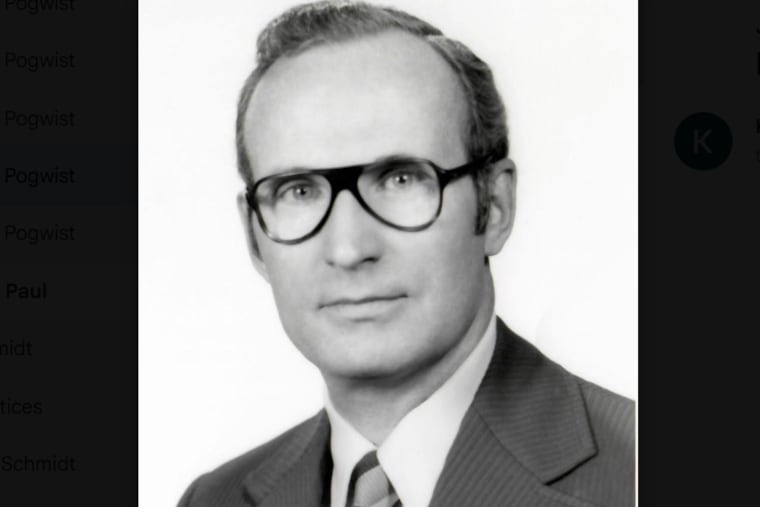
Jonathan Yardley, a Pulitzer Prize-winning book critic whose assertive and sometimes snappish reviews were a staple of the Washington Post for more than three decades, died Friday at 87 at an assisted-living facility in Washington, his son Jim Yardley confirmed.
Mr. Yardley considered himself a workaday journalist who approached the world of books with the vigor and practiced eye of a sports writer covering a ballgame. He wrote several books of his own, including literary biographies and an unsentimental memoir of his parents. But his most far-reaching impact came in the thousands of reviews he published in the Post and, before that, in the Washington Star and Miami Herald.
Often described as prickly, acerbic, and curmudgeonly — terms he did not disavow — Mr. Yardley had a blunt, plainspoken style that sometimes reached rhapsodic heights when he was moved by a book.
Not one to mince words, he believed that a critic who wrote only favorable reviews had no credibility.
“I have high literary standards and delight in the expression of strong opinion, literary and otherwise,” he wrote in his farewell column in 2014, “but I also read a book as if I were a reporter: looking for what it is ‘about’ in the deepest sense of the word, determining what matters about it and what doesn’t, trying to give the reader a feel for what it is like as well as passing judgment on it.”
For most of his 33 years at the Post, beginning in 1981, Mr. Yardley wrote two reviews a week, one for the Book World section on Sunday and another for Style. He also penned a wide-ranging column on politics and cultural affairs, with a title — “Prejudices” — borrowed from one of his journalistic heroes, the gruff and opinionated H.L. Mencken.
“Jonathan was a tough critic,” Donald E. Graham, the Post’s longtime publisher and chief executive, said in an interview for this obituary. “But when he praised a book, you could be sure that it was excellent. I owe him for many hours of reading pleasure.”
Mr. Yardley deplored the clubby worlds of New York publishing and faculty lounges, but his reviews were widely influential in helping shape the views of readers and writers in Washington and beyond.
He was an enthusiastic champion of novelists Peter Taylor, Anne Tyler, Edward P. Jones, and Michael Chabon, all of whom went on to receive the Pulitzer Prize for fiction.
In a glowing review of Chabon’s 1995 novel Wonder Boys, Mr. Yardley called Chabon “the young star of American letters” but added: “It is time for him to move on, to break away from the first person and explore larger worlds. His apprenticeship is done; it has been brilliant, but the books as yet unwritten are the ones in which we will learn just how far this singular writer can go.”
“When I read those words,” Chabon later wrote, “the hair stood up on the back of my neck, and it was at that moment that I decided to take a chance on this comic book novel I had been thinking about writing.” His “comic book novel” was The Amazing Adventures of Kavalier & Clay, which became a bestseller, won the Pulitzer Prize in 2001, and is now recognized as Chabon’s masterpiece.
Although he was based in the nation’s capital for most of his career, Mr. Yardley said that he had little interest in “politics and power,” the typical themes of the Washington novel. He often reviewed political memoirs and biographies in withering terms, memorably lambasting The Last Brother — Joe McGinniss’s 1993 biography of Sen. Edward M. Kennedy — as “a genuinely, unrelievedly rotten book, one without a single redeeming virtue.”
In 2005, Mr. Yardley charged former Sen. Bob Dole with “trying to climb aboard the highly lucrative ‘Greatest Generation’ bandwagon” with a memoir about his experiences in World War II, which Dole and his supporters had recounted “over and over and over again.” Dole responded, according to the Hill, by faxing a brief note to Yardley along with a copy of the review: “Some damn fool wrote this piece and attached your name to it.”
It was far from the only time one of Mr. Yardley’s reviews provoked an angry reaction. Author Pete Dexter, whose novel Paris Trout was excoriated by Mr. Yardley as being “almost entirely devoid of literary interest,” called him a “worn-out old whore” in a 2007 essay collection. And a longtime friendship with novelist Doris Grumbach was shaken by a public dispute over whether Mencken, whom Mr. Yardley had defended in print (with qualifications), was an antisemite.
Perhaps the most pointed response to one of Mr. Yardley’s reviews came in a Gucci gift box wrapped in gold ribbon, not long after he published a blistering critique of Washington writer Kitty Kelley’s 1981 biography of actor Elizabeth Taylor.
“Inside,” Mr. Yardley told Time magazine, “was a bag of fish heads and a postcard of Liz Taylor giving me the finger.” An enclosed card was signed, “From the friends of Kitty Kelley.”
A life in books
Jonathan Yardley, the oldest of four children, was born Oct. 27, 1939, in Pittsburgh. His father was an educator who became an Episcopal clergyman and the rector of Chatham Hall, a private girls school in Virginia. His mother managed the home and was a bookkeeper. Both were avid readers, with a collection of Trollope first editions and other rare books.
Both his parents traced their ancestry back to Jonathan Edwards, the 18th-century theologian for whom Mr. Yardley was named. He chronicled their marriage, and offered a broader social history of the American WASP, in his 1989 memoir Our Kind of People.
Mr. Yardley wrote that while the WASP ascendancy was ending, he was “proud of those from whom I am descended, and reluctant to see our kind of people reduced to mere caricature. So it is that the more I thought about my parents’ lives the more I became convinced that they represented traditions and beliefs deserving of praise rather than censure.”
Educated at boarding schools, he attended the Woodberry Forest School in Virginia before graduating from Groton in Massachusetts. He edited the student newspaper at the University of North Carolina at Chapel Hill, received a bachelor’s degree in 1961 and later spent a year at Harvard on a Nieman journalism fellowship.
Mr. Yardley launched his journalism career at the New York Times, working as an assistant to James Reston, the columnist and Washington bureau chief, before moving to the paper’s New York office to compile weekly news summaries.
At age 24, he became an editorial writer for the Greensboro Daily News in North Carolina, where he began to write and edit book reviews. He joined the Miami Herald in 1974, serving as the paper’s book editor and critic, and four years later moved to the Washington Star, a scrappy afternoon newspaper that folded not long after he won the 1981 Pulitzer Prize for criticism.
Mr. Yardley’s Pulitzer-winning reviews included pieces celebrating John Kennedy Toole’s novel A Confederacy of Dunces and Ronald Steel’s biography of journalist Walter Lippmann, which he called “a magisterial book: scrupulous, reflective, balanced, comprehensive, admiring yet never fawning.”
By then, Mr. Yardley was writing books of his own, beginning with a well-received 1977 biography of sports writer and humorist Ring Lardner. His other books included Misfit, a biography of author Frederick Exley; States of Mind, a travelogue about the Mid-Atlantic; and essay collections such as Second Reading, drawn from a Post series in which he reexamined literary works from the past.
Not all of those reconsiderations were warm strolls down memory lane. In his lacerating reappraisal of J.D. Salinger’s The Catcher in the Rye, Mr. Yardley mused, “Why do English teachers, whose responsibility is to teach good writing, repeatedly and reflexively require students to read a book as badly written as this one?”
Mr. Yardley’s marriages to Rosemary Roberts and Susan Hartt ended in divorce. In 1999, he married Marie Arana, a deputy editor at Book World who was later promoted to run the section.
He had two sons from his first marriage, William and Jim Yardley, who both became New York Times journalists. In addition to his sons and his wife, survivors include two step-children, Hilary Walsh and Adam Ward; two sisters; a brother; six grandchildren; and five step-grandchildren.
When he retired from the Post, stepping down after some 3,000 reviews, Mr. Yardley wrote that he was most looking forward to a life of reading “for pleasure rather than duty.” He said he wanted to give James Joyce’s Ulysses another shot (he had never been able to finish it) and revisit some of his favorites (P.G. Wodehouse, Peter Taylor).
“People long to be told stories,” he had written in 2002, explaining why he found books so endlessly rewarding. “The need is essential to human nature.”