After Villanova’s ‘cruel hoax,’ it’s time to treat swatting like the public safety threat it is
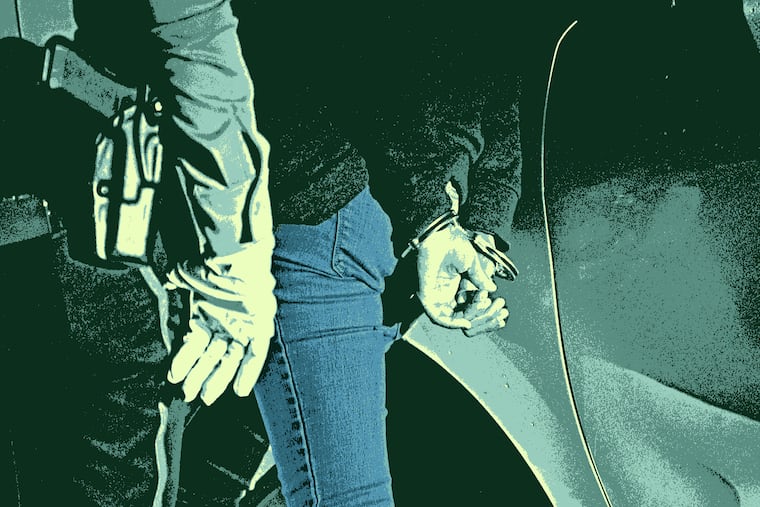
Swatting isn’t a prank. It’s a technology-enabled form of harassment that weaponizes 911 to terrorize targets, traumatize communities, and drain public resources.
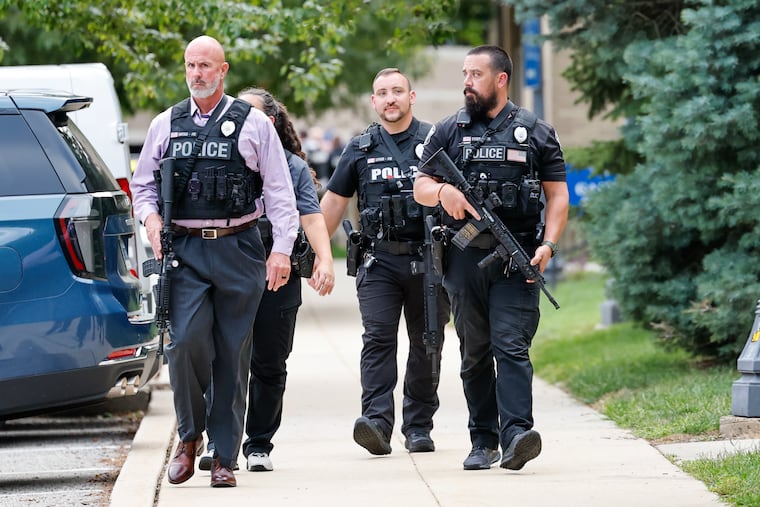
The swatting incident at Villanova University last week prompted students to barricade doors, shelter in place, and text their loved ones in fear — only for officials to confirm it was a “cruel hoax.”
Swatting isn’t a prank. It’s a technology-enabled form of harassment that weaponizes calling 911 to terrorize targets, traumatize communities, and drain public resources. And it’s getting worse.
Swatting is the deliberate, false reporting of a violent emergency to provoke an armed law enforcement response at a target’s home, school, or workplace. While it first took hold in online gaming circles, it now hits schools, synagogues, churches, and public institutions with chilling regularity.
The numbers tell the story: Incidents rose from an estimated 400 in 2011 to more than 1,000 in 2019. From January 2023 to June 2024 alone, more than 800 school swattings were recorded nationwide, and the FBI stood up a reporting database to help agencies track the problem.
These incidents are not victimless hoaxes; they create real danger. In Wichita, Kan., a 2017 swatting led to the fatal police shooting of a man who lived in the home where officers were sent; the caller was sentenced to 20 years in prison.
What Villanova experienced — the panic, the stampede of fear, the flood of officers — is exactly what swatters intend. As one expert put it, “We have to treat each one as real until we know it’s a hoax,” which diverts police from genuine emergencies and strains already thin resources.
Those costs are measured in both dollars and trauma: One city put a single swatting response at up to $25,000; another at $100,000. A researcher estimates false-threat responses cost tens of millions in a single year.
And the harms fall unevenly. Marginalized people — including women, people of color, LGBTQ people, Muslims, Jews — are often targets, and swatting is frequently part of broader campaigns of online hate and doxing. In 2023, an online swatting ring targeted at least 25 synagogues in 13 states before a juvenile suspect was arrested with considerable assistance from community partners, including my organization, the Anti-Defamation League.
We can do better. Here’s what law enforcement, government, and all of us as individuals can do, drawn from evidence-based recommendations:
Law enforcement: Train, track, and share information.
Improve training so officers and 911 call-takers can recognize common swatting patterns, mitigate risk in their approach, and support victims.
Treat swatting as its own crime category in local systems, and report incidents to the FBI’s mechanisms to improve national visibility and response coordination.
Partner proactively with community organizations and platforms to preserve evidence and identify perpetrators; recent cases show how collaboration speeds up results.
Lawmakers and government: Modernize statutes and fund solutions.
Strengthen laws to distinguish swatting from generic false-report statutes, set meaningful penalties, and clarify jurisdictional authority.
Invest in data and task forces. You can’t fix what you don’t measure; dedicated state and local efforts can close knowledge gaps and standardize response protocols.
Individuals: Practice rigorous online hygiene and preparedness. Swatting often rides alongside doxing. Reduce your risk surface.
Don’t post your home address, phone number, or real-time location; be mindful of photos that reveal house numbers or school names.
If you’re at higher risk (public-facing, targeted online), proactively notify your local police nonemergency line. Ask whether they maintain a swatting alert note for your address, and provide a preferred contact number so dispatch can attempt verification in parallel with response.
Document harassment and report threats promptly to platforms and law enforcement. Save URLs, time stamps, and screenshots to preserve evidence that can help unmask offenders.
Even though no lives were lost, what happened at Villanova on Thursday and again on Sunday is their own kind of tragic reality. On a day when students should have been celebrating the start of their school year at one of the country’s premier universities, the entire campus community had to be reminded of a grim truth our country is facing on a daily basis.
Scenes like this are a part of a national pattern, but it doesn’t have to be our new normal. Technology may enable anonymous cruelty, yet policy, training, and digital hygiene can blunt its impact. We owe it to students who hid under pews and to first responders racing toward danger to treat swatting as the public safety threat it is, by aligning our laws with the crime, equipping our agencies to respond smartly, and tightening our personal security online.
The next false call will come. Our response — faster, smarter, and grounded in prevention — can ensure the only thing that spreads is accountability, not fear.
Andrew Goretsky is the senior regional director for the Anti-Defamation League.