Physician attrition isn’t a result of lack of commitment
A congressman says medical schools should screen for students willing to practice for 25 years. But the real question is why medicine keeps losing the people most committed to serving.
When you live in the city of eds and meds, the ins and outs, ups and downs, successes and stumbles of the educational journey make a seasonal backdrop. Just as the sights and sounds of caps and gowns, family photos, and generational pride, joy, and accomplishment are in the air around us this time of year, the cycle of applications restarts.
And so, too, do requests for letters of recommendation. Being asked to write a letter of support for any of my students is an honor. It’s also a responsibility I don’t take lightly.
For those I’ve written to medical schools, the task feels even weightier. I only want the best future doctors, clinicians, and colleagues caring for patients. But I also want what is best for the students I have come to know and value.
For the first time this year, I caught myself almost trying to dissuade a student from applying to medical school. Not because they lacked ability or mission. But because they had the very qualities that make someone an extraordinary physician — intelligence, empathy, curiosity, selflessness, ethical centeredness, creativity, and a desire to serve.
The U.S. healthcare system can be punishing to people with those qualities. My inclination is to protect the students who may be at risk of experiencing the moral injury I have come to know.
The question in my mind is not whether they are good enough to be accepted into medical school. I now question whether the world of healthcare is worthy of them.
The understood pact
I am hard-pressed to think of another degree that immediately conveys demonstrated intelligence and accomplishment in the way a medical degree does. It transcends culture, ethnicity, and geography.
Beyond the respect and prestige, medicine used to offer a near-sacred promise, especially noted by first-generation and immigrant families: work hard, distinguish yourself among the best students nationally, endure the training, become a doctor, and you will have security, standing, and a life of meaningful contribution and fulfillment.
That bargain seems to have changed.
Misdiagnosis and politics
On May 19, U.S. Rep. Greg Murphy, a physician and congressman from North Carolina, responded to a study in the Permanente Journal looking at clinically inactive physicians for factors associated with their attrition. On X, Murphy issued an indictment of medical schools. He wrote that anyone unwilling to commit to clinical practice for 20-25 years should not be in medicine.
To be clear, the physician shortage is real.
A year ago, almost to the day, on May 20, 2025, Murphy introduced legislation to ban DEI in medical schools — the Embracing anti-Discrimination, Unbiased Curricula, and Advancing Truth in Education (EDUCATE) Act. He and those who supported the legislation saw diversity, equity, and inclusion in medical school and the medical profession as “discrimination,” “politicization,” and “woke ideology.”
» READ MORE: Femtech has emerged as both a corrective and a catalyst to close the knowledge gap in medicine | Opinion
Murphy’s EDUCATE legislation frames increased diversity as a threat to merit and excellence, and his recent X post suggests physician attrition is a failure of admissions screening. Together, his position seems to be that the wrong people are being let into medicine and that this is the key cause of healthcare’s attrition crisis.
It shows Murphy’s lack of awareness of the current realities of healthcare. To tell anyone that they must commit to decades of full-time practice without scrutinizing the systems dictating that practice is not workforce planning — it is a coerced loyalty oath. There are harsh truths we in Philadelphia know well.
From Hahnemann/Drexel, to Jennersville and Brandywine Hospitals of Tower Health, to Crozier Health System, we have been witnesses to the closures and collapse of hospitals and entire systems because of poor leadership, incompetent management, and systems-dismantling by private equity. We may be watching this process unfold in real time at Our Lady of Lourdes in Camden.
At no point was this failure one of commitment or dedication from the impacted trainees, physicians, clinicians, or caregivers.
Nurses, physicians, and support staff can do everything “right” and still be discarded by the institutions that once seemed permanent. Murphy chastises students for not committing to medicine for 25 years, but no academic institution, hospital system, corporate employer, or political leader is asked to commit 25 years to that student in return.
A curious distinction
I was serving on the board of trustees of the College of Physicians of Philadelphia when I left my position as associate professor in academic medicine. At one board meeting, a trustee turned to me: “What’s new? I heard you left.” Before I could answer, she turned to another trustee at the table, saying, “Women these days just aren’t as committed to medicine.”
In that moment, it became clear that “leaving” was called “leadership” for some and “a lack of commitment” for others.
Associate deans who no longer care for patients do not see themselves as having left clinical medicine.
Graduates of prestigious medical schools who use their MD as a credential to move into consulting, venture capital, insurance, or government aren’t usually judged on whether they were worthy of medical school admissions and a coveted seat — even if they didn’t finish residency training or get board certified.
“Leaving” and the attendant opprobrium are reserved for those who do the lion’s share of patient care and clinical work before they go.
Is this the new reality?
Doctors increasingly work inside systems designed by people far from the bedside.
Doctors are accountable for patient outcomes, patient satisfaction, documentation, throughput, billing, safety, and liability — yet, they have little control over staffing, scheduling, payer rules, hospital finances, closures, corporate strategy, or leadership decisions.
I’ve had a front-row view of all of these in the last 25 years.
Medicine wants the A+ student: the one who excels academically, volunteers, leads, researches, listens, and cares. The one who is a driven self-starter, adaptable, and gets tasks accomplished with minimal oversight or direction. But once on the other side of the years of education and training, agency and autonomy are stripped away. More and more, doctors are forced to be the face of, and the shock absorbers for, decisions they have no say in making.
We should focus on building a career trajectory that physicians can sustain and survive.
In the setting of AI in healthcare, the corporate practice of medicine, insurance-driven permissions and protocols, do we really need the best and brightest to spend nearly a decade in education and training, only to then treat them like cogs or widgets?
The selflessness, ethics, and humanity that make the best doctors are also the traits most likely to be wounded by a system that rewards productivity over presence, margins over missions, silence over candor, and institutional protection over accountability.
To be clear, the physician shortage is real. Emergency departments are full of people who turn to us when the next available appointment is months away. Entire swaths of rural areas have seen their hospital close or their doctors leave. Communities need doctors to care for them throughout their lives and particularly as they age.
The solution won’t come from a myopic focus on who we let into medical school. Instead, we should focus on building a career trajectory that physicians can sustain, survive — and ideally thrive.
Retention is not built by threatening the pipeline, but by addressing the leaks and reconfiguring the parts that are broken.
The people drawn to medicine for the right reasons will always exist. They are the ones who show up and step up. They teach, heal, listen, advocate, sit with families, mentor others, and build new paths when the old ones fail. And they are not easily dissuaded — from their goals, missions, values, or calling. When they are free to be the doctors their patients need, the rest of the hassles of the job feel bearable. If not, the hassles can feel insurmountable.
The silver lining is not that doctors will keep enduring anything simply because of their drive or values — nor should they. That is not hope; that is exploitation.
The silver lining is that medicine still attracts people who want to use their gifts in service of others. Our obligation is not to test how much harm they can withstand. It is to build a profession aligned with the values we claim to admire.
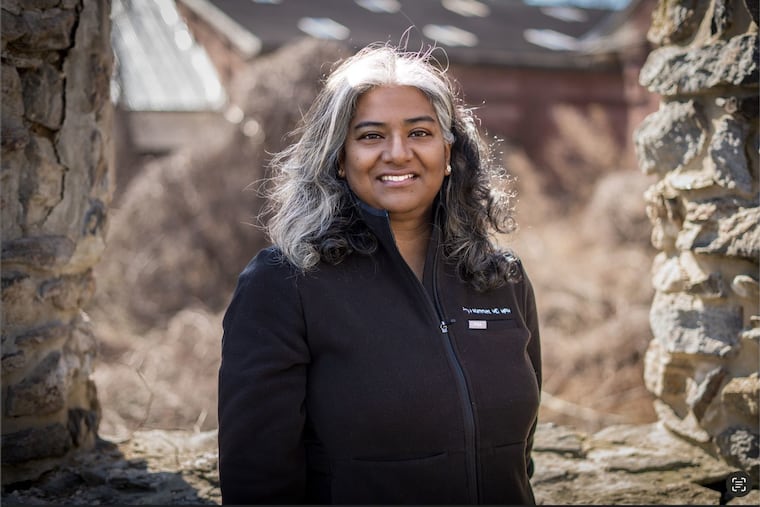
Priya E. Mammen is an emergency physician, healthcare executive, and public health specialist who helps the nation’s most impactful companies integrate clinical integrity at scale.

- How do you prove you’re American?
- We are at a generational inflection point in healthcare. It’s time for Gen X physicians to assert themselves as the stewards of our profession.
- Have we decided health is a perk?
- As our central source of scientific guidance loses credibility, other experts step up
- Who will write our history?

Inquirer Opinion Newsletter