I sued SEPTA to get them to restore routes and reverse service cuts. Here’s how I won.
I questioned the validity of SEPTA’s narrative — that the transit agency could not operate as normal without additional funding — given it had access to almost $400 million on hand.
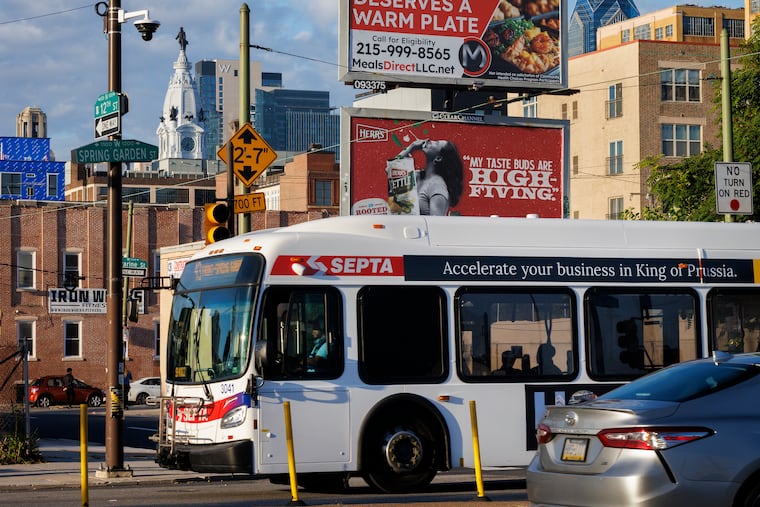
After months of gloomy predictions and weeks of uncertainty, SEPTA riders have finally received a bit of good news: canceled bus routes and other service cuts the transit agency put in place because of the budget stalemate in Harrisburg have been restored.
That means students will get to school, workers to jobs, patients to doctors’ appointments, and so on — all despite the transit agency’s warnings that if it did not receive the funding package it sought from state lawmakers, it would be forced to cut service by 20%, a debilitating blow to the roughly 700,000 riders who take SEPTA each day.
Even though a potential crisis has been averted, it’s worth asking how we came so close to the brink in the first place. The story is one of contradictory statements by SEPTA, Chicken Little-like predictions of transportation Armageddon by elected officials, and a pot of roughly $400 million that, for whatever reason, the transit agency refused to use.
As SEPTA’s self-imposed Aug. 14 deadline to impose service cuts approached, I confronted the agency’s leadership about possible alternatives. Having worked as a consumer advocate in our city for more than four decades, I was aware that agencies like SEPTA usually keep cash available in “rainy day” funds or reserve accounts.
During the public comment portion of the July meeting of SEPTA’s board, I asked the system’s leadership about the balance of one of those accounts — the service stabilization fund.
The response from a SEPTA staff member who was in attendance, Erik Johanson, the senior director of budgets and transformation, was shocking: $396 million.
Why then, I asked, wasn’t the agency using that money to fill the $213 million deficit that it said prompted it to decide to cut 32 bus routes and slash other services?
Board member Michael A. Carroll replied that SEPTA used that fund not for emergencies, but almost like a checking account, and that the agency did not consider it a fiscal best practice to spend down the balance.
I, for one, couldn’t think of a better best practice than SEPTA doing everything it could to avoid draconian cuts to a system that is relied upon by millions of people — many of whom, as residents of the second poorest big city in the nation, cannot realistically afford car ownership, or even the cost of taxis or ride-shares.
I was also troubled by what I saw as a disparity in SEPTA’s planned cuts — the brunt of the service changes seemed to fall heaviest on neighborhoods predominantly made up of people of color and those with low incomes, while riders of Regional Rail lines — who are typically white and have higher incomes — emerged relatively unscathed.
So, joined by two other public transit users, I sued SEPTA to reverse the cuts and help protect city riders.
Our suit alleged that SEPTA’s cuts were part of a political strategy that entailed needlessly making riders suffer in order to pressure the majority-Republican state Senate to pass a long-term funding bill. (The lawyer who filed the suit, George Bochetto, is a Republican.)
“SEPTA is using the safety and economic well-being of an entire region — SEPTA’s riders — as pawns,” our suit read. “The game is as simple as it is dangerous: concoct a fiscal crisis with a proposed budget full of false narratives and outright lies to the public, falsely claim SEPTA has no choice other than to implement drastic cuts to public transit services which millions of riders rely upon and an entire region utilizes as an economic engine, and then point to the legislators in Harrisburg as the villains who refuse to succumb to SEPTA’s desperate needs for increased funding.
“The problem is there is no fiscal crisis. SEPTA is making it up.”
In the Common Pleas Courtroom of Judge Sierra Thomas-Street last month, SEPTA officials acknowledged that some of their earlier statements had been contradictory.
SEPTA General Manager Scott A. Sauer, who for months repeated a claim that SEPTA was legally required to pass a balanced budget, acknowledged under oath that, in fact, there is no law or PennDot requirement that prohibits SEPTA from using available accounts for stopgap funding.
“We were saying that early on in the process,” Sauer testified regarding his comments about balanced budgets. “That was our understanding at the time. I have been since corrected in the spring.”
After hearing the SEPTA officials’ testimony, the judge ordered SEPTA to restore service and to stop all future cuts.
As is the usual practice in Common Pleas Court, Judge Thomas-Street’s decision was not accompanied by a written opinion that addressed the central claims in our suit. Nevertheless, it’s clear none of the cuts were required, despite SEPTA’s repeated claims that it had no choice.
Given SEPTA’s repeated, inconsistent public statements, it is hard to believe it could not have anticipated the devastation that service cuts would bring. Few challenged SEPTA’s unnecessarily dire fiscal narrative, a narrative that was repeated by elected officials, reporters, and editorial boards.
Yet, the unquestioning acceptance of SEPTA’s claims continues. SEPTA said it had a “structural deficit” of $213 million that it could close only by cutting service and raising fares. SEPTA is now getting an infusion of nearly $400 million, but fare hikes are still on the table.
The unquestioning acceptance of SEPTA’s claims continues.
State Sen. Vincent Hughes has been among the few voices demanding SEPTA stop the fare hikes. Scant other elected officials have asked why, if the agency has already received more money than it needed for this year, must it raise fares by another 21.5%, just after a 9% increase nine months ago?
Mayor Cherelle L. Parker and all the members of City Council should stand with Hughes and his demand for a rollback of the 21.5% fare hike.
While SEPTA will need more money and a permanent funding stream in the years ahead, it should not ever be allowed to leverage possible cuts to the system to achieve this needed goal.
We must all continue to hold SEPTA accountable for its fiscal management, its doublespeak, and its conflicting public statements. We must also ensure SEPTA never takes city riders to the brink of losing this vital public service again.
Lance Haver, a former director of consumer affairs for the city of Philadelphia, has been an advocate for consumers in the city for four decades.