Listen up, Democrats: African Americans are political moderates
Black voters, on the whole, are less liberal than white voters. So they’re also less inclined to vote for a self-described progressive like Chris Rabb.
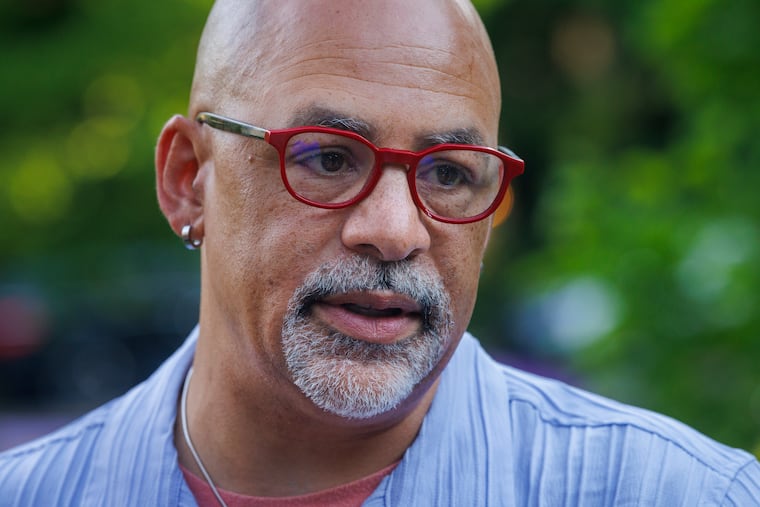
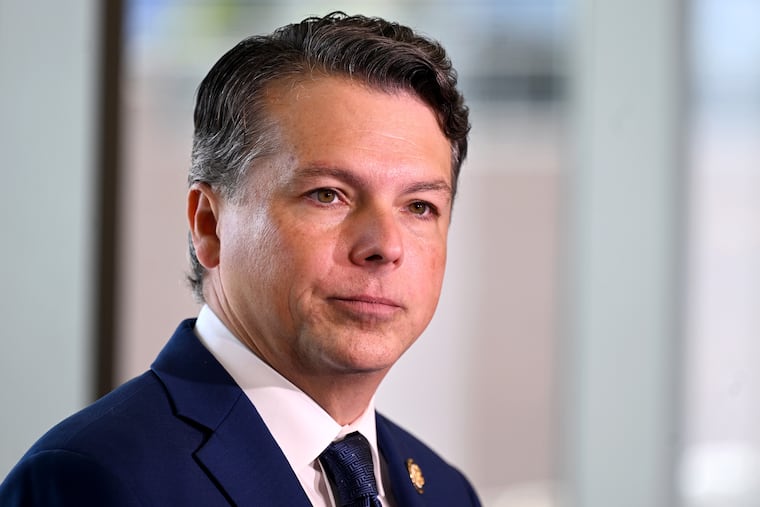
Last Tuesday, in the Democratic primary for Philadelphia’s 3rd Congressional District, I voted for Chris Rabb. But you might have guessed that already, because I’m a white guy.
Rabb dominated majority-white precincts in his victorious campaign. But he was outpolled in majority-Black districts by both of his opponents, Sharif Street and Ala Stanford.
Why?
You can’t attribute the outcome to race, because all three candidates are African American. The answer lies in a stubborn fact that too many white Democrats continue to ignore: Black voters, on the whole, are less liberal than we are. So they’re also less inclined to vote for a self-described progressive like Rabb.
And nobody likes a scold. Despite our paeans to “diversity,” liberals have too often displayed a finicky intolerance toward diverse perspectives. You can hear that in the way we try to change America’s vocabulary: good people say “unhoused” instead of homeless, “Latinx” rather than Latino or Latina.
That’s a great way to alienate political moderates, especially African Americans. In a 2019 survey, just 29% of Black Democrats described themselves as “liberal”; among white Democrats, 55% did. Meanwhile, nearly half of Black Democrats identified as “moderate.” If we don’t make space for a wider array of views, we will alienate a wide array of voters.
Take border security. In a 2022 poll, 63% of Black Democrats favored increasing border patrols on the U.S.-Mexico border; among white Democrats, 47% wanted the same. And 30% of Black respondents supported building a wall along the border, as opposed to 15% of white respondents.
That doesn’t mean the border wall is a good idea; personally, I think it’s a terrible one. But it’s also a mistake to dismiss anyone who supports it as an incorrigible bigot. Fifteen percent of African American voters cast their ballots for Donald Trump in 2024, up from 8% four years earlier. Do we really want that trend to continue?
Or consider U.S. Immigration and Customs Enforcement, which has led the way in the president’s mass deportation campaign. In a poll taken in January, after ICE agents killed the first of two protesters in Minnesota, 51% of white respondents said they were “very favorable” or “somewhat favorable” of abolishing the agency. Among African Americans, only 17% were very or somewhat favorable of that proposition.
And guess who supports abolishing ICE? Rabb. That puts him in league with white progressives, but in conflict with most Black voters.
If Democrats want to hold on to Black voters, we must listen to their concerns about safety.
Again, that doesn’t mean Rabb is wrong. There’s a strong case to be made for eliminating ICE. But most African Americans want to reform the agency instead of abolishing it. And we need to create room for them.
Then there’s the question of policing, which also reveals a big gap between white and nonwhite Democrats. In a 2022 Pew Charitable Trusts survey here in Philadelphia, a heavily Democratic city, about two-thirds of Black and Hispanic residents said we didn’t have enough police officers. Meanwhile, white respondents were more than twice as likely as Black people to say we have too many police.
The lesson is obvious. If Democrats want to hold on to Black voters, we must listen to their concerns about safety. Anything less will accelerate their exodus to the GOP, which has depicted Democrats as “soft on crime” for the past half-century.
We also need to acknowledge Black support for school choice, including vouchers. In a 2024 YouGov survey, about two-thirds of African Americans said their state should provide “school voucher subsidies for families to send their children to private or charter schools.” But fewer than one-third of white Democrats agreed with them.
Ditto for abortion, climate policy, and transgender rights: on all of these issues, and many others, African Americans and white liberals are miles apart. That’s why New York Mayor Zohran Mamdani — who calls himself a democratic socialist — struggled to attract Black voters. And it’s also why most African Americans in Philadelphia didn’t support Rabb.
My own politics are mostly in line with the liberals, which is why I voted for Rabb. And I’m not suggesting they need to alter their political positions or their fundamental values.
Instead, I’m pleading with them to show more tolerance for Democrats — especially African Americans — who disagree with them. The numbers don’t lie: Black voters cluster in the moderate wing of our party. The only question is whether we can create a big enough tent to retain them.
Jonathan Zimmerman teaches history and education at the University of Pennsylvania. He is the author of “Whose America?: Culture Wars in the Public Schools.”

- College should be more challenging, but Harvard’s cap on giving A’s teaches the wrong lesson about hard work
- Memo to Democrats: No more purity tests. (I’m looking at you, Chris Rabb.)
- At Penn, we’re all Jews now
- Why I agreed to debate conservative podcaster Steven Crowder — and why it didn’t happen
- Challenge the high school student group inspired by Charlie Kirk, but don’t censor it

Inquirer Opinion Newsletter