Chris Rabb’s path to victory in the U.S. House race ran through Northwest Philly and the progressive left
Rabb's geographic strengths, coupled with an internet-savvy campaign and a strong field operation, meant he surged at the end of the race.
As the results of Philadelphia’s highly contested congressional race began to trickle in Tuesday evening, politicos and casual observers alike were a bit surprised by the first batch of votes that encompassed residents who cast their ballots by mail.
For more than an hour after polls closed, State Rep. Chris Rabb — a progressive who gained momentum in the final days of the race — was in third place. Leading the field was Ala Stanford, a physician whose campaign had seemed to sputter in the final weeks.
But inside Rabb’s campaign, operatives were not worried. They drilled into the numbers, zooming in on Rabb’s home turf in the voter-rich Northwest Philadelphia. In the 50th Ward, the highest turnout slice of the city, Rabb was pulling nearly 40% of the vote.
That’s when Rabb’s campaign manager Alon Gur knew: “We won.”
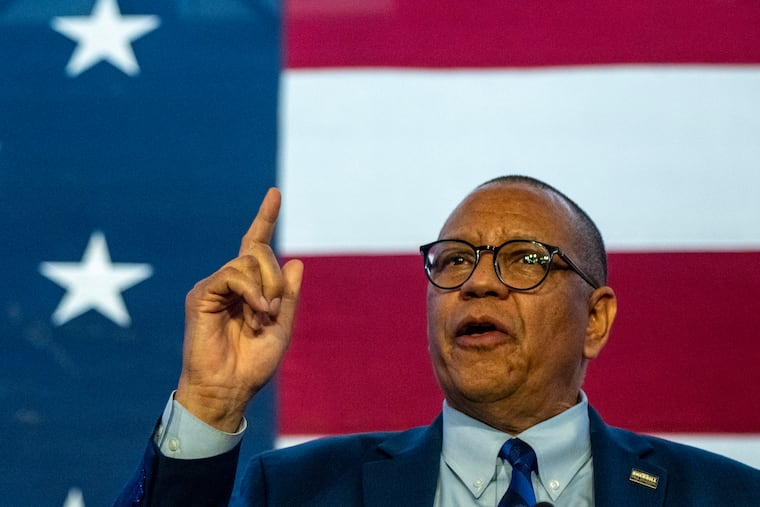
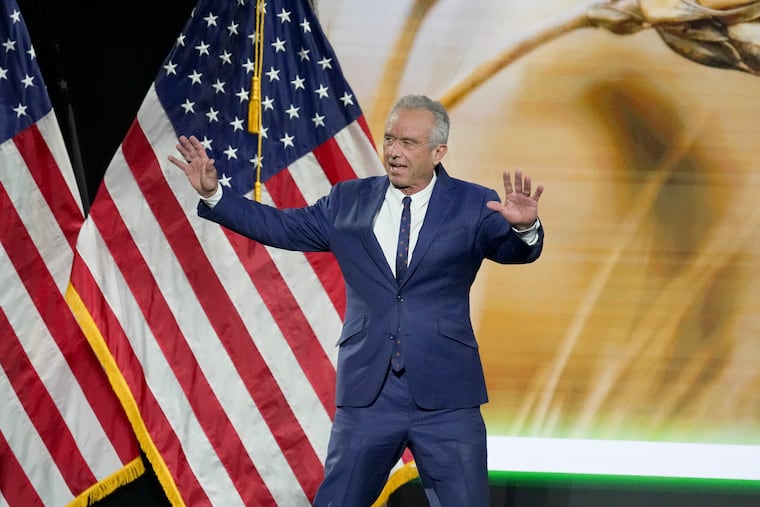
Two hours later, after dancing with supporters in a Germantown banquet hall, Rabb declared victory in the Democratic primary to represent Pennsylvania’s 3rd Congressional District, regarded as the bluest district in the nation, which includes about half of Philadelphia.
His win came in no small part because he performed well in Northwest Philadelphia, the city’s most dense pocket of typically pro-establishment Black voters, according to an Inquirer analysis of precinct-level results.
The campaign also ran up its totals by winning a large majority of the vote in wards that tend to back progressives.
» READ MORE: Chris Rabb’s election marked a big night for Philly progressives — and a rebuke of the Democratic establishment
His geographic strengths, coupled with an internet-savvy campaign and a strong field operation, meant Rabb surged at the end of the race. On top of that, he was boosted by more than $1.5 million in last-minute advertising and organizational support from a national left-leaning coalition.
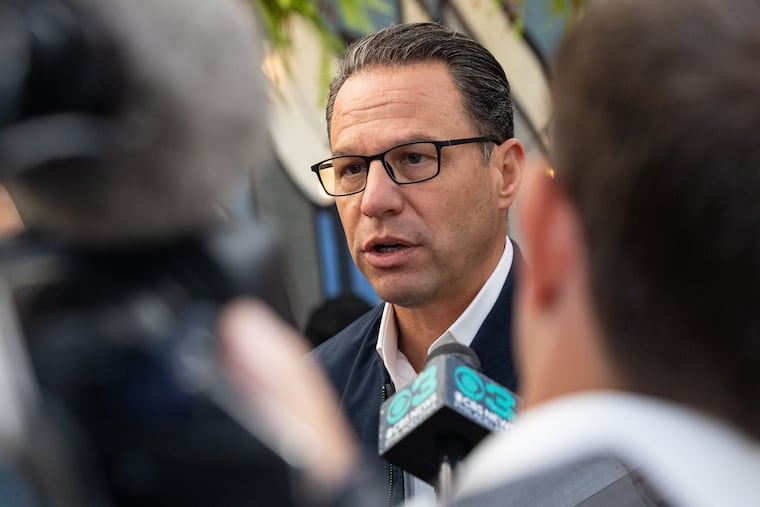
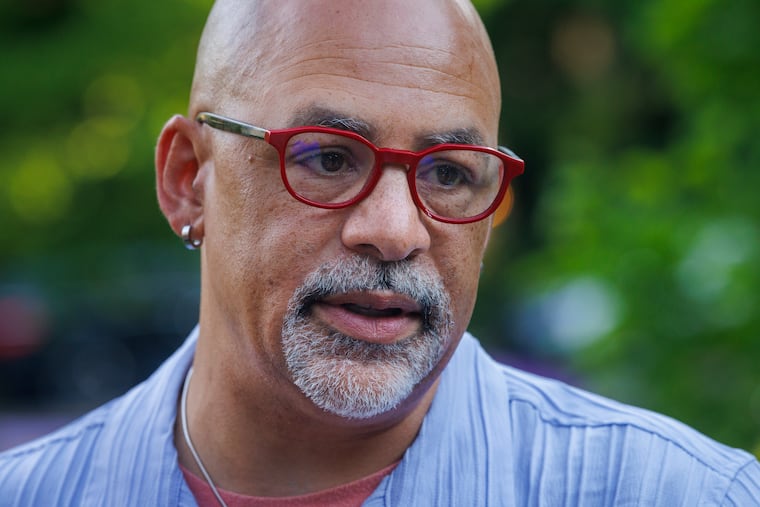
Rabb, in an interview Thursday at a picket line of nurses outside Jefferson Einstein Philadelphia Hospital, said he won because of “grassroots organizing.”
“It was mobilizing regular people who wanted to see their priorities, their values, reflected in a campaign that indicated that we need more than incremental change,” he said.
That helped him beat out his opponents, whose campaigns could not overcome the factors working in Rabb’s favor. Stanford was well-funded but drew negative attention for a series of gaffes. And State Sen. Sharif Street, who had the backing of Mayor Cherelle L. Parker and many of the city’s elected officials, did not have a strong presence on television, and his digital messaging did not reach as far as Rabb’s.
“Chris Rabb energized the base,” said Jack Inacker, a Democratic strategist based in Philadelphia. “He was the right candidate for the right moment. And he nailed it.”
The progressive left, Inacker added, “simply wanted it more and were able to deploy resources in a way that was effective and resonated with people.”
This is how the progressive insurgent pulled it off.
Rabb held his own across Northwest Philly
A five-term state lawmaker from East Mount Airy, Rabb won the primary with 44% of the vote. That amounted to roughly 65,000 votes. In the district, about 145,000 registered Democrats, or 32% of eligible voters, cast ballots.
But Rabb’s margin signaled a decisive win. Street captured 29.5% of the vote, while Stanford came in third with 24%. And with no Republican opponent in November, Rabb is all but guaranteed the congressional seat. The incumbent, U.S. Rep. Dwight Evans, is retiring after 10 years in the role.
Rabb dominated in the voter-rich corner of the city that he has represented in the state House since 2017.
Notably, he won in the 50th Ward, which is based in East Mount Airy and boasts some of the highest voter turnout in the city. Parker is the ward leader, and she ran up the score there in the 2023 mayoral race by winning more than 70% of the vote.
This year, the results in the storied ward were close. Rabb garnered about 35% of the vote, while Street took 33% and Stanford won 29%, according to unofficial returns.
» READ MORE: Philly neighborhoods fall into six groups of Democrats
Rabb won almost every precinct in other parts of Northwest Philly, including Chestnut Hill, Roxborough, and West Mount Airy. The area went almost exclusively for liberal former City Controller Rebecca Rhynhart and the progressive ex-City Councilmember Helen Gym in 2023.
“Chris Rabb represents one of the highest-turnout districts as a state representative, with a core of working-class Black folks who know him,” said Steve Paul, executive director of the progressive group One PA, which endorsed Rabb. “You cannot fake that kind of base.”
Rabb ran up the score in younger, whiter neighborhoods
Rabb pitched himself on the campaign trail as a “Black radical” — someone whose deep family roots in Philadelphia and American Black history inspired him to resist the political “status quo” and fight for something better.
Of the 24 wards that Rabb won, eight are majority-Black, according to The Inquirer’s analysis.
In the 768,000-person, mostly Black 3rd Congressional District, Rabb won 60% of the vote in precincts that are majority-white. He won 28% of the vote in majority-Black precincts, the fewest of the three major candidates, all of whom are Black.
The precincts that broke toward Rabb are also, on average, wealthier and more educated than the precincts that picked Street or Stanford, according to The Inquirer’s analysis.
He outperformed his district-wide average in higher-earning precincts — winning roughly three times as many votes in precincts where the median household income is $100,000 or higher. The same was true in areas where a quarter or more adults have a bachelor’s degree or higher.
“He is just a very sharp person,” R. Scott Hanson, a 57-year-old college professor, said while voting in Chestnut Hill. “He will do a lot of fighting to represent us in the best way possible, but he will also work for consensus.”
Street and Stanford performed better in the district’s majority-Black neighborhoods — areas from West to North Philadelphia that had helped lift Parker to victory. Those areas represented about 14,000 more total votes compared with majority-white precincts, but neither candidate was able to drum up the support that Rabb found in the other areas.
Street, the first Black chair of the Pennsylvania Democratic Party and the son of former Mayor John Street, won 41% of majority-Black districts. Stanford, whose campaign also tried to capture strong Black voter support after her work leading the city’s COVID-19 vaccinations for thousands of Black residents, won 30%.
A well-organized coalition blanketed the city
In many ways, Rabb was a beneficiary of progressive organizing that has been underway in Philadelphia since U.S. Sen. Bernie Sanders (Ind., Vt.) ran for president in 2016.
The organization Reclaim Philadelphia grew out of that movement, and it played a key role in lifting progressive prosecutor Larry Krasner to the district attorney’s office in 2017. Since then, Reclaim and a handful of allied organizations, including the labor-aligned Working Families Party and the Democratic Socialists of America, have installed leftists in the state House, the state Senate, and City Council.
The 2023 mayor’s race was a key test of the movement when it rallied behind Gym. But the former City Council member finished in third place behind Parker and Rhynhart, both of whom tacked closer to the political center.
At the time, progressives were somewhat fractured. But Inacker said there has been a maturation of the Philly left since then, and it is now in a place where it can compete with the Democratic City Committee, the party’s official organization.
“All of the lessons the left had learned about how to organize, while the city committee had for a long time wavered and had eroded, it came to pass,” he said.
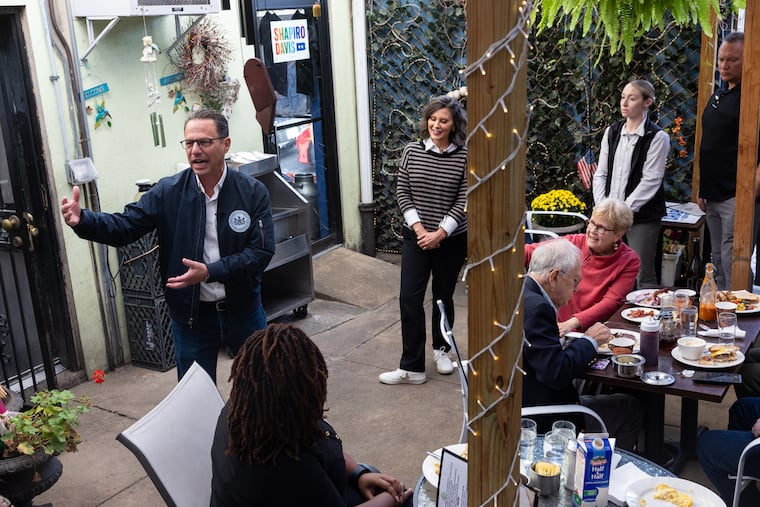
In this election, much of the coalition focused on so-called field organizing and canvassing. That included knocking on doors, handing out campaign literature, having conversations about the candidates, making phone calls, and encouraging people to vote.
Inacker said he spoke to Democratic voters who had heard three or four times from a representative of the Rabb campaign but had never heard directly from advocates for Street or Stanford.
All told, the Rabb campaign says, its coalition knocked on about 120,000 doors. It deployed an army of volunteers to talk with voters one-on-one, including sitting elected officials like U.S. Rep. Summer Lee, a progressive Democrat from Pittsburgh, and State Rep. Rick Krajewski, who hails from West Philly.
The campaign deployed specific groups to different pockets of the city where those organizations had an existing base.
“This is a real moment for the Philly grassroots movement,” Rabb said. “The organizations that have so long been rooted in this struggle came together in an unprecedented and unified way.”
The ideologically minded volunteers who powered Rabb’s coalition said they felt like they were part of something bigger.
Mitchell Donnelly, a 29-year-old woodworker from Kensington, celebrated at Rabb’s Tuesday night party while wearing a specialty baseball cap reading “Free Palestine,” but with the “P” in the style of the old-school Phillies logo.
“It feels like a real movement to be a part of,” said Donnelly, a Rabb volunteer who could not vote in the race because he does not live in the district. “I’ve canvassed quite a lot of campaigns. This is the first one that I truly feel very excited to come out for.”
Rabb had a modern digital strategy
After months of building momentum with younger voters — including through hosting events in the city with younger and national leftist figures like U.S. Rep. Alexandria Ocasio-Cortez (D., N.Y.) and influencer Hasan Piker — Rabb also won decisively on election day in areas of the city with high concentrations of voters age 35 or younger.
That may be because of the campaign and the coalition’s robust digital strategy.
On multiple occasions, videos of Rabb making quick, fiery statements during a community event or an interview went viral on X, Instagram, and TikTok.
That included several clips the campaign created and promoted of Rabb talking about the conflict in the Middle East, including publicly saying “F— AIPAC,” a reference to the American Israel Public Affairs Committee, the pro-Israel lobby.
» READ MORE: How the Middle East and the word 'genocide' became the defining issue of the Philly congressional race
The profane comment was amplified by left-leaning social media accounts and eventually drew the attention of Piker, whose controversial show on the streaming platform Twitch reaches millions of people daily.
In late April, Piker traveled to Philadelphia to rally with Rabb in West Philadelphia. It was an inflection point in the campaign, and some criticized Rabb for campaigning with Piker, who had made incendiary comments about Israel and U.S. foreign policy. But hundreds of supporters gathered to hear the pair speak, while more than 20,000 watched online.
The building of Rabb’s national brand accelerated, bringing with it small-dollar donations from around the country. In recent weeks, he sat for interviews with everyone from podcasters to preachers.
Nicholas Gavio, the Mid-Atlantic communications director for the Working Families Party, who worked directly with Rabb’s campaign, said the goal was to get Rabb “out there as much as we could.”
“We really found that he just wasn’t known, but as people learned about him, read about him, they really liked him,” Gavio said. “So that was part of the strategy of flooding the zone, having him do anything and everything.”
Gur added: “The core thing is doing what we can to get as much content as possible in the hopes of finding the viral moment.”
Rabb’s allied organizations also leveraged the power of influencers.
Paul, of One PA, said the organization has for the last two years partnered with content creators to help spread its message and reach young people. Some of those influencers posted videos about Rabb and his campaign.
Campaign finance records show that One PA’s federal political action committee paid individual influencers several hundred dollars for “social media consulting.” Paul said that the outlay amounts to a “small stipend” and that it is not payment in exchange for an endorsement.
He said that spending paled in comparison to what deep-pocketed super PACs spent on communications and digital infrastructure.
“Community groups,” Paul said, “will never be able to pay hundreds of thousands of dollars to a marketing firm to get our message out.”
Outsiders gave Rabb a last-minute push
For two months, Stanford ruled the airwaves, supported by a Washington-based super PAC that poured more than $3 million into an advertising campaign to support her.
But at the end of the campaign, a coalition of national progressive organizations came together to plow a combined $1 million into the race. They spent the money to run one ad repeatedly — a positive commercial featuring progressive Philly public officials repeating Rabb’s name and describing him as “the rabble-rouser.”
At roughly the same time those ads began, the super PAC backing Stanford pulled its commercials from the air. It meant that Rabb dominated television in the final week of the campaign, a time when many voters were just tuning in.
The progressive groups also funded a late digital ad that attacked Street for his involvement in a 2021 redistricting scheme that critics said benefited Republicans.
Gur said the late ads “absolutely helped” raise Rabb’s profile.
“Now he’s walking around Philly,” he said, “and people are like, ‘aren’t you Chris Rabb?’”
Even Rabb’s opponents recognized the impact. One Democratic strategist, who was aligned with a different candidate and spoke on the condition of anonymity, said the ads at the end of the campaign made a difference.
“The air support at the end with a million dollars that gave him the push he needed was executed flawlessly,” the strategist said.
Maurice Mitchell, the Working Families Party’s national director, said Rabb deserved credit as a “unique candidate” whom his organization was “happy to support on the outside, telling the story on the air, pushing back against the big money.”
“The Working Families Party,” he said, “proved that we can be competitive by getting on the air and telling our stories.”
Staff writers John Duchneskie and Michelle Myers contributed to this article.