Harrisburg just can’t quit the sketchy tax revenue from skill games
Lawmakers reluctant to raise taxes find it easier to bleed problem gamblers.
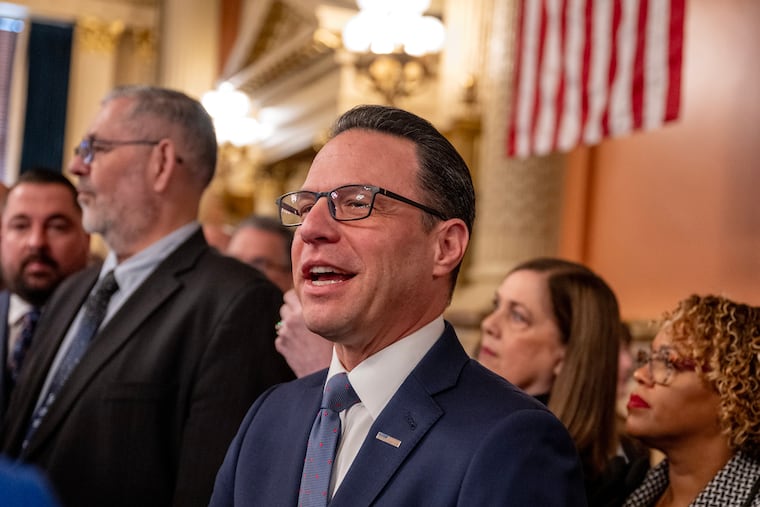
When Josh Shapiro first ran for state attorney general in 2016, I asked him during a meeting with The Inquirer Editorial Board what he thought about the spread of legalized gambling in Pennsylvania.
He gave a thoughtful and passionate response detailing the reasons why he hated gambling and thought it was bad public policy. It was music to my ears, which is why I still remember it nearly 10 years later.
So it is sad to see now-Gov. Shapiro roll out another state budget that proposes taxing skill games. For two decades, lawmakers in Harrisburg have turned to new ways to boost gambling tax revenues.
Funding the government with billions of dollars in gambling losses from individuals is beyond scuzzy. And of all the exploitative and predatory forms of gambling that exist, skill games are among the scuzziest.
Shapiro said as much years ago, but Harrisburg is hooked on gambling. It is a problem Shapiro inherited, but now he’s helping to fuel more gambling. Last year, Shapiro signed a bill designed to grow the lottery, and an agreement that allowed online poker players in Pennsylvania to compete with those in other states.
Here is why the gambling monster keeps growing: Gambling interests are among the biggest donors in Harrisburg and hold huge sway over lawmakers. Meanwhile, lawmakers reluctant to raise taxes find it easier to bleed more gamblers.
The latest golden goose is skill games.
Despite the name, there is not a lot of skill involved. The games are similar to slot machines, but only worse because of how they disproportionately target poor and working-class communities.
Like slots, skill games can be addictive. The Pennsylvania Council on Compulsive Gambling has received more than 400 calls about skill games since 2021, including from many already enrolled in casino self-exclusion programs, according to Josh Ercole, the gambling council’s executive director.
Skill games operate in a gray area. They are not taxed or regulated, but they have proliferated to nearly every corner of the state.
There are more than 70,000 skill game machines in Pennsylvania. They can be found in bars, restaurants, gas stations, truck stops, VFW halls, and even at the end of a food aisle in a convenience store. By comparison, Pennsylvania has about 25,000 slot machines in 17 casinos.
The tax rate on slot machine revenues is 54%. Shapiro proposed a 52% tax on skill game revenues, while Senate Republican leaders backed a plan to tax skill games at 35% of gross revenue.
It is mind-boggling that Harrisburg is trying to tax and regulate skill games after allowing them to spread across the state. If lawmakers cared about protecting vulnerable communities, a better policy would be to ban skill games. That is what Kentucky did in 2023.
But Harrisburg has long turned a blind eye to the unsavory aspects of gambling.
Some of the initial slots licenses were awarded to politically connected operators who had never run casinos, including one man who had pleaded guilty to fraud and was later charged with lying about ties to mob figures. The charges were dropped.
Meanwhile, skill games have been allowed to operate in the shadows, even as they attract crime that has led to killings and a recent police shooting. Philadelphia City Council banned skill games in 2024, but the court lifted the measure while it is on appeal.
Pace-O-Matic, the leading developer of skill games, spends millions of dollars lobbying lawmakers in Harrisburg. The company’s former compliance director, who was also an ex-state police corporal, recently pleaded guilty to accepting hundreds of thousands of dollars in kickbacks in return for quashing complaints about illegal gaming machines.
Despite the sleaze and legal trouble, Harrisburg remains addicted to gambling. Since 2004, the state has legalized more and more gambling, starting with slot machines, then adding table games in 2010, and online gambling, sports betting, and mini casinos in 2017.
Despite the sleaze and legal trouble, Harrisburg remains addicted to gambling.
Pennsylvania rakes in more tax revenue from gambling than any other state in the country. In the last fiscal year, Harrisburg collected a record $6.4 billion from gambling.
The state celebrates the record tax haul as if it were a public good. The sad reality is that people lost billions of dollars. State lawmakers helped make their constituents poorer.
Casinos add little value to the local economy. In fact, they subtract dollars that could be spent on other goods and services.
Las Vegas, at least, attracts tourists who spend money on other things. Most of the gambling losses in Pennsylvania come from locals. Few tourists plan getaways to the casino in Chester or King of Prussia.
But here is the worst part: The business model for all forms of gambling largely depends on addiction. Casual players are not the target audience.
Casinos actively try to lure customers back with incentives, from free meals to free play certificates. Slot machines, which generate the majority of profits for casinos, are designed to addict users, research professor Natasha Dow Schull found.
A study in Massachusetts found 90% of casino revenues came from problem and at-risk gamblers. The industry argues addiction rates are low, but that is for the general population, not the customer base.
Years ago, an executive at the Parx Casino in Bensalem boasted that many of its customers visited more than 200 times a year — or five times a week.
That is quaint compared with online gambling. Smartphones allow people to bet 24/7. Gambling sites are engineered with sophisticated and predatory techniques, including frequent notifications, designed to keep users betting.
This has resulted in a surge of addicted gamblers, including many young people. The rise in sports betting has led to efforts to fix games, which has tarnished the integrity of sports.
The Philadelphia region is the No. 1 market for online gambling companies, topping Las Vegas and New York. Since 2021, the number of calls about online gambling problems has increased 180% in Pennsylvania and 160% in New Jersey.
Harrisburg lawmakers are too busy counting the tax revenues and campaign contributions to consider the lives destroyed by legalized gambling.
Tragic stories abound.
» READ MORE: If ‘skill games’ cannot be banned, Harrisburg must act to regulate and tax | Editorial
An executive who helped run a large Black fraternity headquartered in Philadelphia pleaded guilty in 2022 to charges after embezzling nearly $3 million to fuel his gambling addiction.
That same year, a bookkeeper at the Delaware River Waterfront Corp. was sentenced to more than four years in prison for stealing more than $2.6 million to pay for her gambling addiction and trips.
A former judge in Chester County pleaded guilty in 2021 to stealing thousands of dollars in campaign funds to fuel a “six-figure” gambling habit at area casinos.
An attorney at a major Philadelphia firm who had a gambling problem was convicted in 2019 of stealing $100,000 from an 88-year-old client. A priest in Delaware County was sentenced to eight months in prison in 2018 after stealing $500,000 from a fund to care for aging priests that was used to cover gambling losses and pay for trips.
Most stories don’t make the police blotter, as thousands of other gamblers struggle in silence. Studies show that gambling problems lead to increased bankruptcies, suicide, and divorce.
The state Gaming Control Board website has a special section dedicated to the hundreds of people a year who leave their kids locked in cars or hotel rooms while they gamble for hours at a time. That is not entertainment; that is a problem.
Has anyone in Harrisburg ever wondered if the tax dollars are worth the harm?
Obviously, each person is responsible for their actions. But state lawmakers take an oath to protect the citizenry. Yet, they enabled the proliferation of gambling that has ruined many lives.
The same goes for the online sites and casinos that actively market to keep people gambling.
Just listing a toll-free number for people to call to get help is as disingenuous as the latest effort to tax predatory skill games.