Trump proposes illegal joint venture with Iran to toll ships going through Strait of Hormuz
The president’s behavior, vulgarity, threats to allies, and mishandling of the Iran war raise issues of mental competence.
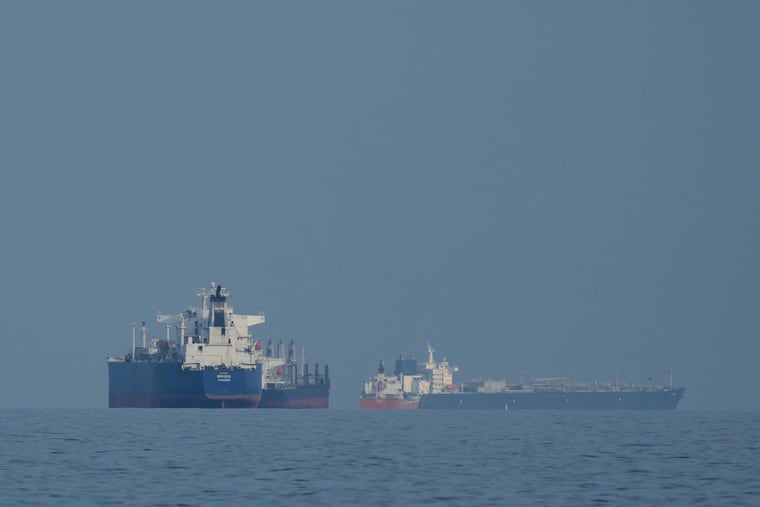
On Wednesday, ABC’s Jonathan Karl asked President Donald Trump if he was OK with the Iranians charging a toll for all ships that go through the Strait of Hormuz, the narrow Arab Gulf channel through which 20% of the world’s oil must travel to market.
By that time, the fate of the global economy was hanging on getting that narrow waterway opened. After Trump started his war with Iran, the Tehran government — for the very first time — had seized control of the strait and mostly shut it down. That is why U.S. gas prices at the pump have soared.
The president had threatened to wipe out Iran’s “whole civilization” unless it opened the strait by 8 p.m. Tuesday. He railed online, “Open the Fuckin’ Strait, you crazy bastards, or you’ll be living in Hell — JUST WATCH!”
About two hours before the deadline, clearly influenced by plunging markets and angry MAGA voters — and eager to rid himself of the Iran war burden — Trump suddenly agreed to a two-week ceasefire that left Iran still controlling the strait.
By the time he spoke with Karl, Trump was ready to green-light Iranian extortion of tolls from tankers so long as the U.S. shared in the take. “We’re thinking of doing it as a joint venture,” he said. “It’s a way of securing it — also securing it from lots of other people … It’s a beautiful thing.”
Nothing so clearly illustrates the madness of this Iran war, and that of its architect, Donald J. Trump, than his urge to profit from a strategic disaster. But the incompetence, geopolitical ignorance, and disconnect from reality that led the president to embark on this war are also putting America — and the U.S. economy — at great risk.
It’s hard to conceptualize the level of venality that would inspire Trump to imagine colluding with Iran in shaking down America’s close Arab partners.
“I don’t think he understands what he has been saying,” said Philip Wasielewski, director of the Foreign Policy Research Institute’s Center for the Study of Intelligence and Nontraditional Warfare and a 30-year veteran of the CIA and the Marine Corps. “We would become partners with Iran in the illegal charging for use of an international waterway. We would be extorting our own allies.
“This would reverberate not just in the Middle East, but in Asia. We would be setting an example for China in potentially blocking the Taiwan Strait. We cannot be coconspirators in extortion for the world’s oil.”
Don’t be so sure, under the presidency of Trump.
Even though the president is renowned for viewing foreign policy through the prism of financial deals and benefits, his bizarre take on Iran has our Gulf allies reeling.
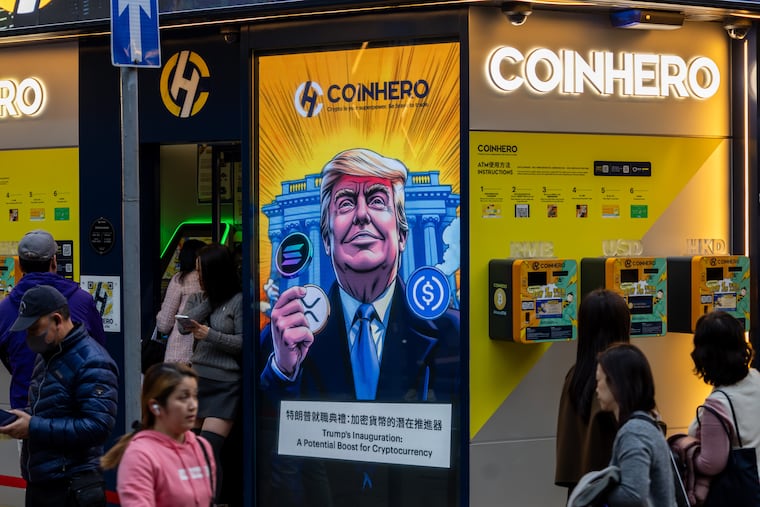
Their ire goes beyond the fact that Trump’s sons (and the son of special Iran negotiator Steve Witkoff) are all in the cryptocurrency business and could potentially benefit if Iran goes through with its pledge to charge tanker traffic $1 worth of cryptocurrency for each barrel of oil that passes through the strait.
» READ MORE: Iran looks likely to win strategically despite U.S. tactical military gains | Trudy Rubin
“Six weeks ago, the U.S. went to war supposedly to end Iran’s nuclear program,” the distinguished Lebanese journalist Hisham Melhem told me. “Now Trump talks about a joint venture with the regime in Tehran.”
Arab allies advised Trump against starting this war because they didn’t believe the Iranian regime could be toppled by airstrikes. They feared a wounded Iran would retaliate against them. This is just what happened, as Tehran targeted their oil and gas infrastructure with missiles and drones, even as Iran blocked them from exporting most of their oil.
“Iran remains down but not out,” said Melhem. “It has withstood U.S. and Israeli bombing for six weeks. It has retained 30% to 50% of its missile arsenal and thousands of drones, which are cheap to make. And Iran has a new weapon: control of the Strait of Hormuz.”
To remove the Iranians from control of the strait would take a massive new U.S. military commitment, which Arab allies doubt Trump is willing to consider because it would probably trap the U.S. in a quagmire. They fear he will make concessions to Iran in talks that will begin Saturday in Islamabad, Pakistan, and then simply declare victory. Meantime, they will be left with a militarily weakened but politically empowered Iran that has huge sway over their economic futures.
Yet, what has most shocked America’s allies is the behavior of a U.S. leader who seems to be veering out of control.
First, there are the sick threats by a POTUS who is blind to the impact U.S. presidential words have on the world around him. The genocidal calls about “wiping out” Iranian civilization, the vulgar curses, the gross insults to allied leaders don’t make him look strong in the eyes of friend and foe. They make him look crazy.
Such shameful self-indulgence foster speculation (as I heard at the Munich Security Conference in February) about Trump’s mental decline.
Second, there is the sheer recklessness and ignorance with which Trump undertook the Iran war, and the political incompetence with which the White House has handled it.
» READ MORE: White House rejection of Ukraine’s help to fight Iranian drones may cost U.S. military lives | Trudy Rubin
In the middle of nuclear negotiations with Iran in February, which Omani mediators said had made progress, Trump decided — after a talk with Israeli leader Benjamin Netanyahu — to embark on a war.
He based that decision on assumptions that he should have known were crazy if he had bothered to listen to any serious Iran expert — namely that an air war could topple the Iranian regime. But, of course, Trump says he only needs to check with his “own morality” and “his own mind.”
Neither Arab nor Asian nor NATO allies were consulted. Nor do they have any trust in the Trump team’s ability to negotiate a decent long-term deal with the prickly, difficult Iranians.
The president’s chief negotiator will be Vice President JD Vance, who has little foreign policy experience. He spent the last week not prepping for this tough assignment, but stumping in Budapest for Hungarian President Viktor Orbán, a four-term illiberal leader and MAGA darling who has curbed the courts, the press, and immigration. Vance’s top priority will no doubt be to please his boss and advance his 2028 presidential hopes, so it’s hard to expect much from the talks.
Moreover, Orbán looks likely to lose Sunday’s election, which would make Vance look particularly foolish. But he won’t be helped by the other negotiators, Trump’s real estate buddy Steve Witkoff and first son-in-law Jared Kushner. Neither has any expertise on Iran or nuclear issues. Both mistakenly believe complex political talks are no different from negotiating real estate deals.
If Trump’s primary goal is a speedy but dangerous exit, leaving Iran as a Hormuz toll collector, his team isn’t likely to put the brakes on. But neither is Tehran likely to share proceeds with Washington.
One thing is certain. “Life will not return to life before the last six weeks,” as Melhem told me.
Expect oil prices to stay high, the global economy to suffer, and the Mideast to remain unstable. Talks — if they don’t collapse — are likely to drag on, or end with more U.S. concessions to empowered Iranian hard-liners. The regime in Tehran may ultimately falter from internal rot, but not from a Trump victory.