Letters to the Editor | May 20, 2026
Inquirer readers on delivery robots in Center City and abolishing the Electoral College.
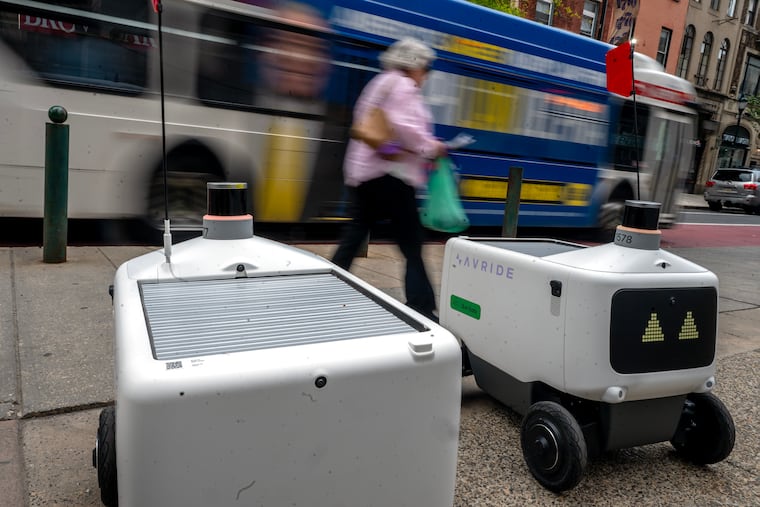
Delivery bots
It seems that, like them or not, the small, autonomous food delivery bots have arrived in Philly to stay. I have encountered several of them while walking Center City’s sidewalks, and although I have yet to see one vandalized or impeded, I have read of those events several times. While I understand some people’s aversion to them, one factor they provide is a plus: They seem to be reducing the number of reckless food delivery e-bike riders who carelessly speed down sidewalks and otherwise endanger both foot and vehicle traffic. I realize the bots may be taking away some delivery jobs, but since they actually seem to be generally safe, I suggest we coexist with them as peacefully as possible.
Ben Zuckerman, Philadelphia
Still not enough
I do not entirely agree with Sharif El-Mekki’s support of a new rideshare tax to fund public education in Philadelphia.
I believe, however, that it is important to note the irony of an educational lobbyist making nearly a quarter-million dollars per year saying that an additional tax in Philadelphia would not be a significant burden to low-income Philadelphians.
When the city passed the so-called 10% by-the-drink tax in 1995, City Council sold the idea by assuring us the proposed revenues this tax would yield would solve the school district’s financial woes, and usher in an Athenian-style golden age of education in Philadelphia. Then, something interesting happened. The tax passed, and given the fact that Philadelphia bar owners are more honest and better at math than City Council members, the tax not only reached the forecast amounts, but it brought in three times City Council‘s estimates. So how’s that “golden age” of education going? Three times the amount requested, and it still isn’t enough. Next came the sugary beverage tax. Now a rideshare tax?
Education is important and is clearly worthy of funding. But before another penny is taxed, the Philadelphia School District must undergo a complete, stem-to-stern, financial audit. The waste, fraud, and corruption within the school district is rampant. It is a greater impediment to effective education than class size and union contracts combined.
Audit the school district. There is already more than enough revenue to accomplish the mission.
Tom McCourt, Las Vegas
Last dairy farm
Jason Nark’s excellent article on Waldac Farms describes what has been playing out across the country for a century. More than anything, the conflict over land use is driven by an aversion to thinking of farming as a business. Traditionally, farms were places where families bonded and prioritized handiness, thrift, common sense, responsibility, and the rewards of physical work. No matter how advanced society gets, there is still a yearning to preserve not just rural vistas but also agrarian values.
It is easy to say farmland should be protected. It is hard to answer when farming is no longer a viable use of the land. The reality is that many farmers can no longer support their operations through production alone. Nothing goes back to the way it was, and farm decisions are always based on trade-offs. By incorporating an alternative use into his farm, Andrew Cadwallader is creating a future for agriculture.
Roxanne Christensen, Philadelphia
Respect the craft
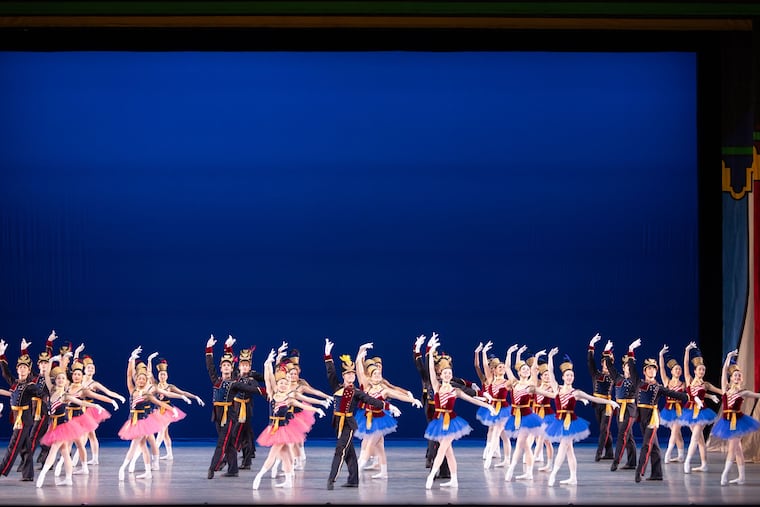
The recent article on Beatrice Jona Affron’s departure from the Philadelphia Ballet for the New York City Ballet was a much-deserved recognition of a Philadelphia cultural icon.
But I was surprised and troubled by the article’s reference to dancers as a “perishable commodity.” Ballet dancers are not fungible commodities. They are artists of extraordinary talent, elegance, and strength. They give everything to their craft, bringing their individual perspective, interpretation, and spirit.
Ballet careers do have physical limitations, but that is part of what makes dance so powerful. Watching a ballet performance, you know you are experiencing something incredibly special at a moment in time, and although a performance or a career ends, that experience stays with you forever.
Words matter. Dancers should not be referred to as products with an expiration date. They should be accorded the admiration and gratitude owed to artists whose talent and beauty enrich our lives and contribute to the very fabric of our community.
Joan Mazzotti, Haverford
The future is now
This rapidly approaching summer is on track to become one of the hottest ever recorded, and quite possibly the hottest ever. Still, some, including the president of this country, dismiss global warming as a hoax or a vague, distant worry. But climate scientists are saying, with increasing urgency, that the future is now. Rising temperatures and more extreme weather events are no longer theoretical; they are here now, and they are increasing in lethality.
In our dense urban centers, heat is a silent killer, especially for the elderly, the poor, and those with fragile health, and this is only the beginning. As the planet warms, vast regions may become uninhabitable. Extended, punishing heat waves will claim millions of lives across the globe. At the same time, climate change is fueling more extreme weather of every kind, including supercharged hurricanes, devastating tornadoes, catastrophic floods in some regions, and bone‑dry droughts in others.
Yet, instead of treating this crisis as the defining challenge of our time, we are pouring national energy and resources into developing artificial intelligence — technology that may be dazzling, but does nothing to cool a burning planet or protect vulnerable communities. We need to pressure our government to focus on the evolving emergency that is already here. Acting now is not only a moral obligation to those suffering today; it is a pledge to future generations that we did not look away, that we were willing to sacrifice convenience, complacency, and even some financial sacrifice to secure their survival. It’s the morally right thing to do. I mean, if rising temperatures don’t light a fire under us, what will?
Ken Derow, Swarthmore
Abolish the Electoral College
The Electoral College is a procedure that has always held my interest. It’s a process that authorizes the election of a president and vice president of the U.S.
The overwhelming majority of public officials in the U.S. are elected by popular vote. Not so for the president and vice president. If those candidates receive at least 270 electoral votes, they win. It is inconsequential if the opponent receives the most popular votes.
After some research, I learned that in U.S. history, four presidents were elected who did not have the majority of the popular vote. Most recently, George W. Bush in 2000 and Donald Trump in 2016. Hillary Clinton had three million more popular votes than Trump.
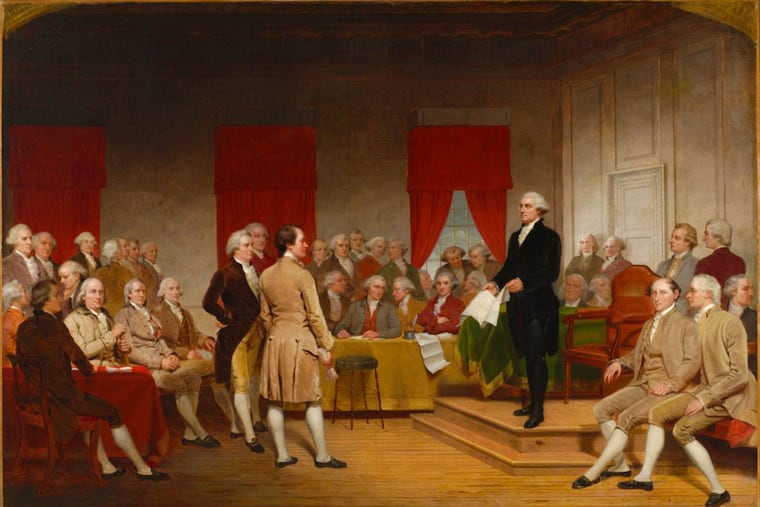
In 1787, the founders, after much debate, reached agreement on how a president and vice president should be chosen, e.g., the Electoral College. It was a compromise between electing the winners by popular vote or having Congress choose them. Essentially, we are voting for electors who certify and sanction the election results. I believe the Electoral College should be abolished. It is an undemocratic process, antiquated, and does not reflect the will of the people. Presidents and vice presidents should be chosen by a majority of voters.
Ed Vreeswyk, Yardville
Level with us
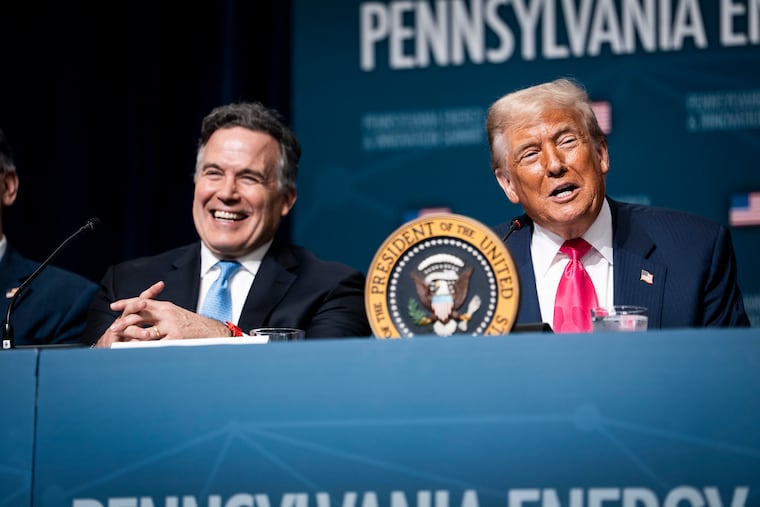
I was shocked by President Donald Trump’s recent cavalier dismissal of the economic impact of Operation Epic Fury on ordinary Americans. While Trump, Elon Musk, and the rest of their billionaire cohort have the financial resources to ride out economic rough patches, it’s blithe arrogance to assume the average American can endure the market shocks of this conflict in Iran.
Despite the gasconade from Trump and Defense Secretary Pete Hegseth, it is becoming apparent that this operation in Iran is bogged down. Dispassionate military assessments suggest Iran’s resilience has enabled it to recover its offensive capabilities. The Strait of Hormuz — a strategic choke point that should have been factored in before any missiles flew — is developing into a naval combat zone, while Iranian nuclear infrastructure is rumored to be largely intact.
The president and his administration must level with the American people and acknowledge that he has entered a conflict that will cost far more in money and lives than initially claimed. We may be waiting quite some time for prices to come down — let alone for the dawn of any Trumpian “golden age.”
Richard O’Connell, Philadelphia
Join the conversation: Send letters to letters@inquirer.com. Limit length to 150 words and include home address and day and evening phone number. Letters run in The Inquirer six days a week on the editorial pages and online.