The New Year’s resolutions that Philly’s boldfaced names should be making | Shackamaxon
As 2026 begins, here’s what folks in City Hall, Harrisburg, and everywhere in between should be focused on.

This week’s Shackamaxon column proposes some New Year’s resolutions for our state and local officials, and other boldfaced names.
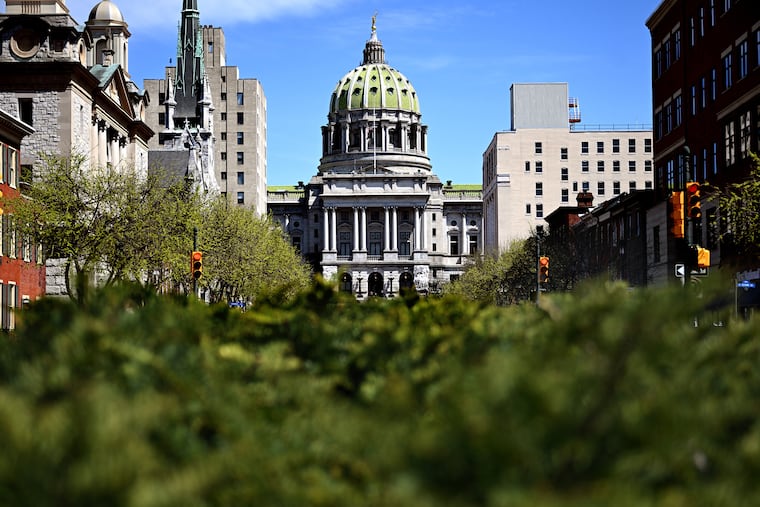
Gov. Josh Shapiro
Resolution: To put the horse before the cart. It’s hardly a secret that the Ambitious Abingtonian is eyeing a 2028 run for president. The governor participated in a deep profile written by the Atlantic’s Tim Alberta, one of the country’s preeminent presidential campaign reporters. New York Times opinion writer Binyamin Appelbaum labeled him “the future of the Democratic Party.” And, of course, Shapiro himself has a new book on the way. Given all the hubbub, you might forget that Shapiro actually has yet to win his bid for reelection this year. Until he accomplishes that goal, all the presidential talk is a waste of time.
Mayor Cherelle L. Parker
Resolution: To lower the drawbridge. The mayor began 2025 with the Sixers, Comcast, and the NBA pulling the rug out from under her by abandoning their plans for a Center City arena. Then she spelled Eagles “E-L-G-S-E-S” during a news conference, saw the city’s blue-collar municipal union go on strike for the first time in decades, and ended the year with City Council seeking to alter her Housing Opportunities Made Easy plan.
Despite this, Parker can point to important successes. Crime rates continue to decline: The city has posted the lowest number of homicides since the 1960s. Philadelphia is no longer the nation’s poorest big city. Despite a pandemic-induced decline in commercial property values and commuter wage taxes, the city’s fund balance stands at a record $1.19 billion. But there is one thing the mayor could do that would strengthen both herself and the city, which is moving beyond the siege mentality that has defined much of her tenure so far.
City Council
Resolution: To eliminate micromanagement. District Council members often defend their tradition of “councilmanic prerogative” by citing the phone calls they’ll inevitably get from irate constituents when things change. That may be true, but they should think about things a little differently. After all, the more a municipal lawmaker leans into using prerogative, the less popular they seem to be.
Take Jeffrey “Jay” Young, for example. Young won his election by default. His opponents were disqualified over issues with their petitions, and the legal challenge against his own candidacy was dropped. He’s also the only councilmember with a declared opponent, with local lawyer Jalon Alexander openly tossing his hat into the ring. Then there’s Cindy Bass. Her record of allowing vacant-but-treasured local landmarks to sit and rot is so unpopular that — in a chamber where many incumbents go unchallenged — she won her last reelection campaign by just under 500 votes.
Angry phone calls are a part of life in elected office. Prioritizing the squeaky wheels over the public good, however, is a choice.
SEPTA
Resolution: To stand and deliver. It has been a tough year for our local transit agency and its new general manager, Scott Sauer. Harrisburg punted yet again on a sustainable funding solution. Train cars in the decades-old Regional Rail fleet started catching fire, and an effort to save money on maintenance led to a months-long closure of the Center City trolley tunnel. Still, despite these challenges, 2026 represents an important opportunity for our city’s transit agency to change perceptions.
Beyond getting the tunnel back up and running, SEPTA’s riders need more reliable service on both buses and trains. They also need better conditions in stations and on vehicles. While overall crime is down, issues like smoking remain frustratingly common. With Philadelphia anticipating hundreds of thousands of additional tourists in 2026, the agency should pull every available lever to improve the quality of life for both visitors and longtime riders (a group I am part of).
Kim Ward and Joe Pittman
Resolution: To learn to love all of Pennsylvania. State Senate Majority Leader Joe Pittman’s rambling August speech represented one of the lower points in intra-commonwealth relations. Meanwhile, his colleague in leadership, Senate President Pro Tempore Kim Ward, spent the year essentially trying to destroy Philadelphia’s transit system. Ward frequently lobbed rhetorical bombs despite never once meeting with Sauer. It’s hard to imagine a Philadelphia-based politician ever treating rural needs with such open contempt. Their petulant approach stands out because their party’s mid-level leaders took a much more reasonable tack.
By contrast, State Sen. Judy Ward, who chairs the Transportation Committee, represents a Central Pennsylvania district that is, if anything, more rural than Pittman’s. Yet, she’s gone as far as visiting Philadelphia and touring SEPTA facilities herself in her quest to better understand the issues facing the agency. Pittman and Ward should emulate that model and at least do their homework before making big decisions about the southeastern corner of the state.
The rest of us
Resolution: To put our best foot forward. A crucial factor in making 2026 a success for Philadelphia is Philadelphians ourselves. The city is filled with conscientious, law-abiding, tax-paying residents. But a dedicated cadre of miscreants often creates a different impression. Let’s make 2026 a year where all of us shovel our sidewalks, park our cars legally, dispose of our litter, pick up our dog poop, stop for red lights and stop signs, yield to pedestrians, use real license plates, get proper permits for construction, wait to smoke until after leaving the station, and pay our public transit fares.