A World Cup in Trump’s America is insane. How this fan is coping.
From price gouging to travel bans, the U.S.-centered World Cup is becoming obscene. What should soccer fans do?
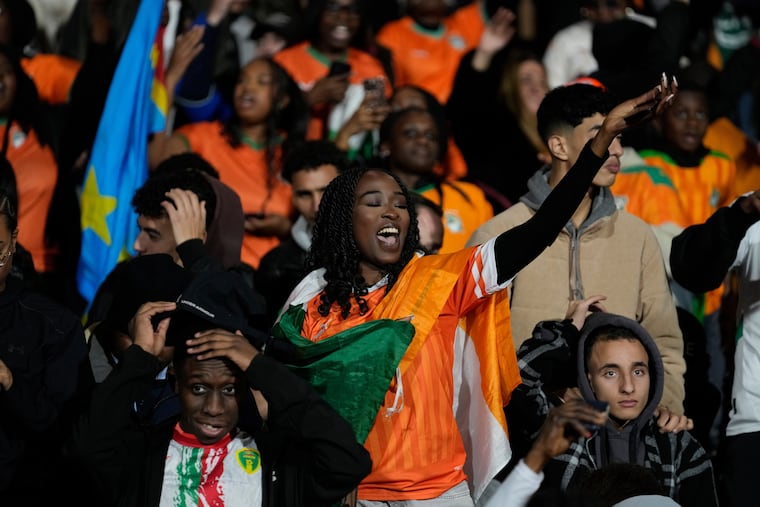
Bouakary Coulibaly grew up in a part of the world that is out of its mind for soccer — the West African nation of Côte d’Ivoire, sometimes still known by its anglicized name of Ivory Coast.
Some 36 years since moving to the United States, where he’s an entrepreneur, reggae musician, chef, and a cabdriver on the streets of Philadelphia, Coulibaly still vividly remembers how every kid in the poorer neighborhoods of his native Abidjan starts kicking a soccer ball as soon as they can walk.
“I used to play soccer when I was a kid,” Coulibaly told me, adding with a laugh, “but I wasn’t very good.” But like most Ivorians, both back home and among a sizable diaspora on the East Coast, he remains a fanatic for the sport, and still roots for Côte d’Ivoire’s men’s national team, whose orange-clad supporters pound drums to a beat that sounds like an elephant stomping through an African forest.
So, of course, he’s thrilled that the high-flying Les Éléphants not only qualified for their fourth-ever World Cup finals in 2026, but they’ll be playing two of their matches right here in Philly, while training on the Union’s grounds in Chester and staying just over the border in Delaware.
But …
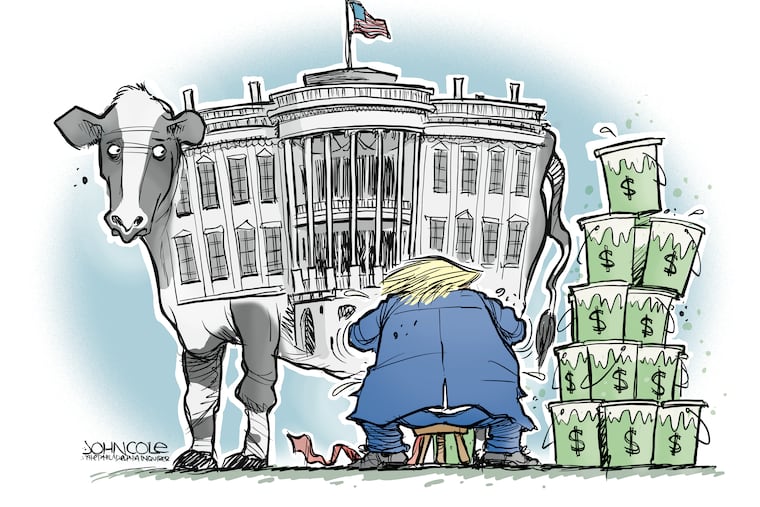
Anyone who’s waited half a lifetime for the planet’s greatest sporting event to return to American soil — as I have — knows that there’s always a “but” attached to this World Cup that will be predominantly played in a United States that’s become an authoritarian global pariah. The two early favorites to define the 48-team tournament are corrupt capitalism and unrestrained xenophobia.
The closest that Coulibaly expects to get to Côte d’Ivoire’s two South Philly matches — against Ecuador on June 14 and Curaçao on June 25 — will be picking up fares on Pattison Avenue after the match. The prices to get inside the renamed-for-a-month “Philadelphia Stadium” are too rich for this 61-year-old Ivorian American. Nosebleed tickets for the Ecuador match on the StubHub secondary market (forget going through the inscrutable FIFA, the world’s corrupt soccer governing body) start at $836 apiece, and rise exponentially closer to the pitch.
What’s even worse is that many of Coulibaly’s fellow Ivorians across the Atlantic couldn’t blow their life’s savings to see Les Éléphants even if they were willing to do so. Last December, Côte d’Ivoire became one of four World Cup-qualifying nations to face a sweeping travel ban from the Donald Trump regime, making it all but impossible for overseas supporters to obtain an American visa. Since then, the U.S. “solution” to the inevitable complaints has been to allow Ivorians (as well as some other restricted countries) to apply for a tourist visa by posting a $15,000 bond — so emblematic of an event that’s all about the Benjamins.
It’s not supposed to be this way. The 2026 World Cup — the first on U.S. soil since 1994 — is meant to be the greatest show on Earth, a monthlong carnival and a celebration of drop-your-guns internationalism, where the beauty of the world’s greatest athletes romping around green sporting cathedrals is only topped by the whirling, religious frenzy of the fans.
In an increasingly angry world defined by war and unthinkable graft, a World Cup that was supposed to be a glorious 38-day escape from our problems is instead a numbingly depressing reminder of them.
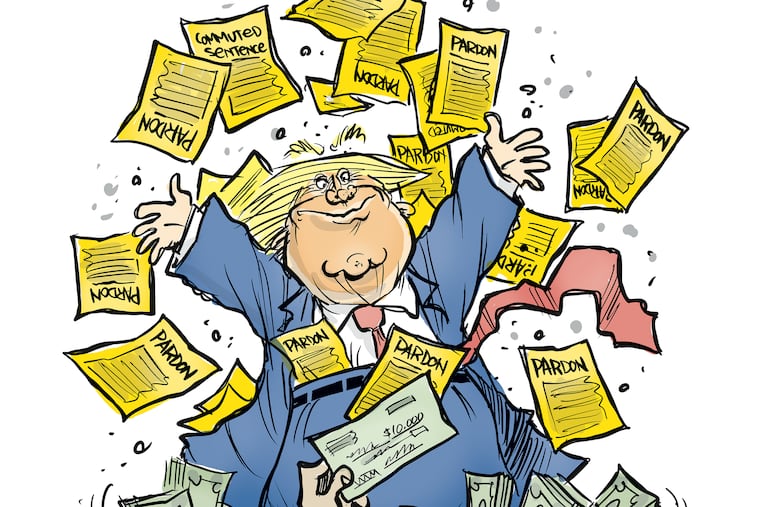
What’s worse? The late-stage capitalism of FIFA’s “dynamic pricing” aimed to suck every last dollar from desperate fans (a mentality that’s even spread to some transit agencies)? The ridiculous corruption that peaked with the creation of a FIFA Peace Prize to ensure Trump’s continued support? The anti-immigration mania that’s shut out some international fans and left others wondering if a flight to America is worth the risk of ending up in a U.S. Immigration and Customs Enforcement concentration camp?
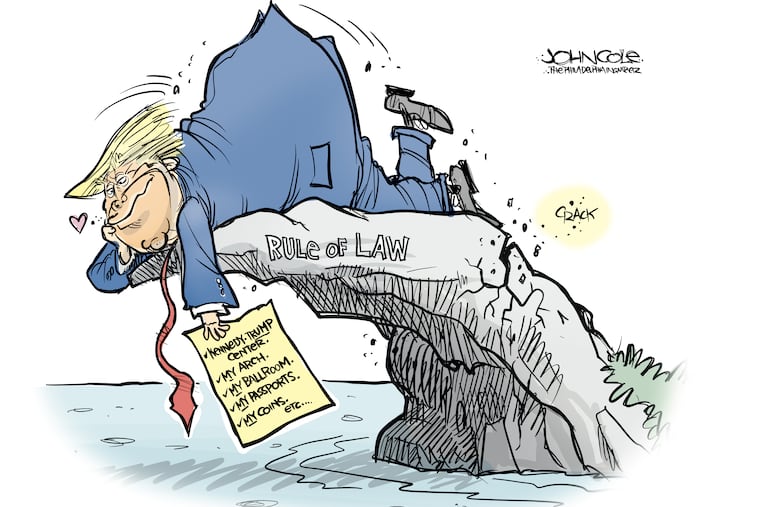
To be sure, the criminal and dictator-embracing enterprise that is FIFA crushed any childlike naivety about world soccer a long time ago, yet staging the World Cup in Donald Trump’s America feels almost as insane as the president himself. Did I mention the United States has been dropping bombs on schoolgirls in one nation, Iran, that, for now, anyway, is still scheduled to play matches in Los Angeles and Seattle in just about two months?
But, hey, they went ahead with those 1936 Summer Olympics in Berlin, didn’t they?
Still, there are already signs of trouble now that the June 11 opener (in Mexico City, with a quarter of the tournament’s matches to be played in Mexico or Canada) is getting closer. This week, some U.S. host cities are reporting that — surprise, surprise! — demand for hotel rooms from visiting fans is much less than expected. Here in Philadelphia, FIFA is said to have canceled some 2,000 room reservations because of low demand — a pattern being repeated from coast to coast.
» READ MORE: I fear for the 2026 World Cup under Trump | Will Bunch Newsletter
“The World Cup is an opportunity for people to come from all over the world to celebrate,” Marc Adoux Papé — an Ivorian native and soccer fanatic who teaches about Francophone Africa at the University of Pennsylvania’s Lauder Institute — told me this week. “One of the things that people value about the World Cup is the pageantry of people coming from all over the world — you know, the costumes, the singing, and all that stuff. You may have fans in the stadium, but are they bringing all those sounds and visual stuff?”
Not when they’re mostly U.S. venture capitalists or whatever — the people still willing and able to render gold unto FIFA and its Trump-loving leader, Gianni Infantino.
In a just and moral world, there would be a sweeping World Cup boycott — not just by fans, but by nations wanting to punish America’s rising fascism at home and deadly imperialism overseas. But sports boycotts don’t really work. Jimmy Carter’s 1980 ban on U.S. Olympic participation in Moscow in 1980 punished American athletes with little impact on the USSR, and if you elect to stay home this summer, some rich jerk from Silicon Valley is just going to be in your seats instead.
True soccer fans have never felt more conflicted. Especially me.
Although American football was my first love as a fan and as a mediocre high school athlete, I was also always soccer-curious — blessed to see Pelé‘s New York Cosmos at the Meadowlands in 1977. I became addicted to the sport during that first U.S.-based World Cup in 1994, when this dad of one colicky baby, with a second child on the way, was too exhausted to get off the couch. I soon decided that, having missed the chance that time around, seeing a World Cup match in person was the No. 1 item on my bucket list, bar none.
The good news is that I’m not dead yet, despite my best efforts. The bad news is that in the 1990s, I had no idea how it would feel to be alive in America in 2026. Despite my disgust over Trump, the FIFA Peace Prize, etc., I still toyed for months with a dream trip with my son to see my beloved U.S. side (despite them having caused me a lifetime of heartburn nearly equal to that of my hometown Philadelphia Union) play Australia in Seattle on June 19, but found myself unwilling to pull the trigger, as the likely cost rose to about $4,000, mostly for two binoculars-needed tickets.
At some point, a stadium light bulb went off in my head. Like any crisis, this World Cup is also an opportunity — to root for the victims of Trump’s cruelty-is-the-point fascism to thrive in spite of him. The perpetual underdog spirit of Philly is embodied by the team that’s right next to you — to love the one you’re with. Why not cheer for Côte d’Ivoire (even as this clueless white dude still trips over the pronunciation)?
Sure, I’ll also root for Christian Pulisic and his American lads over a $4 beer somewhere instead of a $1,400 ticket, but on June 25, my son and I will be in probably the last row of the don’t-call-it-the-Linc for what should be the raucous party of a lifetime when Côte d’Ivoire plays Curaçao, with hopefully a knockout-round berth on the line.
Even though I wasn’t around in 1936, I’m hoping Les Éléphants’ young stars like Amad Diallo of Manchester United can recapture some of that Jesse Owens conquers Berlin vibe. And that, in the spirit of Charlie Brown’s droopy little Christmas tree, these upstart Africans, and whatever supporters can jump through all the hoops and make it to Philly, will show me the true meaning of soccer.
And that, for 90 minutes that will stay with me for the rest of my life, all the ugly background noise will remain outside the Philadelphia Stadium walls, and there will just be the Beautiful Game.

Sign up for the Will Bunch Newsletter