The same structural failures cost the Phillies again in the playoffs. The onus falls on Dave Dombrowski
The Phillies are a top-heavy team in both phases of the game. Dombrowski’s biggest failure over the last three-plus years has been his inability to address either.
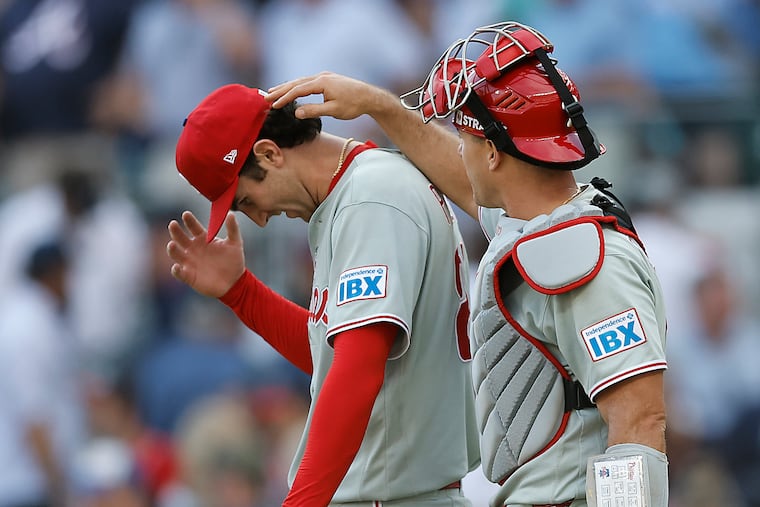
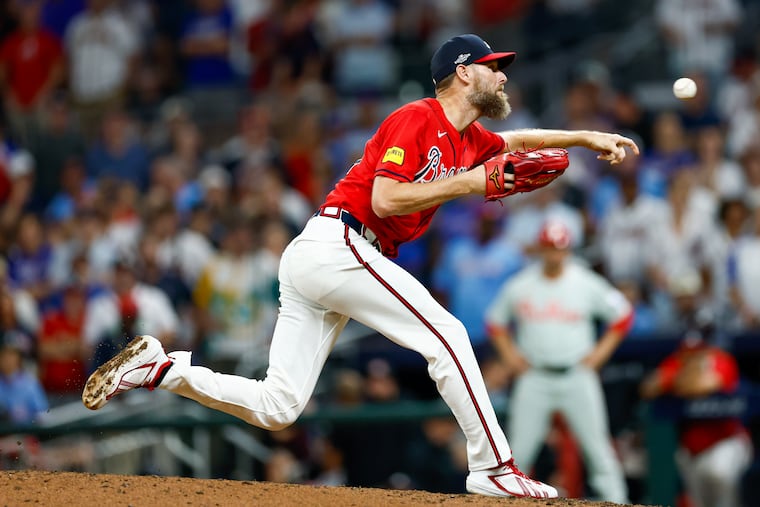
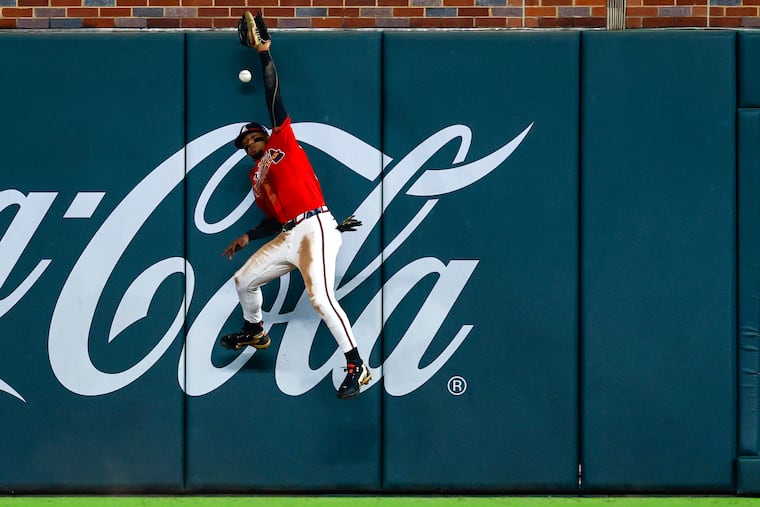
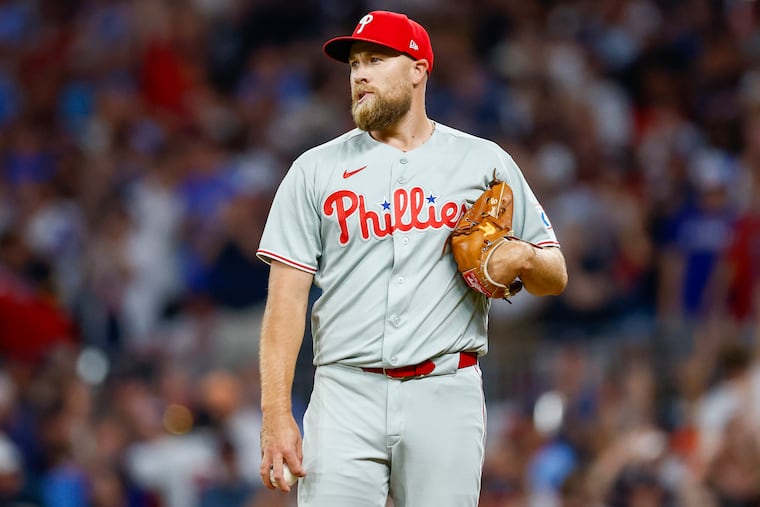
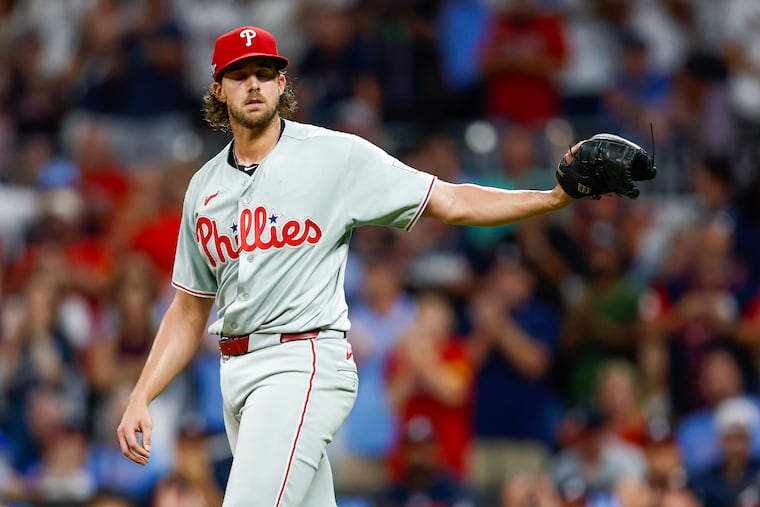
ATLANTA — You can blame the manager for his handling of the pitching staff. You can blame the front office for forcing him to handle a grenade. I suppose you can blame the pitchers themselves: Jhoan Duran for giving up the decisive three-run home run in Game 1, Aaron Nola for doing the same in Game 3. But before we blame anybody for the way the Phillies season ended — a 6-2 loss in a decisive Game 3 at Truist Field on Thursday night — let’s at least take a moment to acknowledge what they accomplished.
A baseball season is a maddening, fluky, grind of a thing. Qualifying for the playoffs in five straight seasons is an extraordinarily difficult task. The Phillies are one of only nine franchises in major league history who have ever done it. Their current streak is the second-longest active one in the majors, behind only the Dodgers (14). That’s not apologetics. It’s reality.
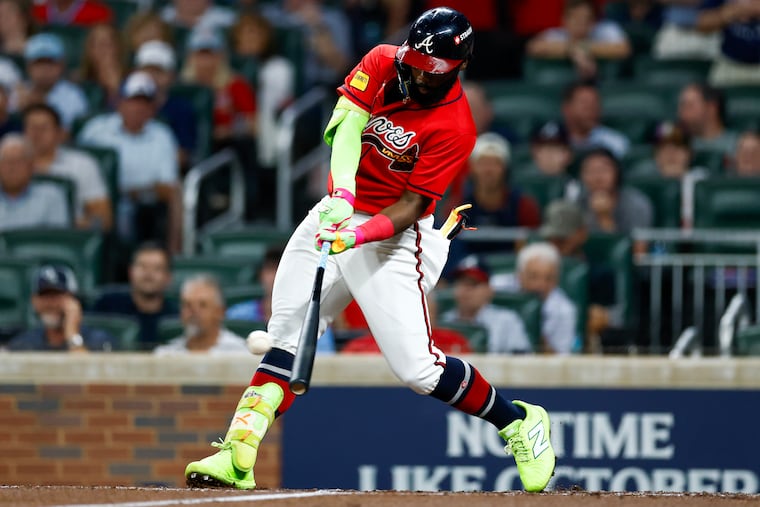
Just ask the Braves, who were down to their last four outs in Game 1 when Austin Riley homered off Duran. Or, heck, ask the Dodgers. Los Angeles made the playoffs seven straight times without winning a World Series before finally breaking through in 2020. That initial stretch included three National League Division Series losses. They’ll be favored against the Braves in this year’s NLDS, which starts Saturday. They know how little it means.
» READ MORE: Phillies’ weaknesses on display in season-ending 6-2 loss to Braves in Game 3
None of this is meant to serve as consolation. Nor does it nullify the litany of criticisms one can and should direct at these Phillies. As difficult as it is to make five straight postseasons, it is nearly as difficult to lose four straight postseason series on luck alone. There are clearly some structural issues here.
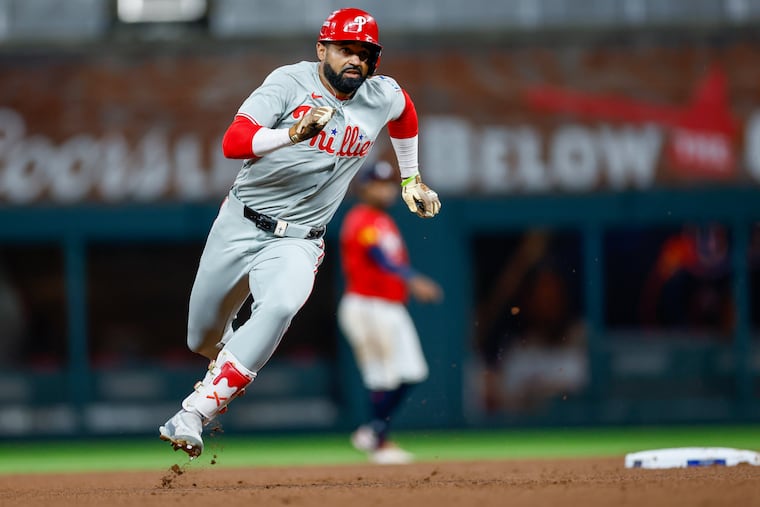
In their last nine postseason games, the Phillies have scored a total of 10 runs in the first six innings. About a third of those runs came in one inning, when they scored three off Shohei Ohtani in Game 1 of last year’s NLDS loss to the Dodgers.
In those same nine postseason games, the Phillies have allowed a remarkable 19 runs in the seventh inning or later.

David Murphy alerts
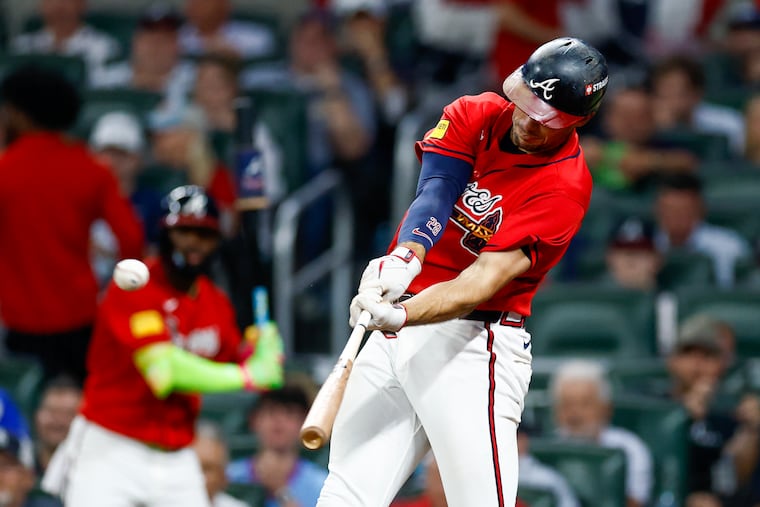
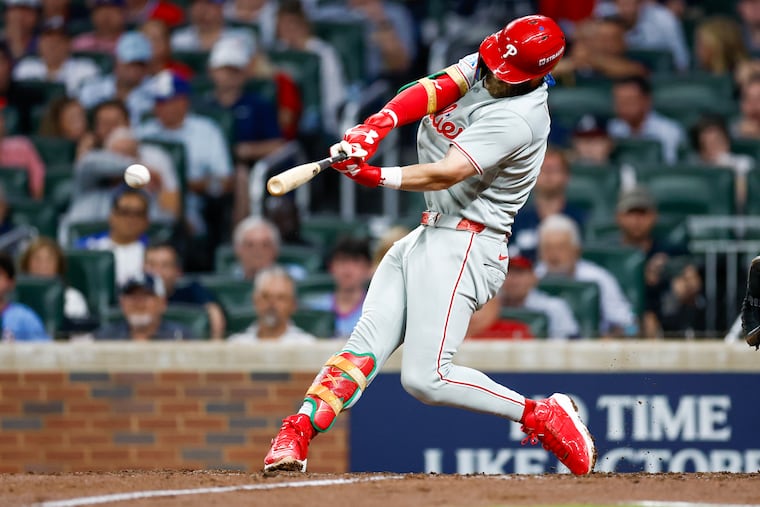
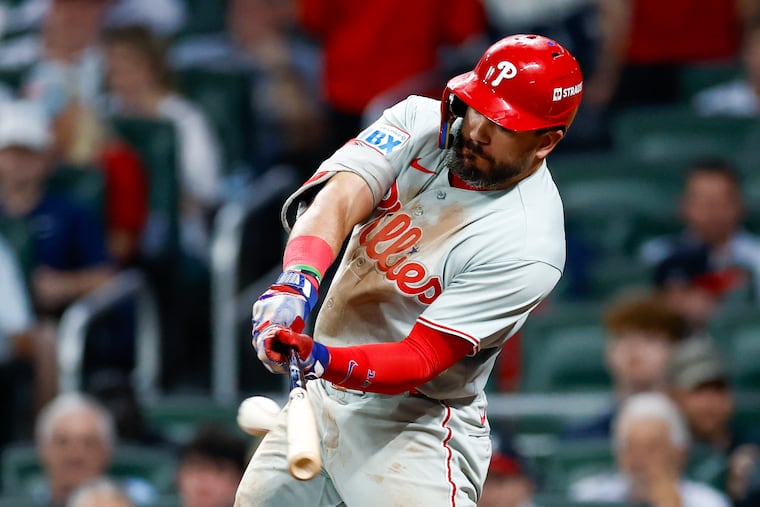
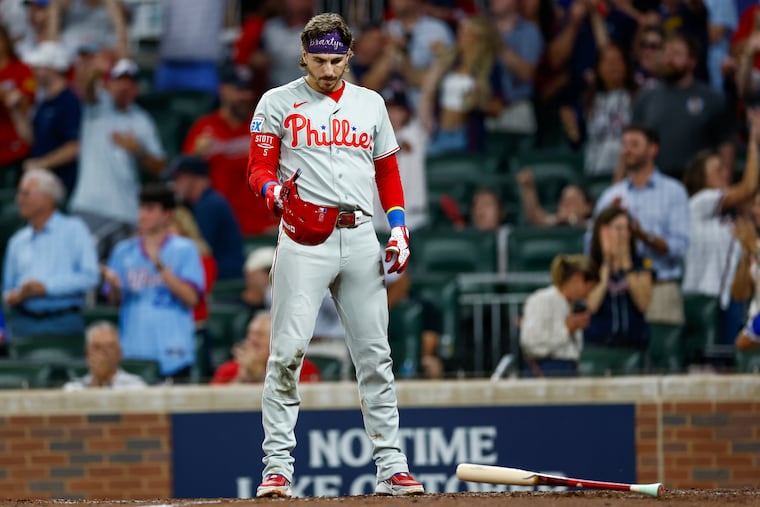
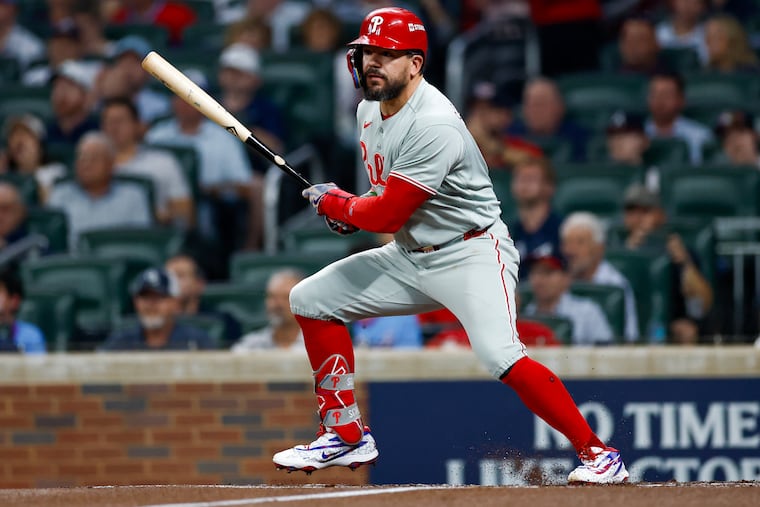
Just as obvious as these KPIs are their underlying causes. The Phillies are a top-heavy team in both phases of the game. Dave Dombrowski’s biggest failure over the last three-plus years has been his inability to address either. The last time the Phillies won a playoff game where neither Bryce Harper nor Kyle Schwarber homered was Game 4 of the 2023 NLDS. In fact, the duo has combined for at least two home runs in five of the six wins since. It is neither sustainable nor reasonable to place that much responsibility on two members of a nine-man lineup.
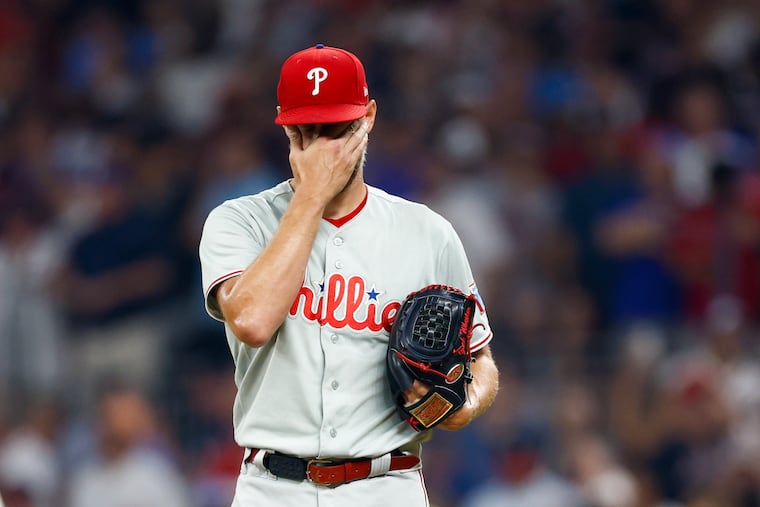
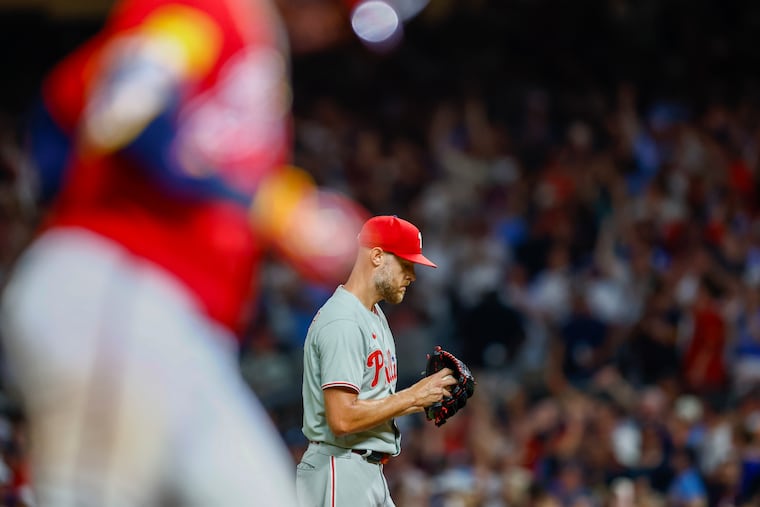
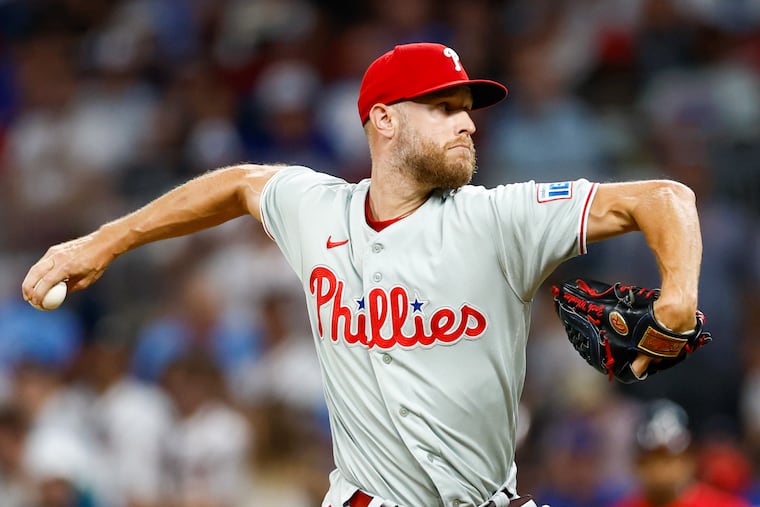
Same goes for the pitching staff, which has leaned so heavily on its key members that you can’t help but wonder about the cumulative effects. In Game 3, 36-year-old Zack Wheeler was out there throwing 68 pitches on three days’ rest. This was two days after Jesús Luzardo threw 77 pitches in his first start off a three-week stint on the injured list. Which was the same day Duran threw 27 pitches in the seventh and eighth innings and wasn’t heard from again.
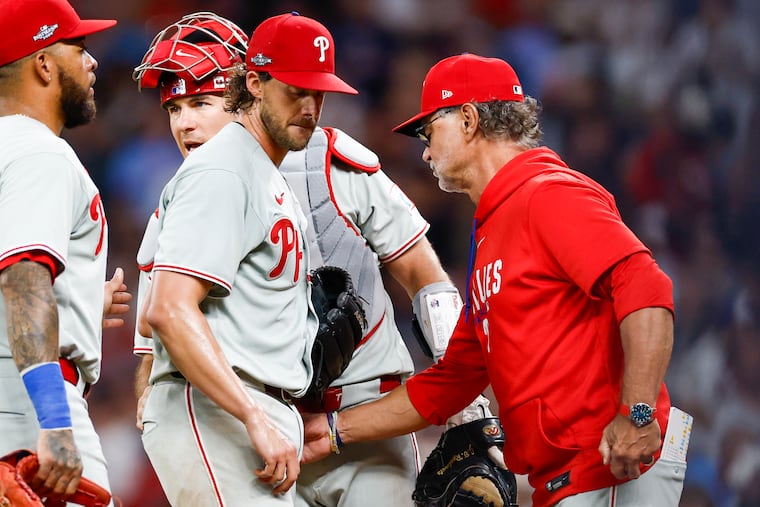
You can second guess some of what interim manager Don Mattingly did with his pitching staff against the Braves. Bringing Duran into Game 1 when he did, allowing him to throw as many pitches as he did, starting Nola in Game 3. None of these decisions looked much different from the ones the previous guy would have made. This is how it looks when a manager feels like he does not have enough options.
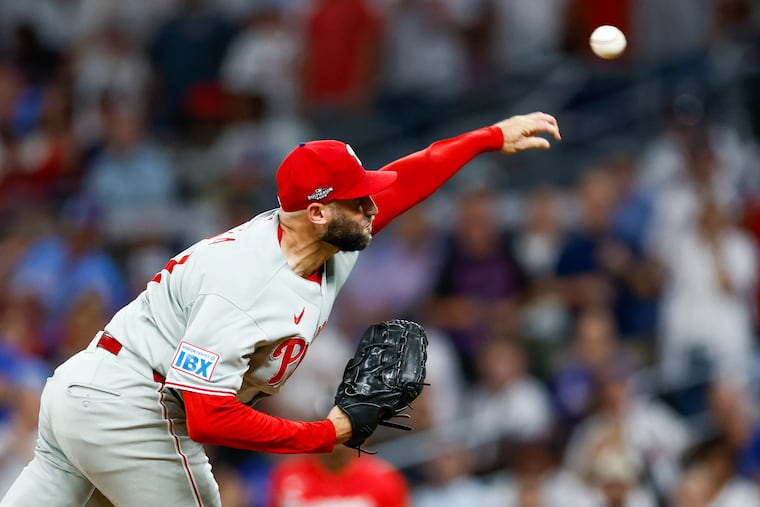
The bulk of the blame lies with Dombrowski. Credit him for drafting Alex McFarlane in the fourth round in 2022. The rookie setup man is the kind of arm the Phillies needed to find to have any hope at solving their longest running issue. Of course, we once said the same of Orion Kerkering.
You can’t fault Dombrowski’s effort. He’s taken plenty of swings. The whiff rate is the issue. Neither of the two relievers he acquired at the trade deadline was on the playoff roster: Caleb Kilian due to injury, Brooks Raley due to ineffectiveness. Same goes for Dombrowski’s biggest offseason acquisition. Setup man Brad Keller went down in early July with an elbow injury that will likely sideline him through next season. Kerkering finished the season in triple A, capping a steady downward slide from his promising debut in late 2023. Dombrowski’s best move of the year was acquiring righty Jonathan Bowlan from the Royals for lefty Matt Strahm. But Bowlan, too, spent most of the series on ice, appearing only after the Braves had taken a 5-0 lead in Game 3.
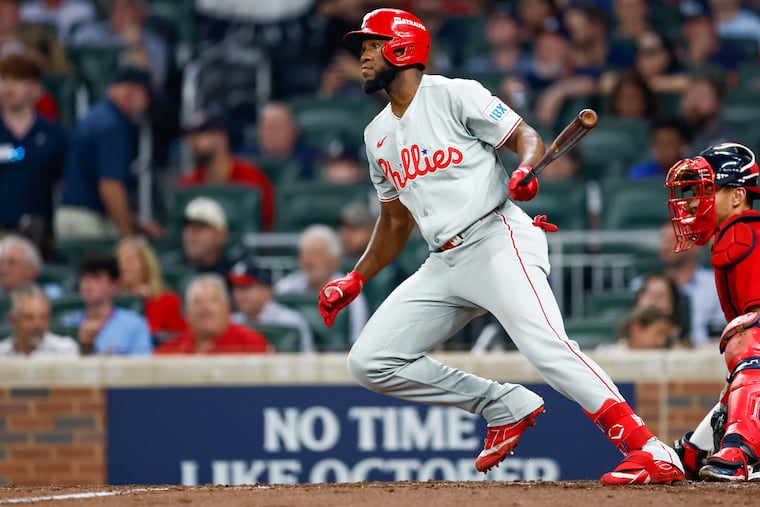
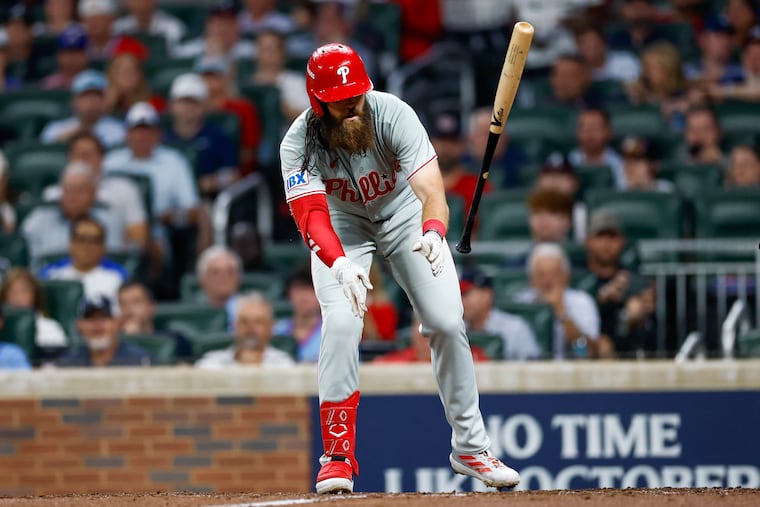
The issues with the lineup will be even more difficult to solve. The Phillies still haven’t found a replacement for Rhys Hoskins behind Schwarber and Harper. Whit Merrifield, Austin Hays, Adolis García, none even managed to offset the decline and fall of Nick Castellanos.
These aren’t just nitpicks. These are issues that will almost certainly need to be solved before the Phillies are capable of winning three or four straight playoff series, let alone one.
They are especially important issues to highlight given the criticism you might otherwise be tempted to lob at the players on the roster. The issue with this team is not its heart, or its brains, and it certainly isn’t its grit. They came back from a disastrous start that earned their beloved manager a pink slip. They came back from a disastrous seventh inning in Game 2, one day after a victory slipped away from them late.
Another middle-of-the-order bat. A couple more arms. That is where the Phillies once again fell short.