Review: Motörhead brings down the Tower
The pope of the Catholic Church is coming this weekend, but the pope of British heavy metal, Lemmy Kilmister, already conquered Philadelphia on Tuesday, when his band Motörhead delivered a thunderous performance at Tower Theater.
The pope of the Catholic Church is coming this weekend, but the pope of British heavy metal, Lemmy Kilmister, already conquered Philadelphia on Tuesday, when his band Motörhead delivered a thunderous performance at Tower Theater.
Motörhead has been around for more than four decades (with Lemmy as the only constant member), but the London outfit's mission has remained the same since Day One: Make loud, fast, belligerent, in-your-face rock songs that rarely exceed four minutes. Bad Magic, Motörhead's 22d album, came out last month, and it sticks to that formula. It's not as brutally victorious as early classics Overkill and Ace of Spades, but it's a no-frills, meat-and-potatoes effort that makes today's bands sound spineless.
One thing that's made Motörhead iconic is the fact that you can instantly tell from Lemmy's inimitable growl that, for better or worse, the man has lived just as hard as - and perhaps even much harder than - his music. His reputation for drugging, boozing, and leading an extraordinarily reckless life is no secret. This authentic excess has helped elevate Motörhead but has been a double-edged sword - the consequence is always looming.
The band had to cancel dates this month and cut some sets short due to Lemmy's poor health. He turns 70 this year and is far less fit for battle than septuagenarian rockers Mick Jagger and Keith Richards. Several concertgoers Tuesday could be heard talking about the very real possibility this could be Motörhead's final tour.
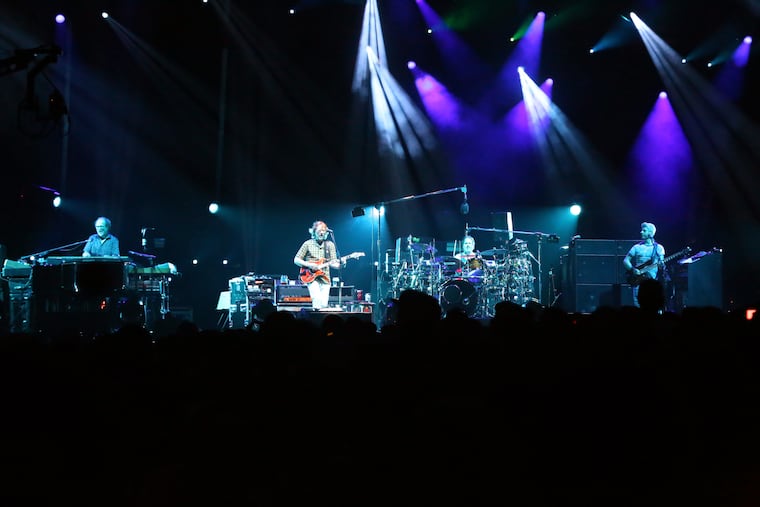
That fear briefly vanished when the trio took the stage, slamming into "Bomber," a song about an invincible and highly effective warplane. The understandably short (13 tunes in about an hour) but explosive set included "Stay Clean," "Metropolis," and fan favorite "Ace of Spades." There were two awkwardly long solo sections showcasing the skills of guitarist Phil Campbell and drummer Mikkey Dee (also of King Diamond fame), clearly thrown in to give Lemmy a chance to leave the stage and do whatever Lemmy does backstage these days.
Otherwise, Lemmy didn't move much. He stood straight behind the microphone and stabbed at his bass guitar. His voice is still fierce, though there were moments when he sang out of time, but in a dignified manner similar to fellow elders Bob Dylan and Willie Nelson.
The audience members - at least half wore Motörhead T-shirts, on sale at the merch table for $40 - roared on the few occasions when he spoke. He asked whether the band was playing loud enough; even though there were more than eight Marshall half stacks behind him, some fans requested they crank the volume up.
He also shared a fun fact: The first time he played the United States, with his previous band Hawkwind in 1973, it was at the Tower.
For the finale, Motörhead unleashed a riotous version of "Overkill." Before plunging into a chaotic, deafening outro of feedback, guitar screams, and rapid-fire drum bashes, Lemmy snarled, "Rock 'n' roll ain't worth the name if it don't make you strut." His diehards cheered for more and watched as he strutted away.