Flawed Phila. formula: Arrest, release, repeat
Until eclipsed by the murder of Officer Chuck Cassidy, it was a jarring crime that rattled Center City - and seemed to signal a kind of open season on police.
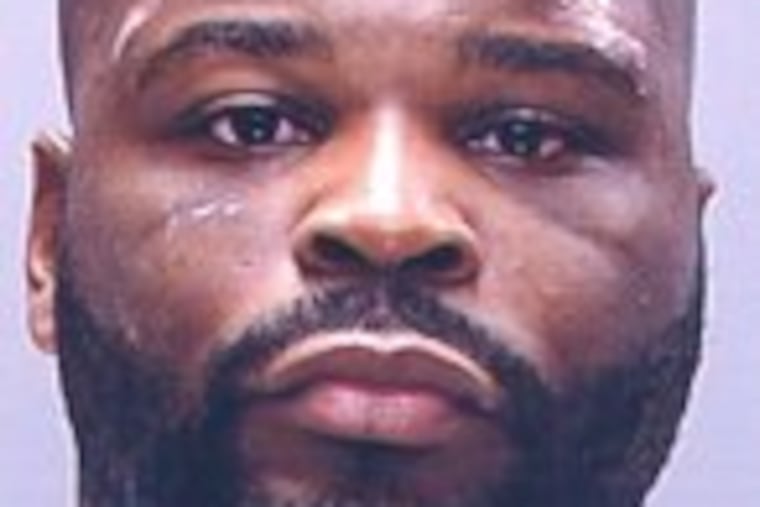
Until eclipsed by the murder of Officer Chuck Cassidy, it was a jarring crime that rattled Center City - and seemed to signal a kind of open season on police.
In an apparent hit attempt, a gunman fired into a parked car at 15th and Sansom Streets, wounding two men and a woman, then shot three times at a pursuing police officer. Trying to get away, Jerome Whitaker jumped into the Schuylkill and drowned.
Today, Officer Mariano Santiago, 44, is recovering at home, a bullet still in his fractured shoulder. The other victims are also out of the hospital.
But before the incident completely fades away, the story of how Whitaker came to be armed, dangerous and on the streets that day is worth unraveling as a case study of how Philadelphia's justice system works.
It also illustrates the legal headaches prosecutors and police will face as Mayor-elect Michael Nutter pushes them to pursue a stop-and-frisk strategy to cut violence.
Convicted of killing a 6-year-old girl in a 1994 shooting, Whitaker was released after serving 11 years.
Several weeks before his Center City rampage, narcotics cops had locked up Whitaker again, this time when he was found with prescription drugs after a search on the street. But he walked after prosecutors dropped the case.
"Obviously, this is a situation where the DA's office is highly embarrassed," said Will Spade, a former city prosecutor who is now a defense lawyer.
"It's every judge and prosecutor's nightmare - the guy turned around a few weeks later and almost killed a cop."
The District Attorney's office insists the pinch was a "weak arrest," without legal justification. Police vigorously disagree. "It's a good arrest from the Police Department perspective," said Police Lt. Francis T. Healy, one of the force's top lawyers. But he was unwilling to criticize prosecutors.
"There are a bazillion reasons people don't get prosecuted," Healy said.
As Santiago recuperates, he says he was not surprised that Whitaker beat the narcotics rap.
But he said it shook him when he realized that Whitaker was a convicted killer.
"Why was he on the street?" the officer said. "He killed that little girl."
From promise to prison
Once an altar boy, and said by his mother to have an IQ of 132, Whitaker showed childhood promise that dimmed early in his rough neighborhood near 20th and Carpenter Streets in South Philadelphia.
By his early teens, he got kicked out of the parish school - where he attended classes for the gifted - and was wounded in a drive-by shooting.
On June 29, 1994, Whitaker, then 15, was angry that a buddy had refused to drive him to settle a beef with someone. He grabbed a gun and rushed out of his home, determined to shoot up his friend's empty car.
"Don't shoot! There are kids around," his sister yelled, according to court testimony. But Whitaker fired anyway, three or four times.
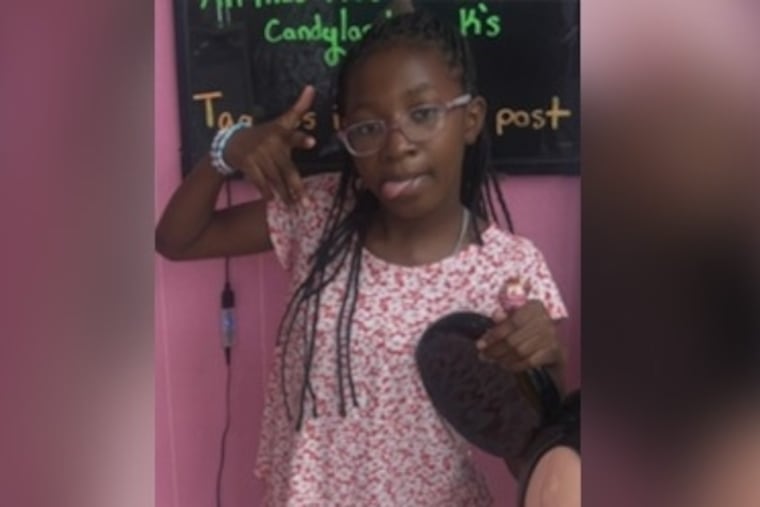
A bullet bounced off the car and killed Michelle Cutner, a first grader munching potato chips on her way home from school.
It was a death that drew big headlines.
Whitaker agreed to a plea bargain, pleaded guilty to third-degree murder and was sentenced to 11 to 25 years in prison.
Ann Ponterio, the assistant district attorney who handled the case, said the deal made sense: The shooting was a reckless act that caused a death, but not an intentional killing.
"This was unquestionably a third-degree murder," she said.
As Ponterio noted, Whitaker was given the maximum sentence under the law at that time. A year later, Pennsylvania increased the mandatory-minimum sentence for third-degree murder to 20 years. But the change was not retroactive.
With credit for jail time before his guilty plea, Whitaker was first eligible for parole in 2005. But the state parole board turned him down, in part because prosecutors and the trial judge recommended against his release.
He was released last year, after serving 11 years. Parole officials said Whitaker had "accepted responsibility" for his crimes, was regretful and had cleaned up his behavior in prison.
His time spent in jail was typical. According to state-prison data, the average time spent behind bars on a third-degree murder conviction is 12 years.
"It looks to me like the system did precisely what it's supposed to do," said Bradley S. Bridge of the Defender Association of Philadelphia.
Whitaker was "fully deserving" of parole, Bridge said. The parole board had no way of knowing what would come next.
"There's always risks of people going awry. But you can't exist in a world where there are no risks, where bad things do not happen."
Back in the life
Once out of prison, Whitaker got a job working for a masonry company. His mother thought he was doing well.
"He was happier," said Cynthia Edwards. "He was doing a lot more than a lot of boys who come out of prison."
Edwards said she was stunned by the shootings.
"I'm sorry about a cop being shot," she said through tears. "I'm sorry about everybody being shot. . . . I would have never thought that he'd bring harm to nobody."
But a year after his release, it appears, Whitaker was back in a life of crime.
On July 8, he was arrested on charges of drug dealing. According to court records, bike police spotted him at 20th and Wharton Streets just after 10 p.m., standing next to a man who was licking a blunt - a marijuana-laced cigar.
As they confronted the two men, police ordered Whitaker to take his hands out of his pockets. He refused.
At that point, veteran Narcotics Officer Jean M. Spicer threw the 285-pound Whitaker up against a wall and patted him down.
She found $519 in cash and two prescription bottles, one containing 96 pills of the antianxiety drug Xanax - in the name of a David Gillins.
The other had 27 Percocet tablets; its label was torn away. Police said the drugs, both popular in illegal sales, had a street value of $1,200.
After his arrest, Whitaker stayed behind bars. His parole officer had him put back in state prison for violating his parole.
But in Philadelphia courts, the drug case quickly foundered.
Whitaker's first hearing was scheduled eight days after the arrest; it was canceled by the DA's office because prosecutors were waiting for a chemical analysis of the pills.
At the second date for that hearing, on Sept. 17, prosecutors withdrew the charges.
Court records list no reason for that decision. Nor are there any details about the case in the official transcript from that day. The court stenographer apparently didn't take notes of the so-called "house cleaning" discussion, when prosecutors quickly run through the cases they are dropping or delaying.
Soon after, with Whitaker's arrest withdrawn, a hearing examiner for the Parole Board ordered him released.
Whitaker was back on the street.
Had the case remained active, he would have remained a parole violator and stayed behind bars.
Whitaker would have been in jail on Oct. 30, the night he put on a mask and gloves and shot four people, including Officer Santiago.
Two reasons to drop charges
Nothing about Whitaker's treatment by the justice system was striking - or even unusual - in Philadelphia.
A U.S. Justice Department study released last year found that 59 percent of all felony cases here ended in withdrawals, dismissals or acquittals - the highest non-conviction rate among America's 100 largest cities.
In the Whitaker case, Cathie Abookire, spokeswoman for District Attorney Lynne M. Abraham, gave two reasons the charges were dropped.
In an initial interview, she said Whitaker had a prescription for the drugs. When told that one of the pill bottles bore another man's name, Abookire declined to comment.
She also insisted police didn't have a legal right to search Whitaker in the first place.
"Prosecution on this case was withdrawn based on the facts there was no probable cause," she said.
There are limits on how far police can go when stopping people on the street and searching them - and using the evidence in court.
Under well-established court precedent, police may pat someone down on the street, but only for weapons.
Things grow more complicated when police discover drugs during a search.
In one state appellate case, from the Pittsburgh area, a judge held that police may take a pill bottle out of a pocket and make a legal drug arrest, but only if the officer believes it might be a weapon - mistaking, say, a pill container for a gun barrel.
According to Healy, the department lawyer, Spicer, the narcotics officer, told him she felt something when she patted down Whitaker and thought it might be pill bottles - but couldn't rule out that it wasn't a weapon.
"To be on the safe side," she told Healy, she ordered Whitaker to empty his pockets. Out came the pills.
As a result, the search was legal and so was the arrest for drug dealing, Healy said.
Spade, the former assistant district attorney turned defense lawyer, also said he thought the case could have gone forward.
"Based on the facts that I've heard, it sounds like this was a legitimate stop and arrest," Spade said.
Whitaker's attorney, Fortunato N. Perri Jr., did not return telephone calls seeking comment.
Other defense lawyers disputed the legality of the search.
Alan Y. Yatvin said police had no legitimate reason to pat Whitaker down in the first place.
"He wasn't menacing them," Yatvin said. "They had no right to go in the man's pocket."
His partner, Howard D. Popper, agreed, but said many judges would have approved the arrest anyway.
"Most judges are going to say 'Are you kidding me? He refused to take his hands out,' " Popper said.
As it happens, authorities had one more chance to keep Whitaker behind bars. Even though the drug charges were dropped, parole officials could have sought to keep him in jail as a person who posed "an imminent threat to the public."
But Leo Dunn, a spokesman for the parole board, said Whitaker was a model parolee in the weeks before the shooting. He was working, kept all his appointments and passed random drug tests.
"The next thing we knew, he's in a morgue."