Analysis: Missile test underscores the failure of Trump's naive approach to North Korea
The U.S. government confirmed last night that North Korea successfully tested an intercontinental ballistic missile, crossing a chilling threshold and underscoring President Trump's failure to change the trajectory of dictator Kim Jong Un's nuclear program over the past six months.
Donald Trump made a bold pronouncement in the weeks before he became president that is not aging well.
"North Korea just stated that it is in the final stages of developing a nuclear weapon capable of reaching parts of the U.S. It won't happen!" Trump wrote on Twitter Jan. 2.
The U.S. government confirmed Sunday night that North Korea successfully tested an intercontinental ballistic missile, crossing a chilling threshold and underscoring Trump's failure to change the trajectory of dictator Kim Jong Un's nuclear program over the past six months.
"The latest missile flew higher and remained in the air longer than previous attempts – enough to reach all of Alaska,"Anne Gearan and Emily Rauhala report on the front page of The Washington Post. "The launch follows a string of recent actions by Pyongyang, including a salvo of missiles last month and three tests in May. Kim has now launched more missiles in one year than his father and predecessor in the family dynasty did in 17 years in power. North Korea has also conducted five nuclear weapons tests since 2006, including two last year."
Experts say the missile was a "real ICBM" and showed technical sophistication that Western experts believed North Korea was years away from mastering. "North Korea's apparent accomplishment puts it well ahead of schedule," the Post's Joby Warrick explains. "The Hwasong-14 tested Monday could not have reached the U.S. mainland, analysts say, and there's no evidence to date that North Korea is capable of building a miniaturized nuclear warhead to fit on one of its longer-range missiles. But there is now little reason to doubt that both are within North Korea's grasp."
The U.S. Army and South Korean military responded last night with a show of force, launching their own missiles into South Korean territorial waters along the country's eastern coastline. U.S. Pacific Command called this a direct response to "North Korea's destabilizing and unlawful actions."
The past three presidents have tried to negotiate, only to learn that Pyongyang can never be trusted. Reflecting the hubris of someone who believes he alone can fix things, Trump's "it will not happen" tweet came two months after Barack Obama warned him privately that North Korea would likely be the single most urgent problem he confronted as president. Several aides from the last administration also told their incoming counterparts that the missile program should be their top national security priority.
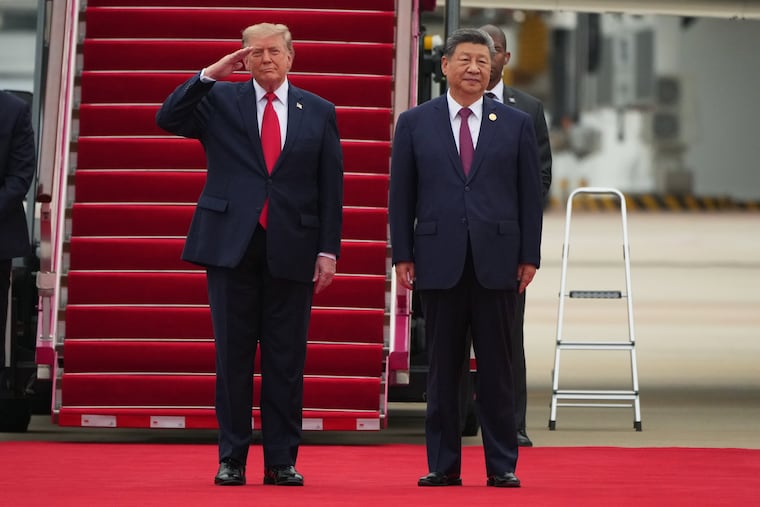
Trump naively thought he could persuade China to pressure North Korea to stop its nuclear activities. Then President Xi Jinping tutored him on the history of the region when they met at Mar-a-Lago in April. "After listening for 10 minutes, I realized that it's not so easy," the president admitted afterward, recounting the history lesson. "You know, I felt pretty strongly that they had a tremendous power over North Korea. But it's not what you would think."
During the transition, Trump appeared to embrace "the madman theory" of foreign policy. The president-elect believed he could use his reputation for unpredictability to unnerve and intimidate America's adversaries into making concessions that they would not otherwise make. Some people close to Trump thought, for example, that North Korea might come to the table out of fear that the American president might just be crazy enough to take preemptive military action. (I wrote last December about why this was both risky and likely to fail, as it did when Richard Nixon first tried it during Vietnam.)
During the campaign, Trump also expressed openness to South Korea and Japan developing their own nuclear weapons. "They'd probably wipe them out pretty quick," Trump said during a Wisconsin rally in March 2016, musing flippantly about a thermonuclear confrontation with North Korea. "If they fight, you know what, that'd be a terrible thing. . . . But if they do, they do. Good luck, enjoy yourself, folks."
As the first president in U.S. history with no prior military or government experience,Trump has clearly never studied "deterrence theory": If he thought a show of force would deter North Korea, he thought wrong. If anything, the president's previous saber-rattling has only driven the regime to accelerate its efforts to build a nuclear weapon capable of striking the mainland United States.
North Korea's ability to bomb American population centers – whether Seattle, San Francisco or Los Angeles – would dramatically change the Washington calculus and massively constrain our ability to use military force. That's the whole point of these tests. "The fear is not that Mr. Kim would launch a pre-emptive attack on the West Coast; that would be suicidal, and if the 33-year-old leader has demonstrated anything in his five years in office, he is all about survival," David Sanger writes on the front page of Monday's New York Times. "As he looks around the world, he sees cases like that of Col. Moammar Gadhafi of Libya – an authoritarian who gave up his nascent nuclear program, only to be deposed, with American help, as soon as his people turned against him. That is what Mr. Kim believes his nuclear program will prevent – an American effort to topple him. He may be right."
"There is no good option here," former acting CIA director Michael Morell said on CBS This Morning. "There is no military option here to destroy the nuclear program (or) his missile program. There is no option to do that that wouldn't start a second Korean War and wouldn't raise the possibility of him using nuclear weapons against his neighbors. The risks are extraordinarily high in a military standoff."
As Jim Mattis put it in March, "A conflict in North Korea would be probably the worst kind of fighting in most people's lifetimes." "The bottom line is it would be a catastrophic war if this turns into a combat if we're not able to resolve this situation through diplomatic means," the secretary of defense said on CBS's Face the Nation.
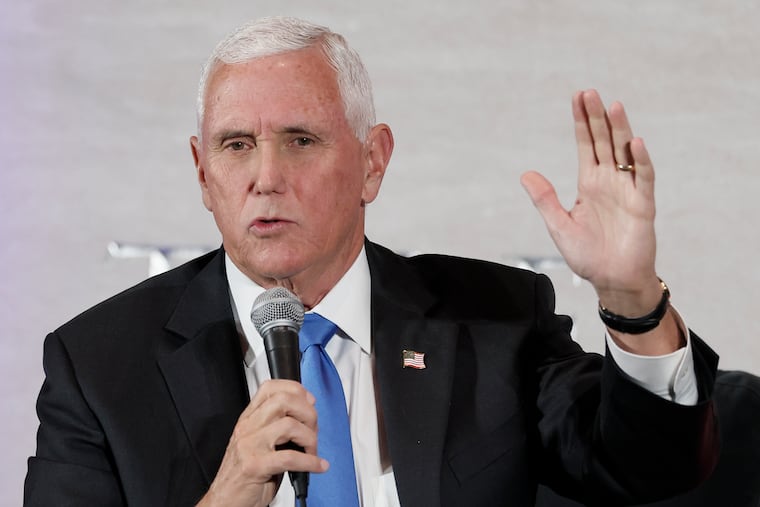
After visiting the demilitarized zone in April, Vice President Mike Pence first announced that "the era of strategic patience is over" and declared that "all options are on the table." "North Korea would do well not to test (Trump's) resolve — or the strength of the armed forces of the United States in this region," said Pence, whose dad fought in the Korean War.
North Korea has repeatedly tested Trump's resolve during the intervening three months and not suffered any discernable consequences. During a joint statement in the Rose Garden last Friday with South Korean President Moon Jae-in, Trump reiterated the talking point: "The era of strategic patience with the North Korean regime has failed." He added that he wants "peace, stability and prosperity" for the region but said ambiguously that the U.S. will "always" defend itself and its allies.
Last week, the Trump administration put in place sanctions on a China-based bank accused of laundering money for the North Korean government. In a statement over the holiday weekend, the White House also implicitly threatened to reassert U.S. complaints about Chinese economic practices that Trump has largely set aside in recent months as he has sought to engage Xi.
While China pledges cooperation with the United States over North Korea, Beijing has not fundamentally shifted away from a strategy that balances pressure on the Kim regime with keeping the regime afloat, said Chris Steinitz, a research scientist at the federally funded, nonprofit Center for Naval Analyses. "It's kind of how China looks at everything. They have a very long view," Steinitz told my colleagues Anne and Emily. "They will wait. They will bide their time. They have a lot of priorities."
Don't forget that the U.S.-Sino relationship involves far more than North Korea: China Tuesday vowed to step up its air and sea patrols after a U.S. warship sailed near a disputed island in the South China Sea, and last week the United States announced a new arms deal with Taiwan. "The bromance is over," Evan Medeiros, a former adviser to Obama on Asia policy, told Simon Denyer and Thomas Gibbons-Neff. "The honeymoon is clearly over, but the next phase is less clear."
In response to the missile test, Trump ridiculed Kim and ratcheted up rhetorical pressure on China to apply more pressure. He did this with consecutive messages on Twitter:
The president offered no additional specifics. His aides, meanwhile, called for an emergency public session of the U.N. Security Council. The international response will also certainly be high on the president's agenda at the Group of 20 economic summit this week. "Global action is required to stop a global threat," Secretary of State Rex Tillerson said in a statement Sunday afternoon. "Any country that hosts North Korean guest workers, provides any economic or military benefits, or fails to fully implement UN Security Council resolutions is aiding and abetting a dangerous regime. All nations should publicly demonstrate to North Korea that there are consequences to their pursuit of nuclear weapons."
Many Democrats called on the administration to offer a clearer strategy. "Instead of vague Twitter bluster, President Trump should answer North Korea's dangerous test with a coherent strategy of direct diplomacy with Pyongyang and increased economic sanctions pressure from China," Sen. Ed Markey (D., Mass.), the ranking member of the Senate Foreign Relations East Asia subcommittee, said in a Facebook post Tuesday.
U.N. Ambassador Nikki Haley, for her part, grumbled that she had to work on the Fourth of July – a tone-deaf comment considering both the gravity of the threat and the reality that tens of thousands of American soldiers serve vigilantly every holiday without ever complaining.
The Washington Post's Breanne Deppisch and Joanie Greve contributed.
Everything is happening so fast — or at least that's how it feels trying to follow politics these days. You've seen the headlines about President Trump and his policies — but what do they mean for Philadelphia? What does that mean for you? We've launched a newsletter to explore just that. You can sign up to get the weekly Trumpadelphia newsletter in your inbox every Tuesday.