Harold C. Juram, 98, early manager at SEPTA
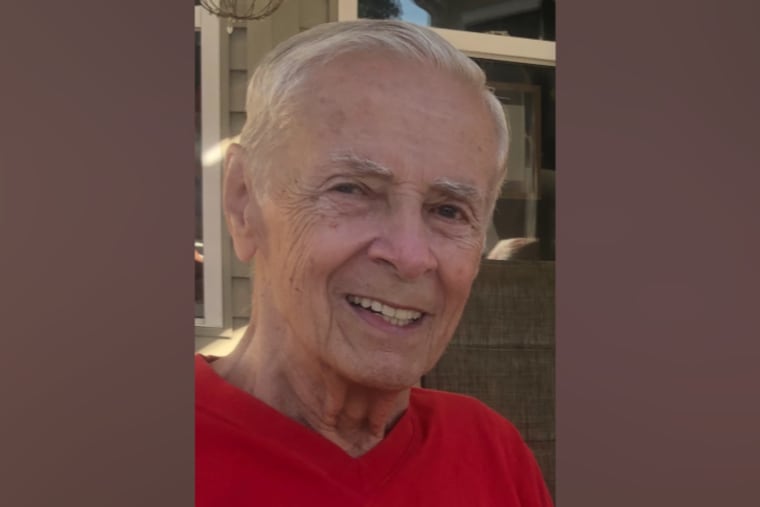
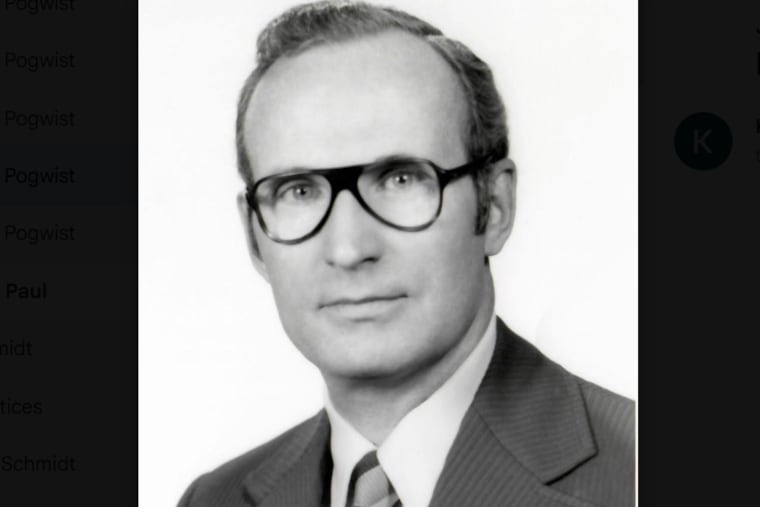
Harold C. Juram, 98, an assistant general manager for SEPTA who "rode the transit system wherever he was headed" whenever possible, died Sunday, Sept. 4, at Abington Memorial Hospital of complications after a fall, his family said.
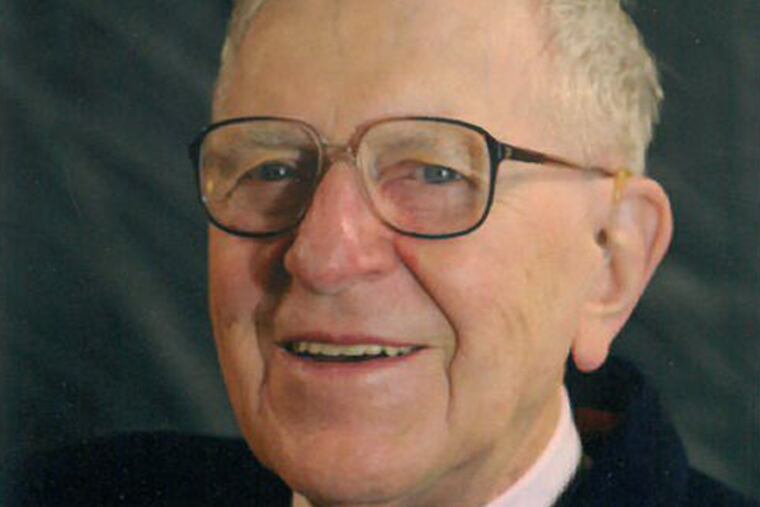
Harold C. Juram, 98, an assistant general manager for SEPTA who "rode the transit system wherever he was headed" whenever possible, died Sunday, Sept. 4, at Abington Memorial Hospital of complications after a fall, his family said.
He had lived in Southampton, Bucks County, before retiring to Foulkeways at Gwynedd in 1997.
Mr. Juram began his career in the scheduling department of the old Philadelphia Transportation Co. (PTC), a private business that ran the trolleys, buses, trackless trolleys, subway, and elevated rail lines in the city from 1940 to 1968. PTC conveyances were painted cream and olive green.
As families moved to the suburbs, creating a commuter class, planners realized that a public transit authority would be needed to address travel within the region. Thus was born the Southeastern Pennsylvania Transportation Authority, or SEPTA.
While still employed as comptroller at PTC, Mr. Juram helped bring about the folding of the PTC into SEPTA in 1968. The suburban rail lines were acquired from other private concerns, such as the Philadelphia Suburban Transit Co.
Once he joined the new transit agency, Mr. Juram became its assistant general manager for planning and development, and then assistant general manager for the regional rails before retiring in 1980.
In 1978, he gave an interview to Railway Age Magazine in which he predicted the increasing importance of the commuter rail lines for moving workers into and out of the city each workday.
"If we did not have the railroads, we're talking in terms of an equivalent of 18 expressway lanes to bring that many people into Center City, along with an enormous parking problem," he told the magazine.
"Not only that, but we have to look to the future. . . . There is an energy problem creeping up on us. . . . If it does hit us, we're going to be looking for the most energy-efficient means [of transportation], and there's every indication that a well-patronized train is an extremely energy-efficient medium."
Mr. Juram was remembered by SEPTA colleagues as a friendly man who kept an open mind and office door.
A firm believer in public transportation, he took the bus, trolley, or train whenever SEPTA routes coincided with his destination. He was a walking advertisement for SEPTA, carrying tokens to give away and also paper timetables to help riders navigate the transit system.
On leaving SEPTA, Mr. Juram joined a consulting firm specializing in public transportation. The company helped create the MTA Metro Subway in Baltimore and later the TriMet MAX Light Rail in Portland, Ore. He retired from TriMet at age 77.
Mr. Juram was known for his upbeat personality and sense of humor. While his work was serious, his manner was not. "He often used a play-on-words, practical jokes, or funny stories to keep things in perspective," his family wrote in a tribute.
Born in Philadelphia, he received a bachelor of science from Drexel University and a master's degree from Rutgers University, both in mechanical engineering.
He was married for 63 years to Edwina Croll, with whom he hiked, gardened, and attended Philadelphia Orchestra concerts, to which they rode SEPTA. She died in 2011.
Mr. Juram was a member of the Germantown Monthly Meeting of the Religious Society of Friends. In retirement, he was president of the Foulkeways Residents' Association.
He is survived by sons Richard and William; daughters Susanna McVaugh, Pamela Kuhn, and Sarah "Sally" Juram; and 11 grandchildren.
A memorial service will be at 2 p.m. Sunday, Oct. 9, in the Community Center of Foulkeways at Gwynedd, 1120 Meetinghouse Rd., Gwynedd. He donated his body to science.
Contributions may be made to Germantown Friends Meeting, 47 W. Coulter St., Philadelphia, Pa. 19144, or to Historic Fair Hill Inc., 5501 Germantown Ave., Philadelphia, Pa. 19144. via www.historicfairhill.org.
610-313-8102