A project in learning
Jordan Shapiro is a Forbes columnist who teaches in Temple University's intellectual heritage department and lives in Mount Airy with his two sons
Jordan Shapiro
is a Forbes columnist who teaches in Temple University's intellectual heritage department and lives in Mount Airy with his two sons
East Mount Airy's Project Learn School turns 45 years old this year, and I am proud that my family is a member of this community.
Project Learn School is a tiny, independent, progressive, cooperative, humanistic K-8 school that was founded by three certified teachers - Donna Allender, Francine Fox, and Nancy Bailey - who were disillusioned with the school choices available to their children. There were no charter schools then. Parents either chose private schools or the local public school.
Project Learn School was founded as a public alternative: free for kids, state-funded, but parent-owned and -operated. The idea was to give parents full responsibility and authority over their children's education. Parents and teachers worked together to define curriculum, plan activities, and approve budgets. It was not long before the school was winning awards for the student-run newspaper and being recognized for its experiential and project-based teaching strategies.
Unfortunately, Pennsylvania was unhappy with this rogue institution because it did not adhere to state standards. But Allender, Fox, and Bailey believed in choosing the right curriculum for each individual student. They would not squeeze individuals into a mold designed in Harrisburg. They took their inspiration from the writings of the education reformer John Dewey, refusing to test students because they did not believe assessments should be comparative: Individuals should always make cumulative progress, but not be measured against their peers. Not surprisingly, the state eventually pressured the school to close its doors.
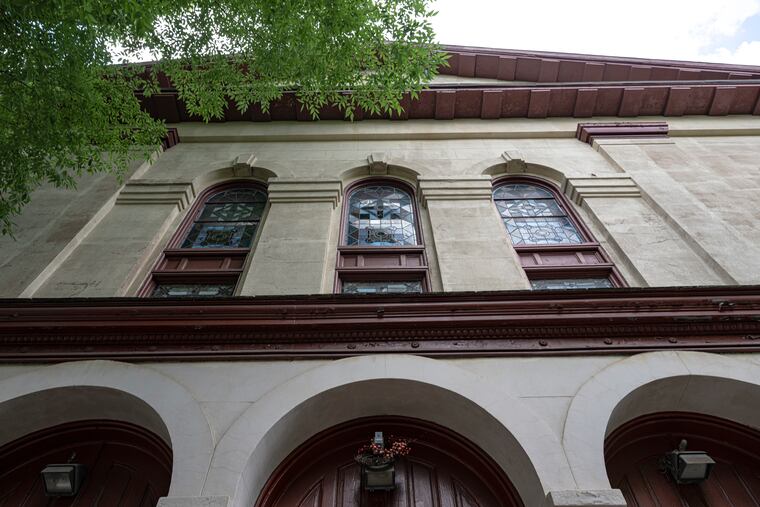
Devastated, the committed group of parents, staff, and students met in the basement of a local church to hold one of their signature town meetings, where policy decisions are made using a modified consensus process. Anyone who has done work with a Quaker organization knows that consensus can be slow, frustrating, and messy. This was no exception. The school's deliberations went until the wee hours of the morning. Most of the students fell asleep. Finally, however, the community resigned, begrudgingly, to become an independent private school.
However, now that the school would be dependent on tuition income, there was a worry that the education would not remain accessible. To keep tuition low, organizers cemented the cooperative model into the bylaws. Parents, staff, and students would work together to keep the school running. This model would not only reduce costs, but also model community values for the children.
Today, the school remains true to its humanistic roots. Town meetings no longer last into the wee hours, but the school is still run cooperatively. Parents can exercise considerable influence over the everyday operations. The classroom teachers are all paid professionals, but there is no principal and the administration is a volunteer committee of parents and teachers. Why? Because just as the school does not want a classroom with hierarchies of expertise, we also do not want an administrative structure that mirrors typical industrial-era management practices.
Too many of the current conversations about education in the United States forget that school is not just about academics; it is also about teaching children a way of being in the world. Every part of providing children with an education - social, academic, administrative - should reflect that way of being.
An ever-growing body of research tells us that every school should be participatory, creative, expressive, empowering, equitable, playful, imaginative, and nurturing. Conferences around the world celebrate innovative educational practices that can help the world's schools move away from what Sir Ken Robinson calls "the factory model of education." Venture capitalists and philanthropists, likewise, throw money at teaching methods that emphasize "character" and "social emotional learning."
Still, words like cooperative and humanistic likely conjure images of the progressive educational idealism of the 1970s. They should. Project Learn School was founded in the days of disco, but this institution does not wear bell bottoms. Instead, it seems uniquely situated on the frontier of 21st-century education. Update the language - change coop to crowdsourced - and the school is teaching and embodying the critical skills necessary for a 21st-century economy.
The conversation about education should not be all about the Common Core, testing, charter schools, and technology integration. We also need to ask: How do we raise a generation of children who use their academic skills in ways that reflect and reinforce the values that we believe should ground our society in the future? To accomplish that, we need an education system that models the way of being we want our children to learn. Perhaps Project Learn School can serve as an inspiration.