Big step: Kindergarten
Back in 1986, Robert Fulghum got his share of attention for his book linking kindergarten principles to what really matters in life. All I Really Need to Know I Learned in Kindergarten became a best-seller, reducing some of life's complexities to a simple schoolyard template.
Back in 1986, Robert Fulghum got his share of attention for his book linking kindergarten principles to what really matters in life. All I Really Need to Know I Learned in Kindergarten became a best-seller, reducing some of life's complexities to a simple schoolyard template.
Kindergarten remains pivotal in the lives of children, introducing concepts and social principles that youngsters learn to live by. As Fulghum suggests, it's where we learn to clean up our own messes, hold hands, and stick together.
For many Philadelphia-area students-to-be, this life-cycle event looms large, as most schools start next week. Don't fear: We grilled two veteran kindergarten teachers about the ins and outs of helping children (and parents) make the transition to the classroom.
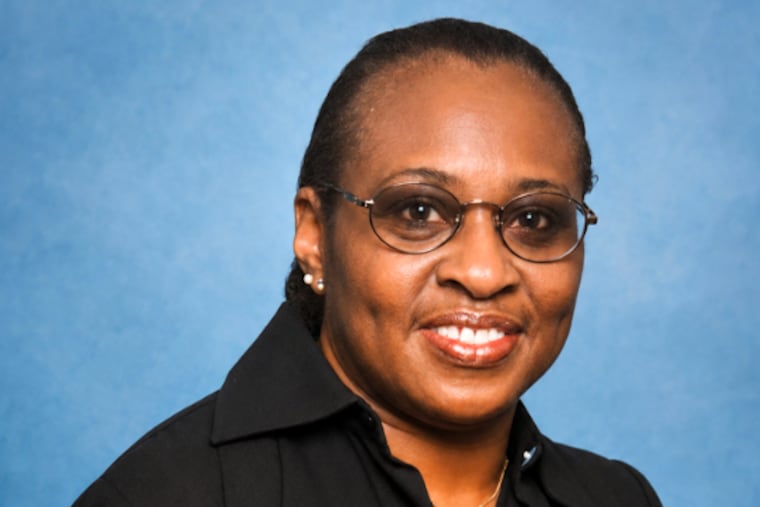
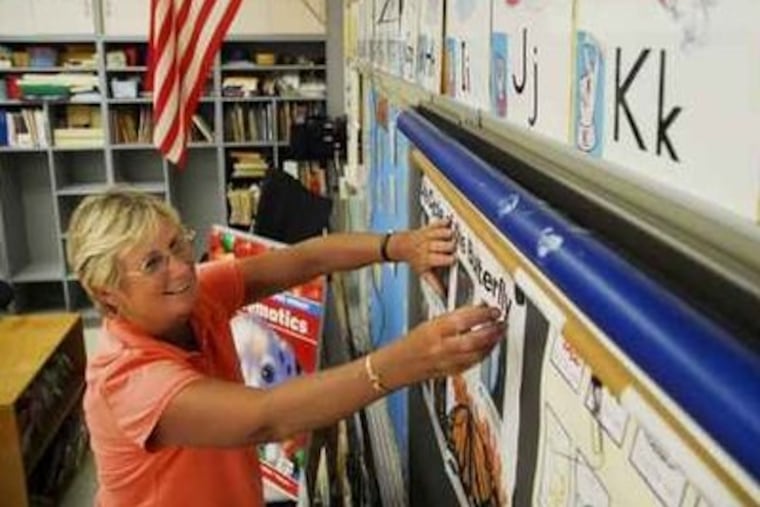
Our first expert: Jan Wright, 56, teaches at Moorestown's George C. Baker School. A kindergarten teacher for 22 years, Wright knew from the time she was a teenager growing up in Collingswood that she wanted to work with children. She started teaching third grade after graduating from Glassboro State College (now Rowan University), but found her ideal fit in the kindergarten classroom.
Our second expert: Elizabeth Zack, a 15-year veteran, is a kindergarten teacher at the Philadelphia School in Center City, an independent, nonsectarian school. After college, Zack planned to work in public relations and advertising. It turned out to be a poor fit, especially after she found herself drawn to the on-site preschool at the company where she worked.
"I would wander in all the time, and then I offered to substitute there. Once I did, I realized that I was finally in the right place." She went back to school at the University of Pennsylvania to get a master's degree in education.
Question: What is your philosophy about teaching kindergarten?
Wright: It's really quite simple: I spend the year emphasizing . . . the most important things I can teach: that it's important to be kind, it matters to others what you say and do, and that in life, there are consequences.
Q: What does preparing a child for kindergarten really mean?
Zack: I think the most important preparation is some prior social experience with other children, so that the child will feel comfortable in a school setting. It can be as informal as a neighborhood play group. Kindergarten is really the beginning of the official school experience, but some parents make the mistake of pushing children into learning experiences that they may not be ready for, even before they get to kindergarten.
Q: What if a child has had no preschool experience?
Wright: It's amazing how quickly kids adjust to a group situation. While the children may arrive with different levels of social skills, kindergarten, by its very nature, starts to level the playing field. Most children watch and learn from one another quickly and automatically.
Q: So what happens if your child doesn't want you to leave on the first day, or leaves so easily that you feel rejected?
Zack: I often tell parents that the transition to kindergarten is harder for them than it is for the child. My advice to parents is to say goodbye quickly and with confidence, even if the child is upset. If you don't, you're sending your child the message that you're not leaving because you're not sure he'll be OK without you. Most children who are crying when they separate from their parents are not crying five minutes later. If the child leaves you happily, don't take it as a message that you're not important in his or her life. Just celebrate!
Q: What does a kindergarten day look like in 2008?
Wright: It's tremendously busy! That's mostly because there's a lot more readiness activity in preschools, and because many parents are pushing reading early. So kindergarten has become much more learning-focused, which I'm not sure is such a good thing. In my own classroom, I still retain a lot of play. Although I have to juggle the demands of the curriculum, my belief is that children will read when they're ready, whether that's at 3 or at 7.
Q: What happens to the very shy child?
Zack: I had one little girl who literally hid under the table for the first few weeks of school. But most of the children who seem to "disappear" in a classroom find their own niche before too long. A child will be able to figure out his or her place in the life of the classroom without a lot of intervention. That little girl who hid under the table was unrecognizable by the end of the year. She was almost in the category of the life of the party!
Q: Is it a myth that girls are typically more "ready" for kindergarten than boys?
Wright: I think that some of the behaviors we look for in a school setting are just easier for girls. Sitting on the carpet and listening to a story is an example - it may just be a more natural fit for girls of 5 or 6 than it is for boys. I find that most of the boys also need movement and more hands-on activities.
Q: How do you communicate with parents, especially if a child is acting up?
Wright: First of all, in two-parent families these days, it's definitely communication with both parents. Many dads have been "room mothers," something you didn't see a generation ago, so that's now an outdated term. Dads volunteer, they come to conferences, and I hear from them often.
I love e-mail because it's quick and makes life easier for all of us. But when something's wrong, I let the parent know and suggest that we need to talk face-to-face about things that are going on in the classroom. I still believe in conferences, especially in kindergarten, when so much is happening in their children's lives.
Q: Bottom line: What are the most important things kids need to learn in kindergarten?
Zack: To love learning. To learn to play fairly. To be heard and to listen to others. I also want them to understand that letters make words, that books can be fun to read, and that there are always new things to discover and learn. And I definitely want them to learn to respect themselves and the world.