Democrats in position to end electoral college, but challenges await
It would end aberrations like the ones in 2000 and 2016 that saw Republicans George W. Bush and Donald Trump win the presidency despite Democrats receiving more votes.
A movement to give the presidency to whoever receives the most votes nationally has new momentum after Democrats swept state races in the midterm elections, but still faces major hurdles in legislative chambers and courtrooms.
For two decades, reformers have pressed states to agree to give their electoral votes to the winner of the national popular vote, regardless of who wins their state. The arrangement would render the electoral college moot and end aberrations like the ones in 2000 and 2016 that saw Republicans George W. Bush and Donald Trump win the presidency despite Democrats receiving more votes.
“There is no other election in this country where the person who loses can win the election, where the person who gets the most votes doesn’t actually win,” said Wisconsin state Sen. Kelda Roys (D). “And it’s fundamentally unfair and antidemocratic, small-d democratic.”
Finding a way to sidestep the electoral college once seemed all but impossible. But with Democrats winning full control of more state governments last week, it now appears within reach — at least politically. If supporters get their way, they will be met with a slew of litigation, and any one lawsuit could block their path.
Such a change would transform the country politically, reshaping who can mount viable presidential bids and how they run their campaigns. Instead of concentrating on half a dozen or so swing states, they would seek votes across the nation. Supporters say that would guarantee presidential candidates find broad backing; detractors say they would ignore smaller states and spend most of their time in the most populous states: California, Texas and Florida.
Opponents say those who want to overhaul the electoral college must go through the arduous process of amending the Constitution rather than rewriting the rules with state laws.
Under the Constitution, states decide how to award their electoral votes, with most giving all of theirs to whoever wins their state. To get around that setup, reformers have asked states to agree to give their electoral votes to whoever wins the national popular vote. The agreement wouldn’t go into effect until states with at least the 270 electoral votes needed to win the presidency join.
Over the last 20 years, 18 states and Washington, D.C., have signed on to the agreement. Together, they have 222 electoral votes.
Supporters tout the plan as a neutral measure, but it’s one that’s secured lopsided support from Democrats. Republicans have shown little interest in changing a system that has allowed them to win two presidential races in recent decades without popular support.
Last week, Democrats won full control of the state legislatures and governors’ mansions in five states that have not yet adopted the compact: Arizona, Michigan, Nevada, Pennsylvania and Wisconsin. They account for 61 electoral votes, and if four of them sign on, the compact would secure the majority needed to activate.
Already, Democrats in those states are giving fuel to the idea.
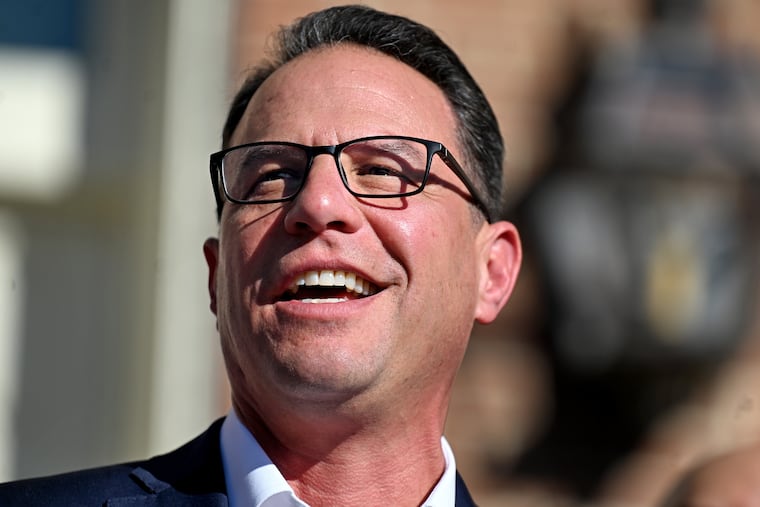
“The national popular vote makes sense,” Pennsylvania Gov. Josh Shapiro (D) said after the midterms on the “Pod Save America” podcast.
Shapiro, a potential 2028 presidential candidate, added, “To me, the most important thing is that the will of the people is heard and respected, and I think popular vote is a way to do that.”
Even with the renewed momentum, the plan faces dire political risks and guaranteed legal challenges. Opponents are prepared to sue because they see it as an illegal attempt to work around the Constitution, said Daniel Lennington, vice president of the conservative Wisconsin Institute for Law and Liberty.
The electoral college is anti-democratic by design, Lennington said.
“I’m going to side with the founders on the idea that there are certain things, certain structures and limitations, that we put on democracy,” he said. “There’s not a lot of difference between a society which is run by an autocrat versus one that’s run by 51 percent of the people in the country that are able to do whatever they want whenever they want.”
Challenges ahead
If enough states signed onto the agreement, supporters would have to wrestle with a provision of the Constitution that says Congress must sign off on some agreements among states. Some supporters of the agreement argue congressional approval isn’t necessary but say they would seek it anyway.
Pushing the issue through a Democratic-controlled Congress could be tricky, especially when multiple senators from both parties are eyeing presidential runs and would have to weigh whether a popular vote would hurt or help their chances.
There’s also debate over whether the president could veto the compact. A White House spokesperson didn’t respond to a request for comment.
An avalanche of litigation is certain, with some lawsuits arguing the new arrangement would arbitrarily and unconstitutionally treat voters differently, said Derek Muller, a University of Notre Dame law professor. Different states have different voting rules — some require voters to show ID; some mail ballots to every registered voter; some have robust early-voting opportunities — and the challengers could argue that creates an unfair presidential contest.
Under one theory, the national popular vote compact would violate state voter residency requirements because it would effectively turn state elections into national ones, Muller said.
The Supreme Court would likely weigh in, but so would numerous state supreme courts. And supporters of the compact would have to win all of the cases.
That’s no reason to hold back, said Chris Rabb, a Pennsylvania Democrat who was elected to Congress last week after working on the national popular vote compact as a state lawmaker for a decade.
“If we had the attitude of not doing the right thing because of lawsuits, we wouldn’t do anything,” he said.
Democrats may reconsider whether the electoral college is still biased against them, especially in light of the midterm results.
On the one hand, they have new opportunities to advance the popular vote compact. On the other, they won states such as Ohio and Texas that are rich in electoral college votes and until recently were seen as solidly Republican.
Support for adopting the popular vote is uneven across the states where Democrats won trifectas.
“We can do away with” the electoral college, Wisconsin Gov.-elect David Crowley (D) told the Associated Press.
Nevada Gov.-elect Aaron Ford (D), who unseated a Republican, has not committed to approving the compact. Ford spokesperson Tai Sims said that, for now, Ford is focused on lowering costs.
But the measure failed before when Nevada Democrats held a trifecta in 2019. Then-governor Steve Sisolak (D) vetoed the measure passed by the Democratic-controlled legislature, saying it “could diminish the role of smaller states like Nevada in national electoral contests.”
A spokesperson for Michigan Gov.-elect Jocelyn Benson (D) didn’t respond to questions.
Arizona Gov. Katie Hobbs (D) declined to say in a television interview this week whether she backed the idea, even though she had sponsored a bill supporting the measure as a state lawmaker.
The plan nonetheless is on the agenda of state Sen. Priya Sundareshan, the Democratic leader in the chamber.
“This goes a long way to demonstrating that every vote matters, that the regular voter can make a difference with their vote,” she said.