ICE targeting sanctuary cities, a new chapter in 40-year history of intimidation and resistance
Sanctuary cities aren't the soft target Trump has hoped they would be.
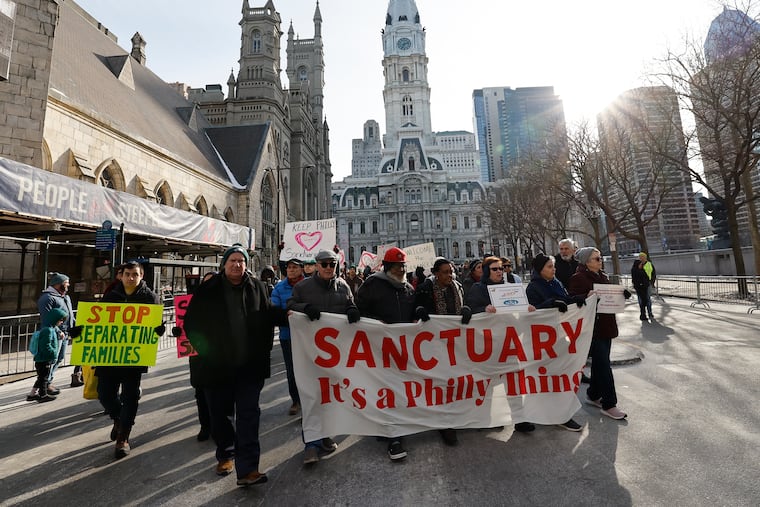
Recently, DHS announced that ICE has begun a surge targeting sanctuary cities, including communications blasting “sanctuary politicians” for covering up purported voter “fraud.” These efforts are part of the Trump administration’s attempt to fulfill a campaign promise to carry out the “largest deportation” in U.S. history, putting sanctuary cities front and center.
It is unclear if targeting sanctuary cities will bolster the administration’s popularity. Even Fox News polling show a majority of Americans is disenchanted with Trump’s immigration policy, in particular interior enforcement that has brought thousands of masked and armed ICE agents into American cities. But, hoping to turn the tide, the administration is perhaps counting on the contentious place that sanctuary cities have occupied in American immigration politics since the 1980s.
Federal officials and immigration restrictionists have repeatedly portrayed them as jurisdictions that frustrate the government’s ability to carry out federal law. Sanctuary advocates, meanwhile, have argued that local governments should decide how much of their own personnel and resources should be devoted to federal immigration enforcement.
There is no single definition of a sanctuary city. The term often refers to jurisdictions that limit cooperation between local government agencies and federal immigration authorities. These policies can restrict local participation in immigration arrests, limit the sharing of information regarding individuals’ immigration status, or prevent local police from holding people solely at the request of ICE. No peer-reviewed study on sanctuary cities suggests that such policies foster crime or lead to increased violence. On the contrary, research suggests that such policies foster greater trust between immigrant communities and law enforcement.
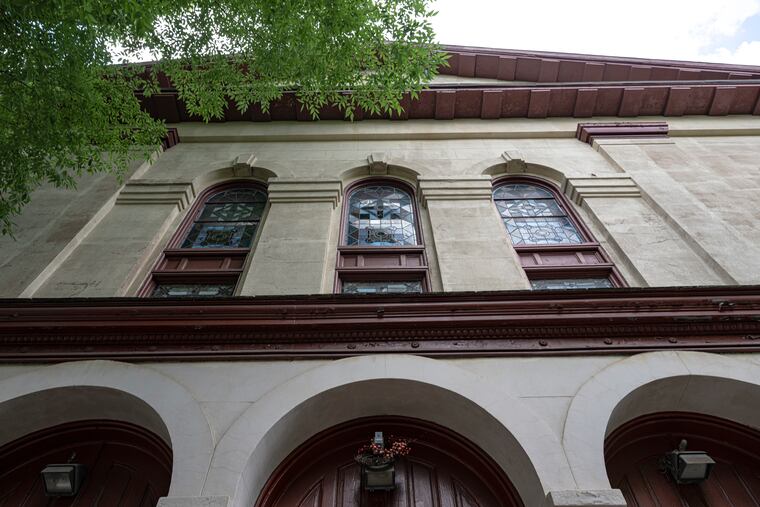
The roots of sanctuary policies predate city ordinances, however. The modern sanctuary movement emerged in the early 1980s when religious congregations opened their doors to Central Americans fleeing civil wars and political repression. They did so in defiance of the U.S. federal government. The Ronald Reagan administration refused to grant political asylum to Salvadorans and Guatemalans whom they deemed economic migrants, rather than victims of persecution. Churches and synagogues provided shelter and transportation while challenging their government’s foreign policies and application of refugee law. Sanctuary combined humanitarian assistance with a sustained effort to change the political and moral terms of the nation’s immigration debate.
As the movement expanded across the country, activists carried their sanctuary practices into municipal politics. They created a new arena in which to debate the interplay between federal and local government jurisdiction as well as resist an expanding apparatus that detained and deported their neighbors. Sanctuary thus became an assertion of both local self-determination and a powerful statement of solidarity with asylum seekers, as municipal leaders claimed the authority to decide how their institutions and resources would be used while refusing to make those resources an extension of federal immigration enforcement.
The Reagan administration responded immediately. In 1987, federal officials threatened to withhold Justice Department funding from California cities that had adopted sanctuary policies. The Government Accountability Office subsequently concluded that federal law did not authorize the Justice Department to withhold those grants on that basis. The threat of financial penalties for cities that refused to abide by the White House’s policies, however, would remain a potent one for years to come.
Attacking sanctuary cities became a marginal position in national politics in the 1990s. That relative quiet reflected developments at the national level that were hardly reassuring for immigrants living in the United States. During the decade, Congress gave the federal government new and unprecedented powers to detain and remove immigrants from the interior of the country. The Antiterrorism and Effective Death Penalty Act of 1996 expanded the grounds for deporting immigrants convicted of a wide panoply of crimes, while the Illegal Immigration Reform and Immigrant Responsibility Act passed in the same year broadened the definition of offenses that could trigger removal while creating an expedited procedure that allowed the government to deport some immigrants without a full hearing before an immigration judge.
These measures passed with substantial bipartisan support under President Bill Clinton. As federal enforcement grew more powerful and increasingly capable of reaching into immigrant communities across the country, there was less political need for immigration hardliners to single out individual cities as obstacles to immigration enforcement.
The political quiet around sanctuary cities began to change after Sept. 11, 2001. The attacks generated a new climate of suspicion toward immigrants, which restrictionist lawmakers such as former Colorado Rep. Tom Tancredo used to recast immigration as a matter of national security. The federal government continued developing policies and technologies to extend immigration enforcement into local communities, such as Section 287(g) agreements allowing federal officials to deputize state and local police to perform certain immigration-enforcement functions, and Secure Communities, launched in 2008, linking municipal fingerprint databases with federal registers to identify people in custody who could be subject to removal.
Meanwhile, cities and states became new battlegrounds for anti-immigrant legislation. Hazleton, Pa., enacted ordinances in 2006 targeting landlords who rented to undocumented immigrants and employers who hired them, while in Arizona state legislators passed SB1070 in 2010, which further intertwined local police with federal immigration enforcement.
Yet sanctuary remained a thorny issue for national political figures. Mitt Romney opposed sanctuary cities during his 2012 presidential campaign, proposing to make conditions so difficult for undocumented immigrants that they would “self-deport.” But the proposition generated political blowback rather than a clear electoral advantage.
Trump brought sanctuary cities back into the center of national politics during his first presidential campaign alongside his calls for a border wall and expanded immigration enforcement. In 2017 he immediately sought to deliver yet faced resistance from states like California as well as from the Supreme Court. In Philadelphia, Mayor Kenney terminated the Preliminary Arraignment Reporting System (PARS) which gave ICE access to record databases used by law enforcement and the courts. Such policies limiting cooperation between local law enforcement and federal immigration enforcement reflected the assertion of local residents and elected officials that their communities should not be enlisted in an immigration enforcement regime they opposed.
Republican governors during the Biden years sought a new sanctuary battlefield. Governors Ron DeSantis of Florida and Greg Abbott of Texas sought to make an example of sanctuary cities by transporting migrants en masse to these municipalities. Whether the targeted Democratic-led cities were actually sanctuary cities mattered little, as anti-sanctuary theatrics played well among the MAGA base. A centerpiece of Trump’s campaign stump speeches in 2024, then, was the promise to “end all sanctuary cities,” ostensibly to finally bring peace and order to the nation.
Since returning to office, Trump has worked to fulfill these promises, and the nation has witnessed how this has played out on city streets. Beginning in the summer of 2025, federal immigration operations increasingly concentrated on those municipalities that had set limits on cooperation with ICE. Los Angeles, Chicago, Portland, Washington, D.C., and Minneapolis became the major sites of enforcement.
The consequences have been profound and traumatic. Roving bands of ICE and Border Patrol agents, snatching both non-citizens and citizens off the street; clashes between local residents and federal officers; and the killing of Renee Good and Alex Pretti in broad daylight. More recently, arrests have skyrocketed even as ICE has disappeared from the front-page headlines.
While sanctuary policies cannot prevent ICE from making arrests nor can they indefinitely protect people living in this country without legal status, those advocating for them have repeatedly thrown a wrench in the plans to complete the largest deportation in American history. They have served as a bulwark against an expanding federal apparatus and statement of values for local communities that refuse to view their neighbors as criminals
Trump’s attacks have continued apace. Along with expanded enforcement operations, he has continually directed the Department of Justice to file lawsuits against sanctuary jurisdictions. Time and time again, however, judges have sided with cities and states, arguing that local municipalities have the constitutional right to dictate how their resources should be used. As Trump faces losses in the courts and once again pivots to targeting sanctuary cities with more ICE enforcement, the administration seems to be arguing that if you can’t abolish them, intimidate them. And, if they won’t be intimidated, continue to wreak havoc.
Sanctuary cities aren’t to be taken lightly. They’ve never been the soft target that Trump has hoped they’d be, and they’ve consistently offered an alternative vision for not only immigration policy but for who Americans value as their neighbor.
Lloyd D. Barba is Associate Professor of Religion at Amherst College. Sergio M. González is Associate Professor of History at Marquette University. They are the authors of Sanctuary in America: How Activists Defied the Government and Defended Immigrants—And Why It Still Matters.
Made by History takes readers beyond the headlines with articles written and edited by professional historians. Opinions expressed do not necessarily reflect the views of The Inquirer.