Josh Shapiro’s blowout victory is his strongest case for 2028. How do other presidential hopefuls compare?
The Democratic governor’s massive victory lays “a pretty good groundwork” for a possible presidential bid, a pollster said.
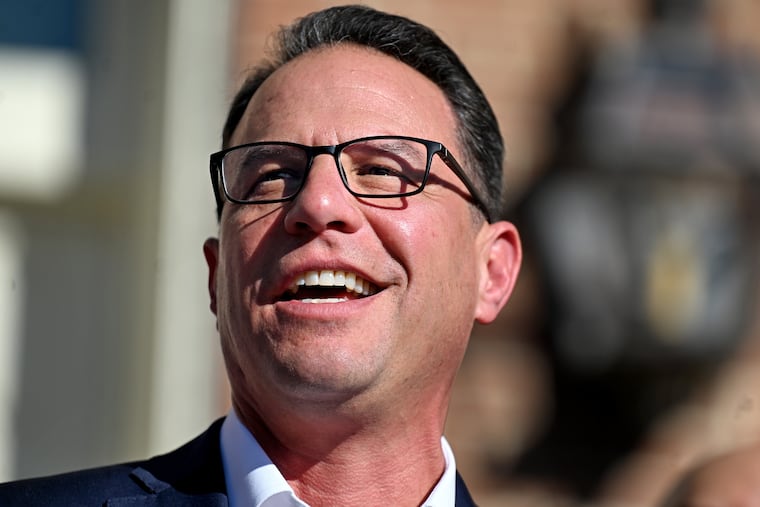
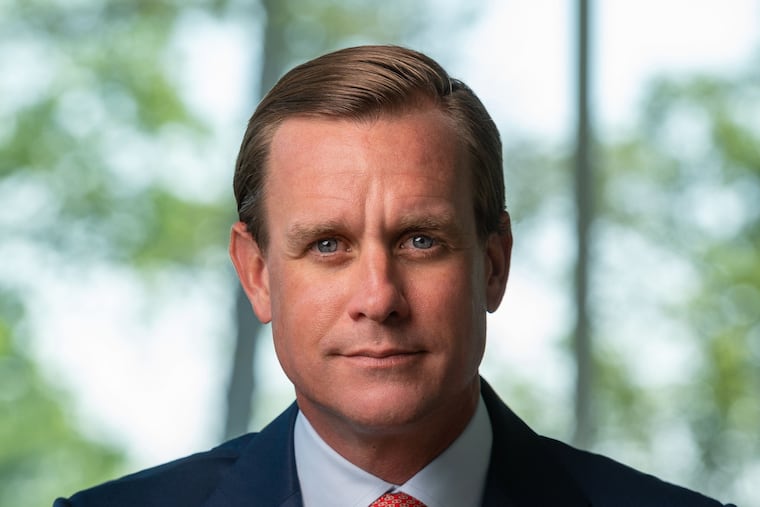
If the 2026 midterm showings were a competition between Democrats with ambitions to run for president in two years, Gov. Josh Shapiro would have come out on top.
In one of the nation’s swingiest states, Shapiro was reelected in a blowout, crushing his GOP opponent, making massive gains upon former Vice President Kamala Harris’ performance in 2024, and, with his coattails, flipping the Pennsylvania Senate to Democratic control for the first time in three decades and getting four Democrats elected to Congress.
Shapiro flexed his political strength, but other potential presidential contenders, namely U.S. Sen. Jon Ossoff of Georgia, saw their stock rise, too, after similarly strong performances in swing states. Will the downballot victories be enough to help Shapiro stand out in a likely crowded field?
“Democratic Party voters are very focused on winning. Putting Pennsylvania essentially in your column right away is something no one else can do,” said Adam Carlson, a New-York based pollster who runs Zenith Research, which gathers data for Democratic candidates nationwide.
In a state that went for President Donald Trump just two years ago by just under a 2-percentage-point margin, the Pennsylvania map now looks almost unrecognizable. Shapiro flipped five more counties than in his 2022 gubernatorial run and became the first Democrat to win Lancaster County in 36 years. He also ran up the score even higher in already-blue counties, including the vote-rich Philly suburbs.
A presidential run, however, is an entirely different ball of wax.
“I think there’s lots to be learned and I’m not sure how it will translate on a national stage for him, but in terms of how to win Pennsylvania, I think he’s laid a pretty good groundwork,” Carlson said.
Behind Shapiro’s win
Last week, Shapiro defeated Republican State Treasurer Stacy Garrity by a whopping 22 percentage points, a 1.1 million-vote margin of victory.
“This is a good night for our commonwealth. It’s looking like it could be a pretty good night for our country, too,” Shapiro told supporters at his victory party.
He outpaced his already impressive 15-percentage-point margin in his 2022 gubernatorial race and outperformed former Govs. Ed Rendell in 2006 and Tom Wolf in 2018, both Democrats who won reelection in the middle of a Republican president’s term.
Shapiro also had a nearly 12-percentage-point increase on Harris’ showing in Pennsylvania two years ago, the highest improvement over the 2024 Democratic nominee among six prospective 2028 Democrats who faced statewide elections this year, according to an Inquirer analysis.
“Demonstrating the capacity to win the biggest state on the map, I think, puts you in the category on your own,” said Tré Easton, vice president of the Searchlight Institute, a Democratic-leaning think tank, who previously worked for U.S. Sen. John Fetterman (D., Pa.). “I think he’s going to have a very compelling case to make if he, as we all expect him to do, pulls a trigger on a presidential campaign.”
Former North Carolina Gov. Roy Cooper won a key U.S. Senate race, posting an 11-point improvement over Harris, and U.S. Sen. Cory Booker of New Jersey brought about a 10.4-point increase.
But perhaps the most direct point of comparison to Shapiro is Ossoff, who was elected to a second term in Georgia, a state with a nearly identical split for Trump and Harris in 2024 as Pennsylvania.
He defeated Republican challenger Mike Collins, a U.S. House member, by over 18 percentage points, and he improved over Harris by about 10½ percentage points.
Ossoff has insisted he has “zero interest” in running for president, but several straw polls and prediction markets have him at the top of the list if he changes his mind.
Shapiro, similarly, has said his focus is on governing the state with the new Democratic trifecta, which could enable him to increase the minimum wage, among other long-stalled priorities.
But he has also taken several concrete steps toward a presidential campaign this year, including publishing a memoir and launching a federal political action committee.
Since Election Day, he has spoken with former President Joe Biden, South Carolina’s Democratic kingmaker, U.S. Rep. Jim Clyburn, and former President Barack Obama’s 2012 campaign manager, Jim Messina, according to reports. (Shapiro’s spokesperson declined to comment further.)
He will also speak Friday at the Majority Democrats’ What’s Next summit in Denver, an event focused on shaping the party’s 2028 platform.
Shapiro’s 22-point win falls in the middle of the pack among potential contenders on statewide ballots this year, but that is largely due to the battleground nature of Pennsylvania in contrast to the deep-blue states of his possible competitors.
Maryland Gov. Wes Moore had the highest win margin, with a more than 33-point difference over his competitor, but was only slightly more than Harris’ win over Trump in the solidly Democratic state.
Booker beat his longshot challenger, South Jersey attorney Justin Murphy, by 27 points. And Illinois Gov. JB Pritzker won reelection by nearly 24 points in another deep-blue state.
Midterm positioning
Shapiro built up a historic $60 million war chest for his reelection contest while GOP donors all but abandoned his Republican opponent, with polls showing a rout.
With his reelection effectively secured months before Election Day, Shapiro focused his attention during the fall campaign on the Pennsylvania Democratic Party, coordinating across campaigns to boost candidates over the line. He devoted the key final weeks of his run to campaigning for congressional and state legislative candidates, to strong success.
But does he deserve credit, when Democrats — who won the U.S. House by a national average of 13 percentage points — were already likely to benefit as the party out of power?
“I really do think the governor’s overperformance, his popularity, and the way in which he leveraged it really made a huge difference, and it’s hard to imagine that it would be as decisive of a win and as widespread if it wasn’t for that,” said J.J. Abbott, a Democratic consultant who advised several of the party’s state legislative candidates.
He credited Shapiro for his recruitment efforts to find and run top candidates for Congress and the legislature as well as raising money for them, going on TV to advocate for them, and visiting almost every battleground candidate’s district.
Being in Pennsylvania also helped bat away repeated accusations from Garrity’s campaign that he was more focused more on Pennsylvania Avenue than the needs of working Pennsylvania families, he said.
But Shapiro’s focus in Pennsylvania kept him away from early-primary states, like Nevada and New Mexico, where voters will be key to deciding the party’s eventual nominee.
His potential competitors, meanwhile, were making moves to build allies across the country.
On top of campaigning in New Jersey swing districts, Booker spent time campaigning for Sen.-elect Annie Andrews in South Carolina, the first state to conduct a Democratic primary for the 2028 election.
Pritzker, a billionaire, spent nearly $40 million of his personal fortune on Democratic candidates and groups in the midterm elections, investing in states like Texas, Mississippi, and Kansas.
And while he was not on the ballot, Kentucky Gov. Andy Beshear chaired the Democratic Governors Association, where he oversaw strategy for gubernatorial races across the country. This year, Democrats won seats in Iowa, Ohio, Wisconsin, and Texas — though Beshear faced criticism for not sending resources to Texas Gov.-elect Gina Hinojosa’s campaign until late in the race.
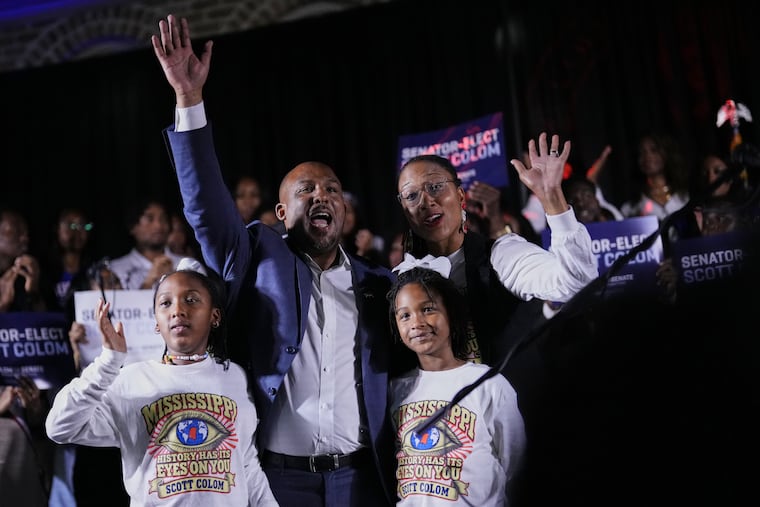
Ossoff, like Shapiro, also spent the midterm cycle focused on his home state. He tied himself to Georgia Gov.-elect Keisha Lance Bottoms, who will become the first Black woman governor in U.S. history, standing alongside her at several rallies and mentioning her in debates and interviews. With his coattails, Democrats, almost all of whom were Black women, won key state-level races, including attorney general and secretary of state, and flipped the Georgia House for the first time since 2005.
Ideological split
As Democrats look ahead to 2028, a division among voters about the best kind of candidate to nominate has begun to emerge. Should they support a leader of the progressive flank who will usher in new, bold ideas? Or should they get behind a pragmatic centrist with a proven record, who can be viewed as electable by independent and Republican voters?
Shapiro, a moderate, falls more toward the latter camp, Carlson said.
“He comes across as a grown-up, and he comes across as somebody who’s not particularly interested in settling scores or issuing vendettas or alienating Republicans. He’s just focused on the job, and he’s not a partisan warrior,” he said.
In the September poll from The Inquirer, the New York Times, and Siena University, roughly one in five self-identified Republicans said they were planning to vote for Shapiro, and, according to election data, Garrity received 219,000 votes from mail ballots, while 285,000 Republican mail ballots were cast.
And while the left wing of the Democratic Party is celebrating victories, like Abdul El-Sayed’s U.S. Senate win in Michigan, election results showed progressive candidates, including El-Sayed and three other Senate nominees backed by democratic socialist Vermont Sen. Bernie Sanders, were among Democrats’ worst performances in this year’s midterms, according to a CNN review.
Those figures could sway to see Shapiro as a safer bet, Easton argued.
“As much as Democrats are going to want to be aspirational, especially after the decade of Trump, they’re also going to want to win, and if he comes on every big stage and says, ‘I take Pennsylvania off the map,’ that’s a hard thing to counter, especially from people who haven’t either won statewide or who maybe could not perform as well in some of these rural areas,” he said.
U.S. Rep. Ro Khanna, a California Democrat who grew up in Bucks County, has signaled keen interest in running for president on a progressive platform but improved only 5 percentage points over Harris this year in his Bay Area district.
Centrist candidates had the biggest margins in statewide races and pulled off wins in deep-red territory like Kansas. That could help the case for Shapiro’s candidacy.
“When you win in a swing state and you come from a swing state, that brings a different heft,” Abbott said.
“Pennsylvania, North Carolina, and Georgia are all really important swing states, and so I think for those candidates, if any of them were to run [for president], that does add credibility, making a case for electability,” he said.
Still, some progressives did remarkably well. U.S. Rep. Alexandria Ocasio-Cortez took an 11-percentage-point leap over Harris’ performance in her district in 2024 as she won a fifth term in her sapphire-blue district in the Bronx and Queens by almost 55 points. The lawmaker said it will be a while before she decides whether she plans to run for president.
As Shapiro potentially jockeys with Ocasio-Cortez and others for the Democratic nomination next year, the most effective way Carlson said he can demonstrate his value to voters is by demonstrating his ability to get material wins. Throughout his reelection campaign, Shapiro repeatedly emphasized that his first commitment would be increasing the state’s minimum wage to $15 per hour, followed by providing more funding for transit services.
“No matter what you’ve done in the past, it’s like a very much a what-have-you-done-for-me-lately kind of thing,” Carlson said.