George Washington’s entanglements with Pennsylvania slavery extend beyond Philadelphia
Trump’s removal of panels focused on Washington’s ties to slavery in Philadelphia should prompt us to learn more about the lives of enslaved people in Washington’s America.
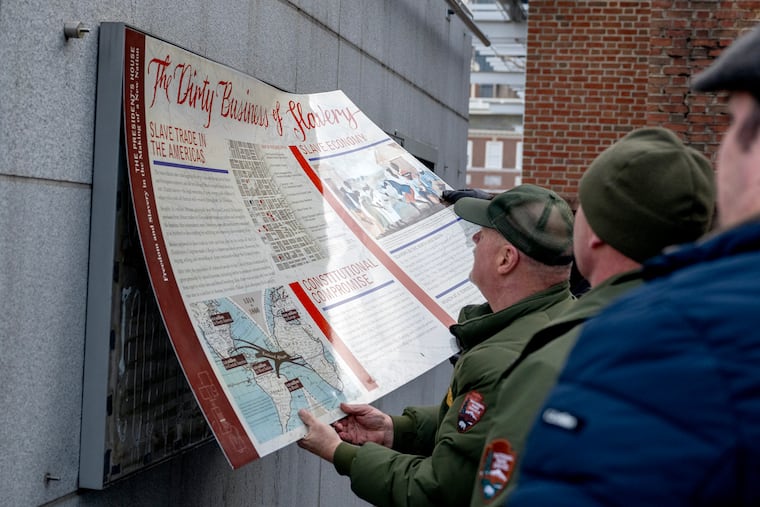
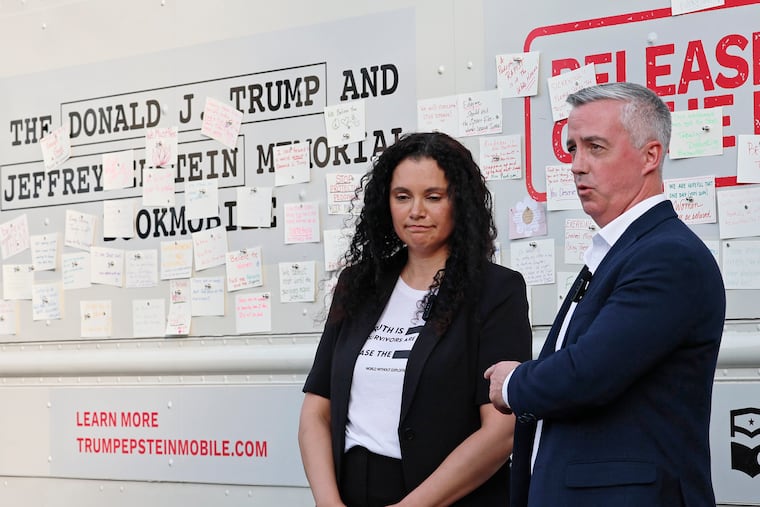
From 2010 until early 2026, there were 34 interpretive panels in Philadelphia’s Independence National Historical Park relating the history of the families who resided at the President’s House Site. Now there are only 16. The missing panels speak to the ongoing struggle between historians and President Donald Trump over the role Black people played in the presidential administrations of George Washington and John Adams.
The legal history of these panels is messy. In January, one year after Trump issued an executive order centralizing his control over historical interpretation at national park sites, federal workers removed all 34 panels from the open-air Philadelphia museum. In February, a district court issued an injunction requiring the restoration of the panels, but a circuit court paused the injunction before the work was completed. In April, the same circuit court clarified that the federal government was not to tamper with any of the panels — restored or otherwise — while litigation is pending. This is how it came to pass that the President’s House Site lies half-interpreted on the eve of the U.S. Semiquincentennial.
If the how is messy, the why is more straightforward: Donald Trump does not like talking about the history of American slavery. On the campaign trail in 2024, he denied that Washington was a slaveholder. When federal workers reviewed the President’s House Site panels for interpretations that conflicted with Trump’s executive order, nearly all their comments pertained to slavery. In short, federal workers understand that Trump does not want Philadelphia museums to discuss Washington’s relationship with slavery, certainly not as part of America 250 commemorations.
In fact, Washington’s entanglements with Pennsylvania slavery extend beyond Philadelphia. Black bondage was so ubiquitous during the first president’s lifetime that it would be peculiar if this were not the case. This context is critical for understanding the tension between freedom and slavery that lies at the heart of early U.S. history.
George Washington’s star began to rise during the French and Indian War, although it was slow going. After losing the Battle of Fort Necessity in what is now Southwestern Pennsylvania in 1754, then-Lt. Col. Washington petitioned the Virginia legislature for reimbursement for his loss of a “valuable servant,” an enslaved man who died of wounds he sustained in battle. Historians, including at Washington’s Mount Vernon, do not know the name of this bound veteran, only that his owner hoped to recuperate his value.
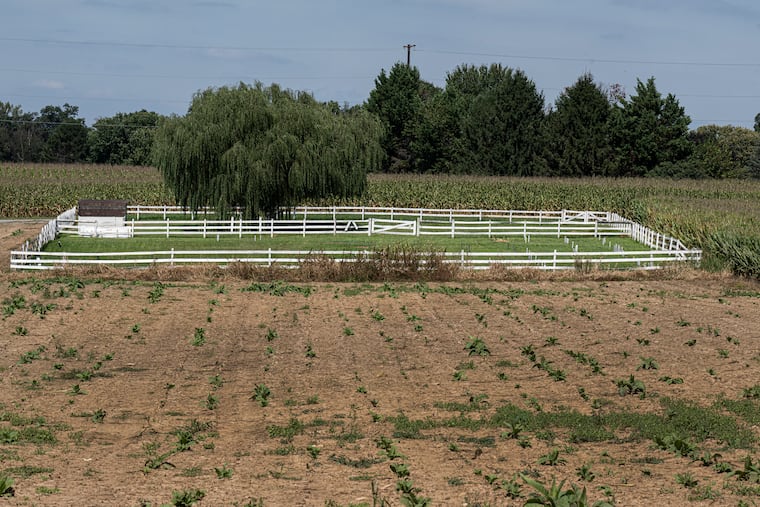
As a reward for his military service, Washington received preferential access to western lands. In 1768, he claimed 1,644 acres near Fort Necessity, which he called Washington’s Bottom. Determined to improve the tract and thus lower his tax burden, in 1773 he relocated four people he enslaved, Nancy, London, Duffy, and Simon, from Virginia to Pennsylvania. He tasked the group with establishing a grist mill along a slender tributary of the Youghiogheny River now called Washington’s Run. Other enslaved people followed, including carpenters, “workeing hands,” and perhaps a third group Washington’s local overseer referred to as “breeding mairs.” It is unclear from the overseer’s letter whether he was requesting horses or enslaved girls and women capable of bearing children. He acquired both, in any case, prompting his remark in 1781 that “negros and stock of every kind sems to incres fast.” Washington’s Pennsylvania plantation was isolated, but a community developed there all the same.
» READ MORE: How the Trump administration’s proposed panels would change President’s House
We know the names of many of these laborers today because Pennsylvania enacted a program for the gradual abolition of slavery in 1780. To distinguish between the bound and the free, the legislation required enslavers to register the people they held as property. Washington’s overseer registered 14 people in 1782, six of whom were children under the age of 10. Of the original four people who Washington had sent to Pennsylvania, only Simon appeared on this list, then 18 years old. However, we know that Nancy, at least, had also survived. A Pennsylvania enslaver noted a few years later that in 1784, “Nance a wench then the property of General Washington” had given birth to twins. She named them Charity and Tom.
In 1786, Washington confessed his support for gradual abolition programs in the abstract and expressed his hope that he would never have to purchase another enslaved person again. A few weeks later, he sold the people he owned in Pennsylvania to buyers in and around Washington’s Bottom after failing to convince the enslaved community to return voluntarily to Mount Vernon. It seemed the group understood that life would be better for them in an emancipating state. Still, this was slavery. Simon was purchased by merchant brothers, Bazil and Thomas Brown. “Nance & Young Child” became the property of a farmer named James Hammond; her other infant children, Charity and Tom, were sold away from her, claimed by Samuel Burns. In 1792, Nancy gave birth to another pair of twins, both the property of Hammond. She named the boy George.
This was not the end of Washington’s entanglements with Northern slavery. In the summer of 1794, one of Washington’s comrades from his French and Indian War days, John Neville, could do little but watch from a distance as Whiskey Rebels burned his Western Pennsylvania mansion to the ground, including the slave quarters. Neville and more than a dozen people he enslaved had been unable to turn back the tax protesters. In response, Washington took up the mantle of commander in chief, marching out of Philadelphia with militiamen intent on pacifying the countryside. In early autumn 1794, he spent a week in Carlisle provisioning his troops at the borough’s barracks. While there, Washington lodged with Ephraim Blaine, a friend, quartermaster, and enslaver. Quartermaster records reveal that enslaved teamsters, men identified only as “Blaine’s Negro,” “Hunter’s Negro,” and “Mitchell’s Negro,” kept the barracks stocked with the oats, timber, and wheat the army needed to sustain its mission. Enslaved Pennsylvanians manned the margins of Washington’s world.
The purpose of this historical accounting is not to sully the memory of Washington, but to emphasize that he presided over a nation where more than one in six residents was an enslaved person of African descent. In fact, this ratio would never be as high as when Washington lived at the President’s House in Philadelphia.
To acknowledge this history is to begin to understand that restoring panels is but a first step. We need more public histories of slavery, not fewer. This is the burden, and the opportunity, of America 250.
Cory James Young is an assistant professor of history at the University of Iowa currently writing a book about the history of Pennsylvania slavery during the age of gradual abolition.
Made By History takes readers beyond the headlines with articles written and edited by professional historians. Opinions expressed do not necessarily reflect the views of the Inquirer.