Trump administration can’t change President’s House panels for now, federal appeals court affirms
The Third Circuit Court of Appeals ordered the federal government to maintain the status quo at the President's House following the National Park Service release of new exhibit panels renderings.
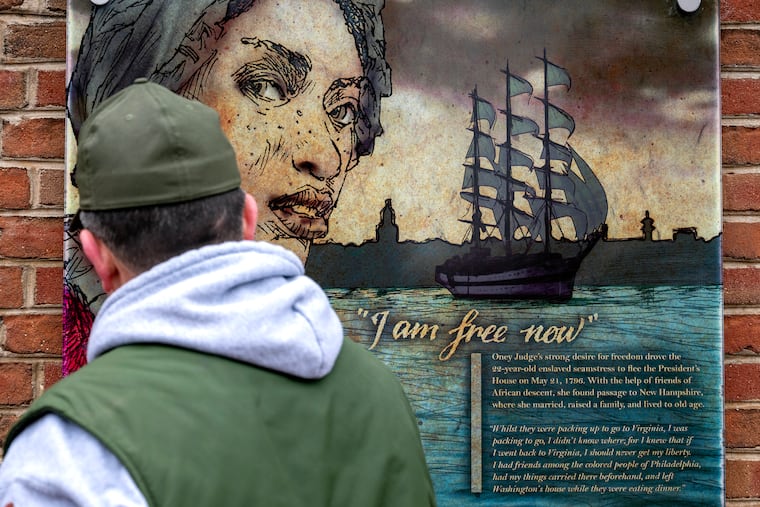
President Donald Trump‘s administration is prohibited from making changes to the President’s House site while its appeal of a lower court’s injunction is ongoing, the Third Circuit Court of Appeals ruled Thursday.
The order ostensibly affirms a previous administrative stay the appeals court entered in February, which paused parts of District Judge Cynthia M. Rufe’s injunction but allowed others to remain in force.
The federal government is not required to fully restore the President’s House site to its condition before the abrupt January removal of the slavery exhibit, but is prohibited from “making any and all further changes to the President’s House Site, including the installation of replacement materials, without mutual agreement of the City of Philadelphia,” Circuit Judge Thomas M. Hardiman’s order said.
The judge instructed the federal government to “continue to preserve the status quo as to the President’s House.”
Prior to the previous stay, the federal government had begun — but not finished — reinstalling exhibits Rufe had ordered restored.
The order came two days after the National Park Service quietly uploaded renderings of proposed new panels for the site. The proposed exhibits sanitize George Washington’s role in the enslavement of nine individuals at the President’s House and attempt to cast the first commander-in-chief in a more sympathetic light.
» READ MORE: The Trump administration wants to sanitize George Washington’s role in slavery at President’s House
“Slaves living in the President’s House experienced a greater modicum of autonomy than elsewhere in the South, such as to explore the city and sometimes even attend the theater, with Washington buying the tickets,” one panel says.
The government’s focus on the site follows a 2025 executive order in which Trump called for a review of displays at national parks that “inappropriately disparage Americans past or living.”
The new panel renderings acknowledge “the full breadth of our nation’s history” and that “no piece of history should be washed away,” a spokesperson for the Department of the Interior said in a statement Wednesday.
“The hard work and sacrifices of the men and women who built this nation deserve to be remembered and honored,” the spokesperson said.
Historians criticized the new panels as being too general, saying the panels tell the story of slavery in the United States but gloss over the specific history of the people enslaved by Washington in his Philadelphia home.
“The President’s House site was specifically designed as a memorial to nine enslaved people at George Washington’s Philadelphia residence,” Ed Stierli, senior Mid-Atlantic regional director for the National Parks Conservation Association, said in a statement. “Those people’s stories matter, and the administration’s efforts to dismantle this exhibit earlier this year were nothing short of an attempt to erase American history and hide the truth from the American people.”
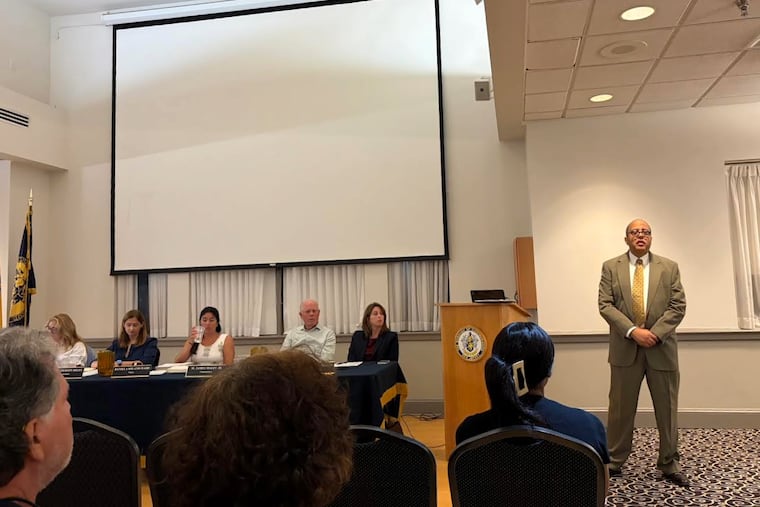
The federal government did not approach the city about the new panels, according to a Wednesday statement by City Solicitor Renee Garcia. The law department did not have additional comment following Thursday’s stay order.
The U.S. Attorney’s Office for the Eastern District of Pennsylvania declined to comment.
The litigation continues to proceed on two tracks. The Third Circuit will hear oral arguments on the Justice Department’s injunction appeal on June 2. Meanwhile, the city has until May 1 to respond to the Justice Department’s motion to dismiss the underlying lawsuit in district court.