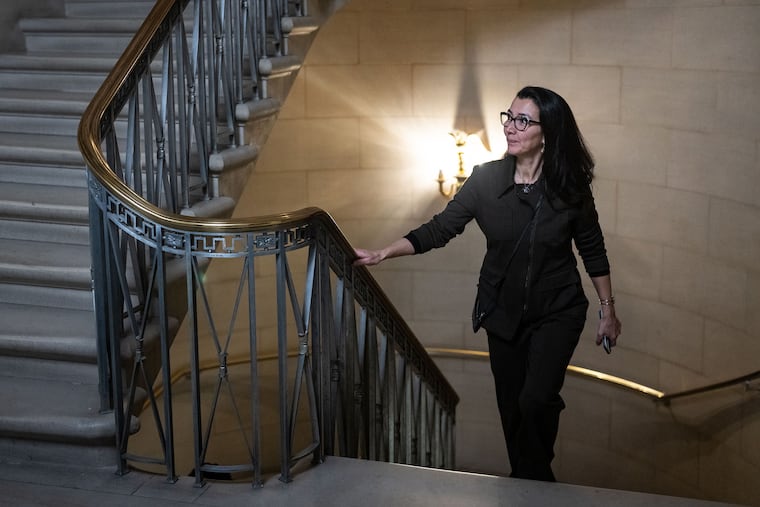
U.S. Sen. Andy Kim champions South Jersey: ‘My job is not to just listen to those who yell the loudest.’
Kim is the first U.S. senator from South Jersey since 1955.
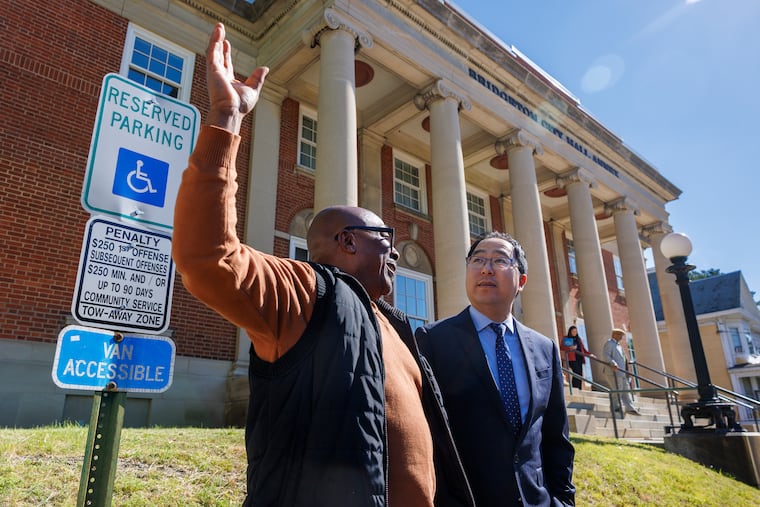
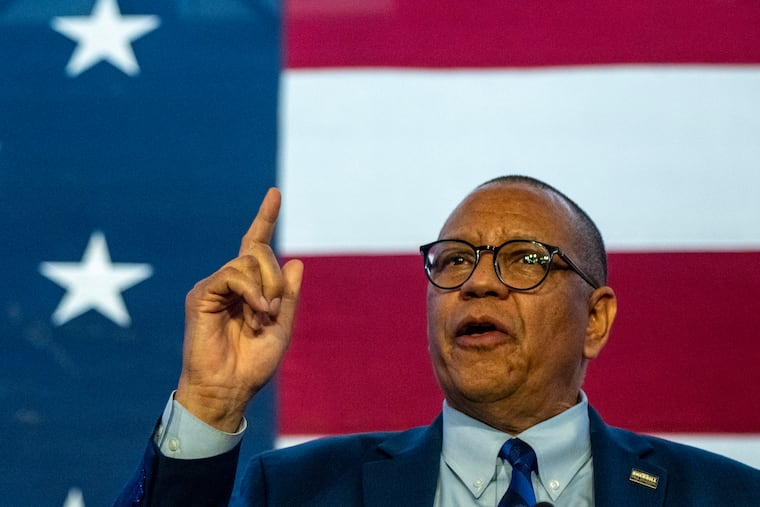
U.S. Sen. Andy Kim has a vision for South Jersey. And he wants his constituents to share theirs, too.
“What’s South Jersey’s punch list?” Kim asked Friday, speaking to a room of residents at Maplewood Gardens, a Bridgeton public housing complex. “Because North Jersey, they got a long punch list, and they never let me forget about it.”
Kim, 43, grew up in Marlton and Cherry Hill and now lives in Moorestown. He became the first U.S. senator from South Jersey in more than 70 years after effectively dismantling the state’s political machine during a 2024 primary against former first lady Tammy Murphy to replace disgraced former U.S. Sen. Bob Menendez.
A former diplomat and the first Korean American in the U.S. Senate, Kim previously represented parts of Burlington, Mercer, and Monmouth Counties in the U.S. House for six years. Now in his statewide role, he’s looking even farther South. He carries a sense of responsibility not just to fight for the region’s most overlooked residents but also to encourage a population that’s been conditioned not to expect much from public officials to stand up for themselves, and to think bigger.
In visits with the Maplewood residents, students at the Pineland Learning Center, and Vineland-area residents who oppose a data center, Kim told his constituents that they’re all his bosses, and he wants their marching orders.
He let a passionate constituent interrupt him and built off what she had to say. He made time for a middle schooler who didn’t get called on and insisted she ask him a question.
“I have 9.5 million bosses here in New Jersey,” Kim said to the room of Maplewood tenants. “Many of them are very noisy …but my job is not to just listen to those who yell the loudest.”
The group initially seemed hesitant to give him a list of problems. One resident said he wants more appreciation for the local community service he does, and a crossing guard mentioned potholes on specific roads. But to Kim, these issues represented a larger disinvestment in the region.
It wasn’t until the federal lawmaker told them about how he’s seen North Jersey get more money and pontificated on issues surrounding housing and transit that they joined in the chorus about the region’s struggles: no grocery store in nearby Salem, a growing unhoused population camping out in the woods, a shuttle for seniors that didn’t show up, and an extra charge on their electric bills.
Kim said that bugs were crawling up his legs when he visited a different low-income housing complex in Salem, so he helped get them an exterminator. It irritates him that this can happen in New Jersey, one of the wealthiest states in the “richest, most powerful country in the world,” he said.
He told the Maplewood residents that North Jerseyans complain about train delays, but in South Jersey, “we wish we had trains.” They agreed.
“If we want support, we need to have a sense of what exactly are we asking for,” he said. “You know, that’s how we’re going to get the governor’s attention. That’s how we’re going to get the State Assembly’s attention and the state Senate. That’s how we’re going to get Congress’ attention.”
Kim said in an interview before hopping in his staffer’s car on his way to the next stop that he’s trying to encourage South Jerseyans to identify concrete requests. He said that hesitance to give him a wish list hasn’t been uncommon in the region.
“When you just aren’t asked that often, sometimes you just kind of stop thinking about, what if someone asked me what I could do with a half-million dollars, or $1 million, or $5 million for our community,” he said. “Like, you know, when you just feel constantly ignored …you start to just kind of feel like you’re on your own.”
‘There’s something here that we can unlock.’
Standing at the Vineland Transportation Center, which is essentially a small bus stop tucked away to the side of a strip mall, Kim said that while he wishes he could spend more time on the ground in the region, he has South Jersey at the front of his mind during meetings in Washington.
Kim, the geographically closest U.S. senator to Philadelphia, questioned why the city’s suburbs seem to stretch farther out on the Pennsylvania side, and envisions the economic hub of the city reaching deeper into South Jersey. He sees a future where the port in South Jersey’s Paulsboro can work across the river with shipbuilders in Philly’s Navy Yard and where Philadelphia workers want to live deeper in South Jersey for more bang for their buck.
“It’s really this question of just like, how far is the reach of the Philly metro area?” he said. “How far does that influence and impact have?”
He also believes the region can expand its own research and innovation efforts at Rowan University, Stockton University, and Atlantic City Airport’s Federal Aviation Administration facility.
He pointed to the Bay Area for comparison: Vineland is as far from Philadelphia as tech hubs Mountain View and Palo Alto are to San Francisco, he said.
“With some strategy and assistance …there’s something here that we can unlock,” he said.
For example, he dispels misconceptions that New Jersey doesn’t have any space for manufacturing to businesses that look to southern states when they need open space.
But businesses ask about housing — and transportation — for the workforce. And Kim gestured around him at the bare-bones transit center and acknowledged there’s much work to be done.
A future for South Jersey’s kids
Throughout his visits on Friday — whether with kids or adults – Kim didn’t bring up President Donald Trump despite his many grievances with him. (Cumberland County voted for Trump before shifting blue in the 2025 gubernatorial race.)
What he did do is remind his constituents that he’s from South Jersey, and that he’s a father, too.
“My role as a senator and my role as a father are inextricably linked,” he said in an interview.
During a visit to the Pineland Learning Center, a school in Vineland for students with disabilities, Kim joked around with the youngest students and did a Q&A with middle and high schoolers.
“The main thing I just want you to take away is that all of you are my boss,” Kim told them. “I work for you, which is why I’m here today, because I have to take my instructions from my boss.”
He may have been met with giggles at first, but students went on to ask him about U.S. Immigration and Customs Enforcement, housing, poverty, and gas prices. One pressed him on the state’s school cell phone ban (Kim had no say in this as a national legislator but said he supports it nonetheless), and another pushed him to give specifics on how he’s going to lower costs for families.
Kim said that as the parent of an 8-year-old and 10-year-old, it’s been impossible to shield them from national political debates – and he saw that in the students at the school.
Down a hill at the Van Dyk Brothers Wholesale Florist farm in nearby Millville and under a tent held up by giant hoops where tulips grow in the winter, Kim sat in a circle with eight locals who are opposed to a new Vineland data center in the works, as his staffer took notes.
Beleaguered by what they say has been a lack of transparency over its development, residents told Kim about local elected officials not giving them the time of day. Some of the residents told Kim that their kids are questioning why their family should stay in the region at all.
“My daughter’s about to graduate from Rowan, and every weekend she comes home, she’s like ‘Mom, Dad, you guys got to move away from here. I don’t care where you go, get out, get out, get out,’” said Steven Brown, one of the residents.
“I’ve lived here for 26 years. We built the house …I’ve got blood, sweat and tears here,” he added.
Kim said he was trying to “think through” how he could be helpful to Vineland residents upset about the data center. Just as he’s trying to “think through” what South Jersey can look like in two or three decades for both his kids and his constituents’ kids.
What’s happening in Vineland, he said, could happen all over South Jersey as data centers pop up at high speed across the country.
Kim didn’t make any promises, but he said he would try to use his leverage as a federal official to get more information from local officials for the residents.
“It would be nice to let them know you’re watching,” said Jolene Gentile, one of the residents, holding a Wawa coffee cup close to her chest.
“They’ll certainly know that,” Kim responded.