New Jersey ratepayers are on the hook for canceled projects amid Trump’s war on wind
“At a time when gas prices are soaring, the Trump Administration chose to further stifle new wind energy production, and worse, waste taxpayer money doing it,” said Gov. Mikie Sherrill.
New Jersey ratepayers will foot the bill for unfinished construction as the state abandons massive offshore wind energy plans as a result of President Donald Trump’s attacks on the industry.
The New Jersey Board of Public Utilities (BPU) on Wednesday officially ended an agreement with grid operator PJM to create infrastructure for offshore wind farms that have no future after Trump’s policy changes.
Brian Lipman, director of the New Jersey Division of Rate Counsel, which serves as a public advocate for ratepayers, said in an interview that ratepayers will be on the hook for reimbursing companies that began construction for projects to prepare the grid for offshore wind energy. He said the price tag could be between $400 million and $500 million.
“My intention is to fight it. I just don’t know how successful I’ll be,” he said.
The BPU argues its decision is saving money for New Jerseyans since the price tag of actually completing the projects would have been much higher. The board’s commissioners blame the Trump administration for the downfall of the offshore wind industry in the state.
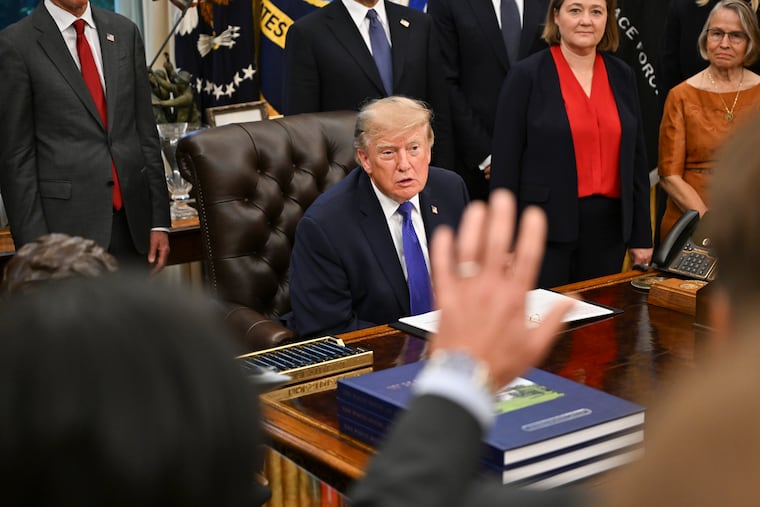
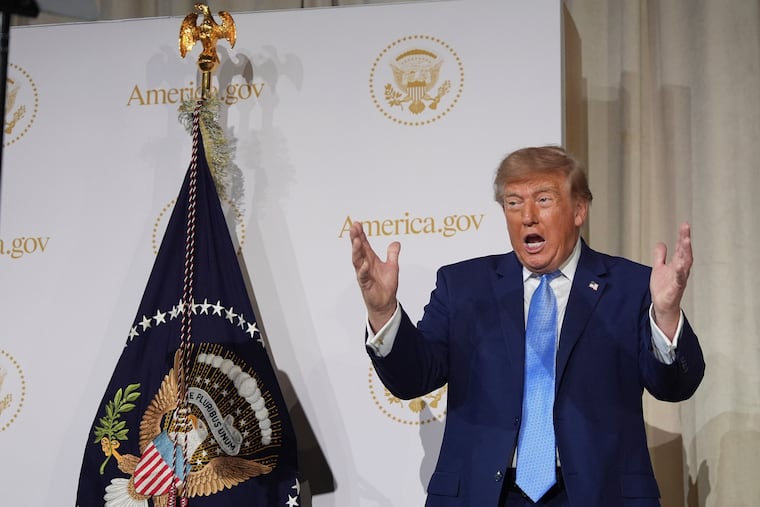
Trump has long detested offshore wind, and in January, Trump signed an executive order pausing federal leases for wind projects — which are required for offshore construction — though federal courts rejected his efforts to stop projects underway.
But the damage had already been done in Jersey, where offshore wind projects were still in their early stages, said Allison McLeod, the interim executive director of the New Jersey League of Conservation Voters.
“Here, it just made the environment really difficult for offshore wind to proceed because we were not at the stage of any projects that were delivering power,” she said.
In March, the Trump administration escalated its war on wind by paying a French company $1 billion to walk away from its offshore wind plans in New Jersey waters and elsewhere. As a part of the arrangement, the company agreed to invest in fossil fuel projects.
Trump has been open about hating wind energy and has made unsubstantiated claims about it — such as saying they disrupt whales, which scientists say is unsupported. And the state’s offshore wind energy plans were already struggling before Trump got involved. In 2023, when former President Joe Biden was in office, Orsted canceled two offshore wind projects, citing economic factors like inflation.
Democratic Gov. Mikie Sherrill has championed an “all of the above” energy approach and indicated she wants to build as much new energy generation as possible to lower utility costs. She blamed Trump for getting in the way of wind energy, which former Gov. Phil Murphy championed.
“At a time when gas prices are soaring, the Trump Administration chose to further stifle new wind energy production, and worse, waste taxpayer money doing it,” she said in a statement. “I won’t let his actions lead to further costs to New Jerseyans.”
Sherrill said on WNYC last week that Trump “effectively ended the offshore wind movement for now in New Jersey” and that the state will pursue the industry “if that makes sense in the future.”
The writing was on the wall
Lipman criticized the BPU for not ending the arrangement earlier because the writing had been on the wall that New Jersey’s offshore wind industry was ill-fated. In June 2025, for example, Atlantic Shores backed out of plans for a large offshore wind farm near Atlantic City after Shell exited earlier that year amid Trump’s attacks.
“They should have canceled this agreement a year ago when Trump declared offshore wind was not going to happen … so that we stopped whatever was being done by the developers, so we wouldn’t be accruing costs,” Lipman said.
The BPU had attempted to delay the projects in August given the “significant uncertainty” of the wind industry, holding out hope that some of the offshore wind efforts could still happen, according to the board’s Wednesday order. But the commissioners’ perspective changed when they learned delaying their agreement with PJM would be a costly and lengthy process. The state of the industry got even worse — with one company canceling its wind project in the fall and Trump’s buyout in March.
“New Jersey was the first in the nation to set up a policy like this … it basically had to do with how we were going to deliver the power onshore to our grid,” McLeod said.
Offshore wind projects were expected to eventually provide a quarter of the state’s energy with enough clean power for 3.2 million homes, and lead to tens of thousands of jobs, according to South Jersey’s New Jersey Wind Port, which was slated to have a critical role in the onslaught of wind energy that is no longer on the way.
The future of offshore wind in New Jersey
Bob Brabston, the BPU’s executive director, said at the board’s Wednesday meeting that BPU staffers put their “professional and personal heart and souls” into offshore wind work and that he still views it as “a necessity for our state.”
Christine Guhl-Sadovy, the board’s president, said Wednesday she is still optimistic about building offshore wind in the future, even though it is “nearly impossible” in New Jersey under the Trump administration. She said ending the agreement was the “responsible” thing to do so ratepayers do not pay even more money to prepare for projects that no longer have a path forward.
“We know of its importance to New Jersey and to the region, not just for the necessary electricity, but the economic development opportunities that are provided to states who advance offshore wind, so I’m optimistic that we will revisit it in the future under different circumstances,” she added.
While the goal of connecting offshore wind projects to the grid was to generate more energy and lower utility bills in the long term, the BPU estimated that the projects could have cost ratepayers up to roughly $1.2 billion to build. So the BPU is presenting the approximately $400 million price tag as essentially saving New Jerseyans about $800 million by canceling the projects. That estimate includes money that has already been spent on transmission projects that are now canceled, as well as some that will continue that relate to other sources of energy.
PJM spokesperson Jeffrey Shields said in a statement that some of the projects could not be canceled because they are being “relied on as necessary grid enhancements.” But canceling most of them, per the agreement with the BPU, “will save New Jersey ratepayers more money in the near term during this period of affordability concerns for New Jerseyans,” he said.
Taylor Rogers, a White House spokesperson, said that Trump does not want taxpayer money to be “wasted on unreliable and costly wind farms that simultaneously pose serious threats to our national security.”
“Instead, we should be strengthening and expanding our infrastructure that produces reliable, affordable, and secure energy like natural gas plants,” Rogers added.
Interior Secretary Doug Burgum claims that wind turbines interfere with military radars, but a military expert told the New York Times that planning and technology can address potential disruptions.
Clean energy advocates urged the Sherrill administration to continue to pave the way for wind projects so shovels can hit the ground when Trump’s term ends.
“We cannot fault the Sherrill administration for making this decision today, but this must be only a temporary setback,” said Robert Freudenberg, the vice president for energy and environment at the Regional Plan Association.
McLeod does not believe all hope is lost for wind in New Jersey, and she believes the state should continue to invest in workforce training and combat disinformation about wind energy.
“I think there’s a lot of groundwork that we can lay right now … when the winds change, and when it’s a friendlier federal climate, that we’re ready to go here in New Jersey to deliver clean power,” she said.