The winners and losers in Pennsylvania’s new $50.1 billion budget
The breakthrough deal capped a saga that featured bitter partisan fights, months of stalled negotiations, and a dramatic resurgence of Pennsylvania’s rural-urban divide.
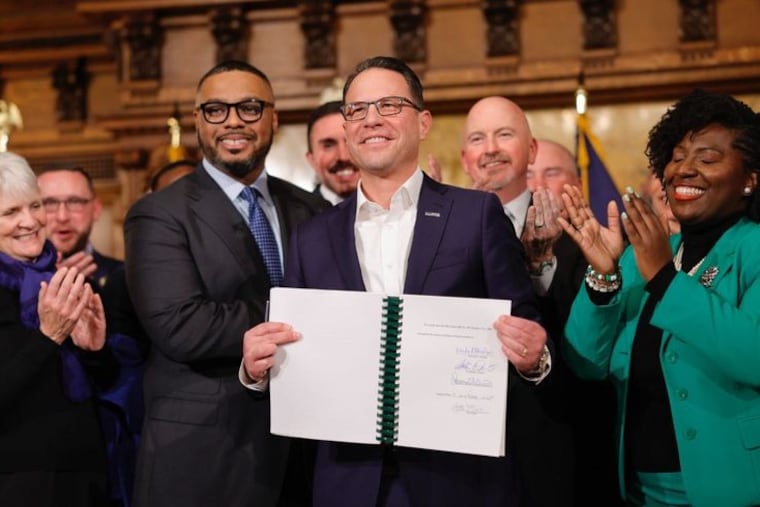
HARRISBURG — More than four months overdue, Pennsylvania’s new state budget became law on Wednesday, allowing nearly $50.1 billion in state funding to begin making its way to school districts and communities around the state.
The breakthrough deal capped a saga that featured bitter partisan fights, months of stalled negotiations, and a dramatic resurgence of Pennsylvania’s rural-urban divide. All the while, school districts, counties and nonprofit service providers were forced to lay off staff, cut services, or take out loans to stay afloat.
But on Wednesday, the omnibus package of bills totaling hundreds of pages passed swiftly through both the state House and Senate, and many were approved within hours of becoming public.
State budget agreements in Pennsylvania often include policy changes that stretch far beyond how the state should spend its money, and this year’s is no different, ending a key climate initiative and creating a new tax credit for low-income Pennsylvania workers.
Here are some of the winners and losers of the 2025-26 state budget.
Loser: SEPTA and mass transit
The most notable absence from the state budget deal: Any additional funding for mass transit.
Although mass transit and SEPTA took up most of the air for weeks in the increasingly contentious state budget debate, transit agencies across the state did not end up securing a long-term funding stream in the final spending plan.
Most Pennsylvania transit agencies, including SEPTA, say they are on their way to dire financial straits because the state hasn’t significantly increased its transit subsidy in 12 years. A previous law required the state to use Pennsylvania Turnpike tolls to finance $450 million for mass transit annually, but much of that obligation was phased out two years ago. Leaders have said for years they would find a steady funding replacement, but have yet to do so, majorly contributing to SEPTA’s service cuts this year.
» READ MORE: Why there was no deal for SEPTA in Harrisburg after all
But mass transit funding was removed from the budget negotiation table in September by Democrats, as Republicans appeared to harden their opposition to any long-term funding source, and a Philadelphia court ruled that SEPTA must undo its service cuts. Left without any other immediate option, Shapiro utilized another short-term plan to keep the agency running.
Democrats and Shapiro maintain that SEPTA and mass transit funding is a top priority, as it has been for the last two budget cycles. However, leaders are unlikely to take on the issue until the short-term plan runs out in two years.
Winner: Low- and moderate-income workers
Low-income Pennsylvania workers will soon be eligible for an earned-income tax credit from state taxes — equal to 10% of the popular federal credit — celebrated by both Democrats and Republicans. This program is estimated to cost the state $193 million, with more than 940,000 residents eligible to access it starting in the 2025 tax year.
Under the federal earned-income tax credit, taxpayers max out at $8,000 for a single parent with three children making less than $61,000 a year. The new Working Pennsylvanians Tax Credit would knock an additional $800 off the total state taxes owed for a person eligible for the maximum tax credit.
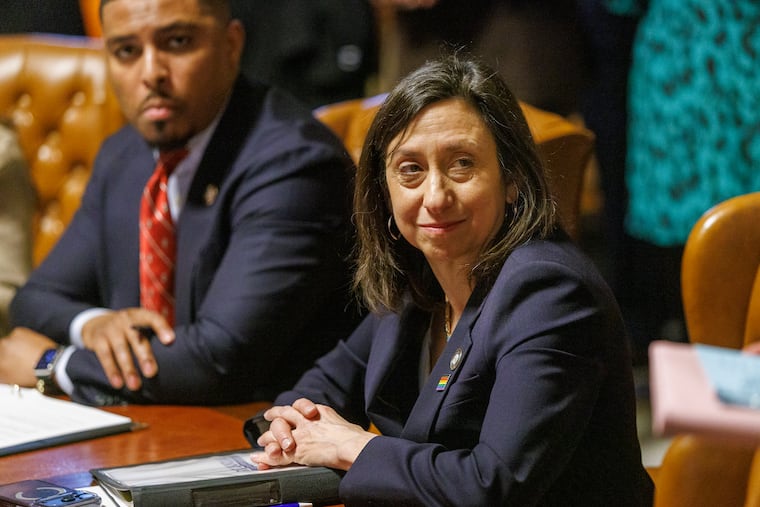
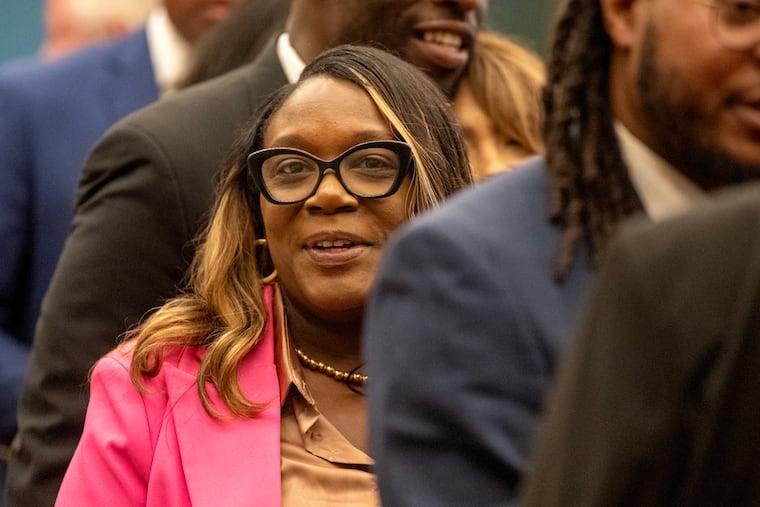
The initiative was a top priority for Democratic leaders in the state House, Shapiro said Wednesday during the bill signing and credited House Speaker Joanna McClinton (D., Philadelphia) and Majority Leader Matt Bradford (D., Montgomery) for negotiating it into the final deal.
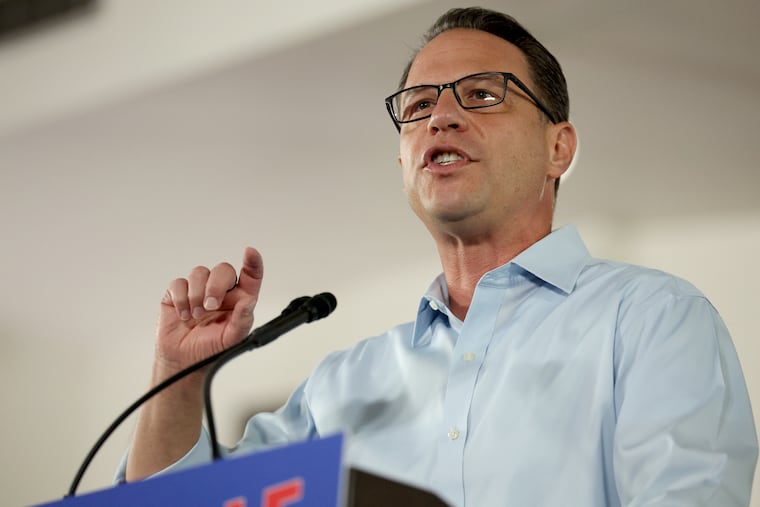
Winner: Gov. Josh Shapiro
In the end, Shapiro came out on top of the at-times bitter budget impasse. He boasted significant funding increases for public education, a new tax credit for low-income working families in the state, and more — with Democrats’ main concession a climate policy he never appeared too attached to in the first place.
Shapiro and Democrats agreed to end the state’s efforts to join the Regional Greenhouse Gas Initiative, which is an 11-state cap-and-trade carbon reduction program known as RGGI that has drawn the ire of Republicans for years.
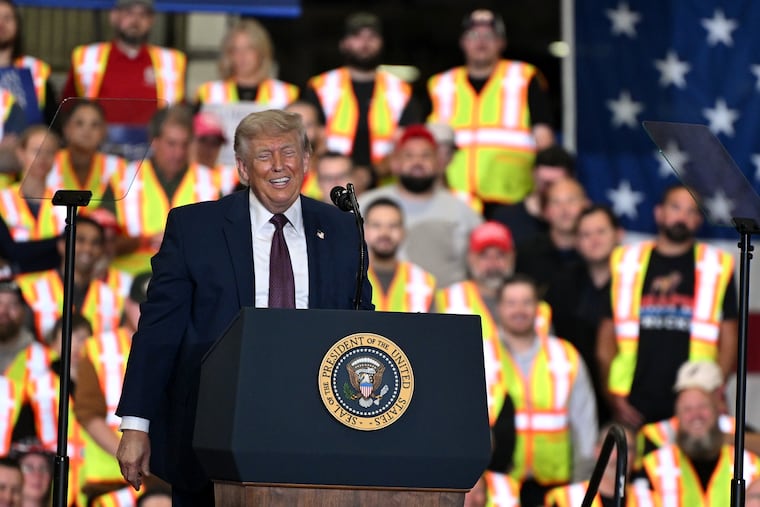
Flanked by state House and Senate Democrats to celebrate the $50.1 billion budget deal and its investments across the state, Shapiro argued that his willingness to stay at the negotiating table when Senate Republicans and House Democrats weren’t willing to talk helped get the deal done, albeit 135 days late.
“We stayed at the table. We refused to accept inaction,” Shapiro said. “All of us here held the line ... and demanded a serious budget that meets the needs of Pennsylvanians.”
And he even put a positive spin on the budget’s key Democratic concession.
“For years, the Republicans who have led the Senate have used RGGI as an excuse to stall substantive conversations about energy,” Shapiro said. “Today, that excuse is gone.”
Budget impasses in Pennsylvania rarely lead to changes in approval ratings in Pennsylvania, public opinion polls have shown. That was apparent in October, three months into the impasse, when Franklin & Marshall College found that Shapiro’s approval rating topped 51%, while 40% ranked him as doing a “fair” or “poor” job.
Loser: Home care workers
The home care industry has been warning for years it is on the brink of collapse. And the new state budget doesn’t include additional funding for 94% of the industry’s workforce, according to the largest home care provider association in the state.
The industry did get a $21 million increase toward home care services that some celebrated, though it is targeted to a small portion of the unionized workforce — and is nowhere near the estimated $370 million needed to keep home care in Pennsylvania afloat.
» READ MORE: Pennsylvania’s home care industry is in crisis, with low pay and unfilled shifts driving it toward collapse
The Pennsylvania Homecare Association has begged state leaders to increase state funding by $370 million to help the industry raise its wages for home care workers, who provide care to help patients age at home, keeping them out of nursing homes and hospitals.
The industry has also pointed to the state’s own independent, taxpayer-funded studies that have found the state needs to invest much more — upward of $800 million — to bring the state’s home care wages in line with those of its surrounding states.
The state budget, advocates say, fell far short of that.
“This budget represents a devastating failure of leadership by Gov. Shapiro, his administration, and the General Assembly,” said Mia Haney, the CEO of the Pennsylvania Homecare Association, in a news release following the state budget’s passage.
Winner: Online sportsbooks and skill games
Betting won out in this year’s budget.
A push by a coalition of online sports betting sites helped stave off a last-minute tax increase added to the state budget, and slot machine look-alikes — known as skill games — yet again avoided any form of regulation or taxation.
The wealthy sports betting industry teamed up to try to block a proposed tax as additional revenue for the state, spending more than $500,000 on commercials last weekend during professional sports games to “stop the tax hike” on sports bets, currently taxed at 34%.
And Shapiro’s proposal to tax skill games by 54%, the same rate that slot machines pay, to generate more revenue for the state — and larger talks of a tax on the games funding mass transit — were ultimately excluded in a final budget deal.
Skill games machines, which have proliferated in Pennsylvania bars and convenience stores, will continue to operate in a legal “gray” area, in which they are allowed to operate in the state but do not pay taxes. The Pennsylvania Supreme Court is expected to hear arguments in a case about the machines’ legality next week.
The major skill game operator, Georgia-based Pace-O-Matic, has asked for years that the industry be taxed. However, citing its customers as largely small businesses, it wants skill games to be taxed at a much lower rate than the high tax Pennsylvania casinos currently pay on slots.
Loser: School districts, counties, and nonprofits stuck repaying interest
The late state budget required schools, counties, and service providers to cut jobs, take out expensive loans, or stop services altogether.
Public education got a huge bump in the overall budget deal totaling more than $665 million, most of which is going through the state’s new adequacy formula targeted to address funding inequities in low-wealth districts. These districts will also likely get to keep more of their money this year that they had been sending to burgeoning cyber charter schools, thanks to long-sought cyber charter reforms.
Still, districts, counties and nonprofits will continue to feel the pain of the impasse. Now that money is soon to begin flowing again, these core parts of Pennsylvania’s infrastructure are on the hook for thousands — or in the case of the School District of Philadelphia, millions of dollars — in interest due to disagreements in the statehouse.
» READ MORE: ‘More needs and less money’: Philly’s collar counties are preparing for tight budgets, tax increases
Districts, counties, and nonprofits are often not allowed to use their state allocations to help pay down the interest they accrue during a budget stalemate.
And counties that didn’t need to take out loans but used much of their savings lost out on thousands of dollars in interest.
“They’re not solving problems. They’re not saving people from tax increases,” Delaware County Councilmember Christine Reuther said earlier this week. “They’re just making somebody else do their dirty work.”

After months of impasse, Pennsylvania has adopted a bipartisan $50.1 billion package that ends a key climate initiative and brings additional funding to public schools. Read The Inquirer's coverage of the passage: