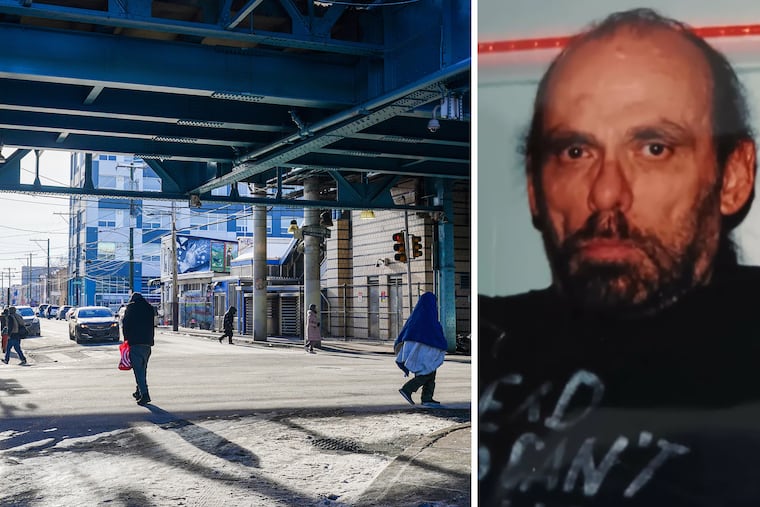
Philly’s building trades unions have turned against Pat Dugan as he runs against DA Larry Krasner as a Republican
The former judge drew key support from the labor council in the Democratic primary. Then he announced he would run as a Republican.

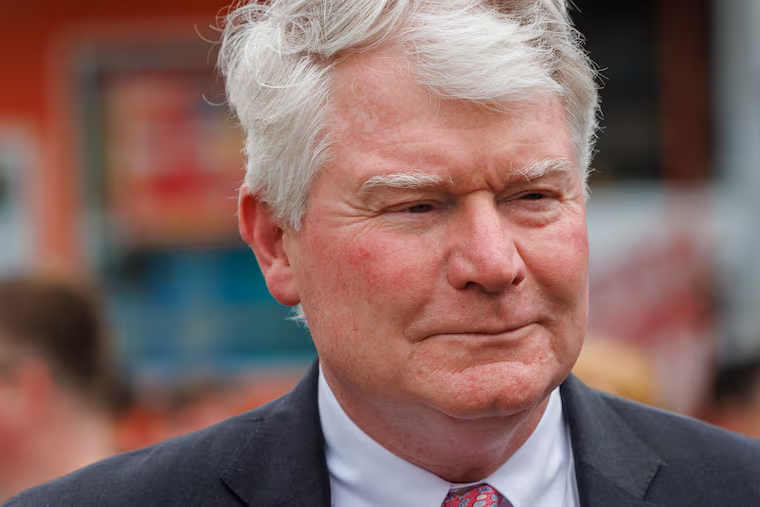
The Philadelphia building trades unions — the largest financial supporters of former Judge Patrick Dugan’s unsuccessful campaign to unseat District Attorney Larry Krasner in the May Democratic primary — have turned against Dugan as he takes a second swing at Krasner, this time running in the general election as the Republican nominee.
“We’re going to do whatever we can to make sure that District Attorney Krasner wins,” said Ryan Boyer, who leads the politically powerful Philadelphia Building and Construction Trades Council as well as the Laborers District Council.
Boyer, a political centrist, and the building trades were Dugan’s most important backers in the primary, shelling out hundreds of thousands of dollars in a bid to elect a more tough-on-crime alternative to Krasner, a leader of the progressive prosecutor movement.
The trades not only fueled Dugan’s campaign — giving him a fundraising advantage, a rarity for a challenger — but also contributed to a super PAC that ran ads attacking Krasner, who is seeking a third term in November.
» READ MORE: Pat Dugan to challenge DA Larry Krasner again in the general election

Sign up here to stay informed about the Philadelphia District Attorney's race with in-depth analysis, real-time updates, and expert coverage.
But Boyer said he was done with Dugan when the former Municipal Court judge opted to run as a Republican despite a campaign promise that he would not accept the GOP nomination.
“I’m just frankly shocked,” said Boyer, who is seen by many as the most powerful person in Philadelphia politics outside elected office. “If you lose, you lose.”
No Republican ran in the primary, and the Philadelphia GOP organized a write-in campaign to make Dugan the party’s nominee if he came up short against Krasner. Dugan, who describes himself as a “lifelong Democrat,” announced he would accept the Republican nod earlier this month, just before the deadline to decide whether he wanted to appear on the November ballot.
‘A reconsideration’ and no love lost
In an interview this week, Dugan, 65, said he never planned to accept the GOP nod when he was running for district attorney as a Democrat. But he said he changed his mind after realizing how important it was to unseat Krasner, whose policies he says undermine public safety.
“It’s a reconsideration as a human being who is putting Philadelphia first,” Dugan said. “I made this heavy decision and basically changed direction to help the victims and the people of Philadelphia.”
During the primary, Krasner suggested Dugan was planning to accept the GOP nomination all along, and tried unsuccessfully to get the ex-judge to commit to declining it if offered. (Dugan’s public promise not to run as a Republican came from his campaign manager at the time, not the former judge.)
Now that the rematch has officially begun, Krasner isn’t buying Dugan’s conversion story.
“If a sore loser wants to run, if a quote-unquote lifelong Democrat wants to become a brand-new Republican, then so be it,” Krasner said in an interview. “Obviously, the real issue here is: Do you want a DA who won’t tell the truth?”
As they made clear during the primary, there is no love lost between the candidates.
In one of his first appearances after announcing his Republican candidacy, Dugan told conservative radio host Dom Giordano that he wanted to physically fight Krasner — a striking talking point for a candidate trying to persuade voters he has a better plan to reduce violence in the city.
“It was pretty close to coming to the point of, ‘Let’s go behind the dumpster,’” Dugan said, recounting his reaction to one of Krasner’s lines of attack in the primary. “I would love to have a charity boxing match.”
Krasner declined the invitation.
“He opined that the proper way to settle this matter was for him and for me to either box or to wrestle, which to me would mean two old men getting hurt,” Krasner, 64, said.
The election ahead
Despite the strong words, the general election race for Philadelphia’s next district attorney is off to a slow start in terms of actual campaigning. Neither candidate retained their campaign manager from the primary, and neither has announced who will lead their team ahead of the Nov. 4 election.
“We will do what is necessary in this campaign,” Krasner said.
Vince Fenerty, who chairs the Republican City Committee and led the write-in effort, said he was helping launch Dugan’s campaign.
“We’re just looking for the right people — Democrat, Republican, or independent," Fenerty said. “He has some fundraising plans coming up, and I’m sure we are going to be ready in the next week to get this campaign in full gear.”
Dugan said he still expects to receive support from organized labor, including some of the locals within the trades council, a coalition of more than 30 unions.
Thomas Lepera, political director of the politically powerful International Brotherhood of Electrical Workers Local 98, praised Dugan but indicated his union may stay out of the general election.
“IBEW Local 98 supported Judge Dugan [in the primary] because of his unwavering commitment to organized labor and his dedication to creating a safer city,” Lepera said in a statement. “However, we have not made an endorsement in the general election, nor do we have any plans to do so.”
Dugan maintained a 2-1 fundraising advantage over Krasner for much of the primary, racking up contributions from suburban donors and the trades unions. Krasner, meanwhile, used his national profile to collect donations from supporters across the country, and also held a slight advantage among individual donors who live in the city.
If Dugan is hoping to pull off a repeat of his fundraising performance, he won’t get any help from Boyer, who is now in an unlikely partnership with Krasner despite the two men being on near-opposite ends of the city’s Democratic political spectrum. Boyer said the Laborers District Council and other unions would be happy to donate to Krasner’s campaign “if he asks or needs some.”
“But I don’t think he feels he needs a lot of campaign contributions,” he said.