Mayor Cherelle Parker calls Senate GOP proposal ‘fuzzy math,’ and urges lawmakers to fund SEPTA
Parker framed the pending SEPTA service cuts as dire, but stopped short of detailing Philadelphia’s plans should they move forward.
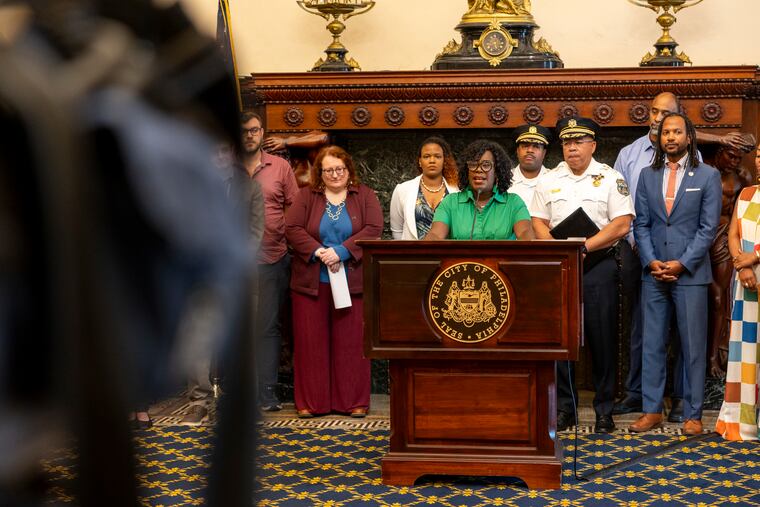
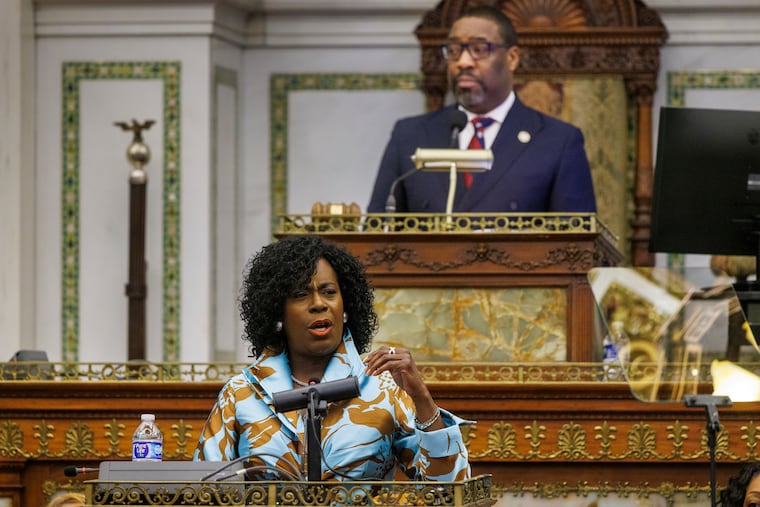
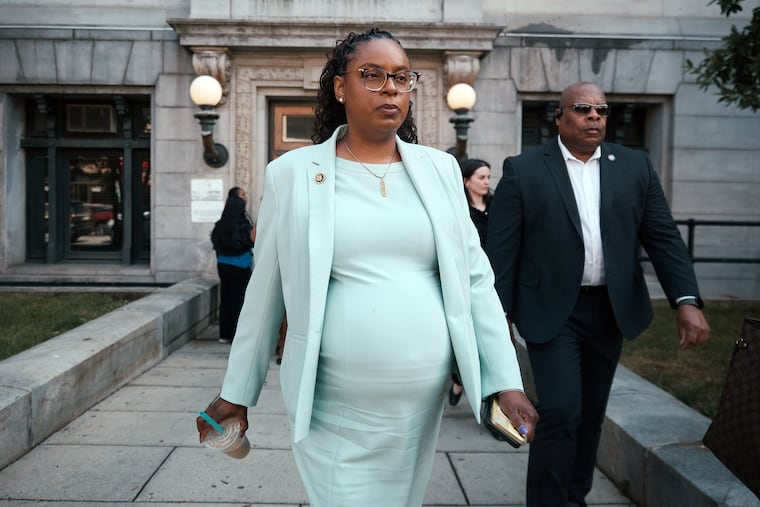
Mayor Cherelle L. Parker on Friday framed the planned major SEPTA service reductions as devastating to the city and to the fiscal health of the state — but declined to detail contingency plans to support residents seeking transit alternatives, saying she still hopes Pennsylvania’s divided legislature finds a solution.
“Without SEPTA, the center’s too weak to hold,” Parker said at an unrelated press conference at City Hall, citing the importance of the transit agency and its economic contributions to Pennsylvania’s general fund.
“I’m talking about a structure that will allow the economic engine, the heart of the fabric of our economy in southeastern Pennsylvania, and thus the commonwealth, to keep it going,” Parker said. “The economy doesn’t work without SEPTA.”
SEPTA has a $213 million operating deficit for the 2026 fiscal year, which began July 1. As a result, the nation’s sixth-largest transit agency plans to enact a 20% cut in all service and a major fare increase, beginning Aug. 24.
In her first public remarks about the impending cuts since SEPTA’s funding deadline passed to forestall them, Parker doubled down on her support for Gov. Josh Shapiro’s pitch to fund the beleaguered transit agency by seeking new revenue streams for the state, such as taxing and regulating skill games and recreational marijuana, and her hope that the legislature could get behind it.
“What is the Plan B?” Parker asked in response to a question. “We will work through if-then statements when the time comes; right now we’re laser-focused on supporting our legislature,” she said.
But lawmakers in Harrisburg this week remained at a contentious standstill, with the state budget seven weeks overdue and no agreement on mass transit funding in sight. The Republican-controlled Senate on Tuesday passed a plan to tap into the Public Transportation Trust Fund that pays for transit-system capital projects to fund SEPTA for two years.
» READ MORE: Is there actually $1 billion sitting in a fund for SEPTA? Explaining the Public Transportation Trust Fund.
SEPTA opposed the measure because, leaders said, it would force them to sacrifice projects essential to safety and service improvements to keep the trains running. SEPTA general manager Scott Sauer said the plan would hurt SEPTA as some needed projects would have to be halted to shift money to the operating side.
Democrats similarly balked at the plan, and on Wednesday, a committee in the Democratic-controlled state House voted down the Senate’s proposal, effectively killing the bill.
» READ MORE: Pennsylvania is still far away from a state budget after House votes down transit funding and spending bills
“Anything other than addressing the systemic, structural deficit, to me, it’s fuzzy math, it’s tricks on a budget sheet,” Parker said, referencing the Senate’s plan.
As they have done for months, Shapiro this week met behind closed doors with Senate Majority Leader Joe Pittman (R., Indiana) and House Majority Leader Matt Bradford (D., Montgomery) to continue budget negotiations. Shapiro on Wednesday told reporters that the leaders are not “far apart,” adding that the Senate’s proposal made clear the chamber is “committed to funding mass transit.”
‘We don’t want everyone to get in a car and drive to Center City’
The news conference marked Parker’s first public appearance this week in a stretch during which she has not done many public events. The mayor last posted on Aug. 8 on her social media account about the looming SEPTA crisis, and visited Harrisburg in June with little fanfare.
But Parker pushed back on questions about what the city is doing to prepare as it stares down a potential moment of crisis for residents who depend on SEPTA to get to work, or to get their kids to school. The first day of school in Philadelphia is Aug. 25, one day after the cuts are slated to go into effect.
Parker said the city did its part in June when it passed, in its own budget, a massive increase in SEPTA funding totaling $792 million over five years. Parker, who previously served as a state representative in Harrisburg and campaigned for mayor on a platform that she could work with lawmakers there for the interests of the city, noted she’s “no longer there,” and doesn’t have a vote.
“You won’t see what were doing on social media,” she said. “The action that you’ll see ... we did it when we passed our budget.”
Michael A. Carroll, the deputy managing director of the city’s office of transportation and infrastructure systems, advised residents to use SEPTA’s trip planner tool to plan travel after cuts begin. He said the city will encourage people to use the city’s bike share program, walk when possible, carpool, and find alternative transit routes into the city if theirs are affected.
More guidance, Carroll said, will come early next week.
“We don’t want everyone to get in a car and drive to Center City,” he said.
But Parker doubled down on her hope that there won’t be a need for contingencies. She said there is no plan at the moment to suspend the city’s in-office work requirement due to mass transit reductions, and she worried about the chaos that even suggested alternative plans could cause.
“I don’t want to think about a home health aide who has three to five clients that they’re trying to see on a daily basis. You gonna tell him or her that they have to ride a bike and crisscross the city of Philadelphia?” she said.
“We’re doing our best to brace for it, but you know, you never want to get me to say I’ve given up. I’m not throwing a flag in the air saying that it won’t get done.”