A veto-proof majority of Philadelphia City Council members have signed onto the ‘ICE Out’ proposal
The developments prompted Mayor Cherelle L. Parker to make one of her first public comments about Trump’s mass deportation campaign, acknowledging in a statement “the public’s fear of the unknown.”
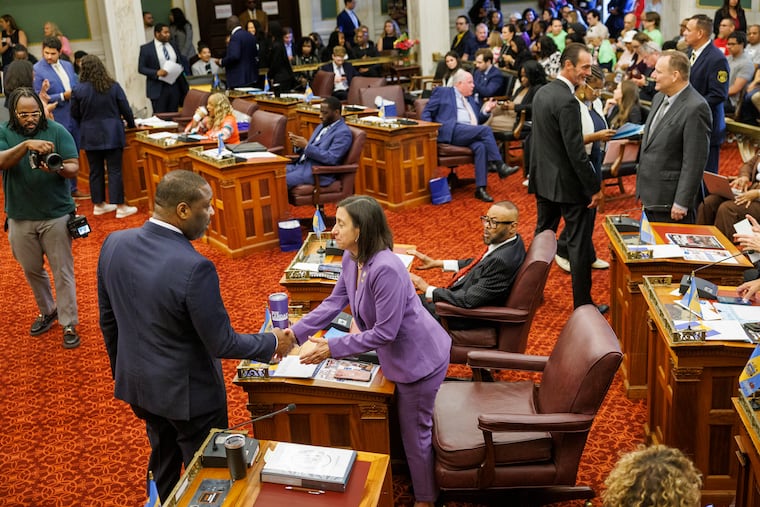
All but two of Philadelphia’s 17 City Council members have sponsored a package of legislation aimed at limiting ICE operations in the city, a level of support that could ensure the measures become law even if they are opposed by the mayor.
The 15 cosponsors, confirmed Thursday by a spokesperson for Councilmember Kendra Brooks, indicate a potentially veto-proof majority of lawmakers back the sweeping “ICE Out” effort.
Brooks and Councilmember Rue Landau, the proposal’s authors, on Thursday formally introduced the seven bills in the package, which includes measures that would codify Philly’s “sanctuary city” status, ban U.S. Immigration and Customs Enforcement from operating on city-owned property, and prohibit employment discrimination on the basis of immigration status.
Landau said that “reaching a majority sends a clear message.”
“Philadelphia stands with our immigrant communities,” she said in a statement. “At a moment when the federal government is using fear and violence as governing strategies, this level of support shows that Council will do everything we can to protect our immigrant neighbors.”
The 15 lawmakers on board with Brooks and Landau’s proposal have each cosponsored all seven bills, Brooks’ spokesperson Eric Rosso said. Only Councilmembers Mike Driscoll, a Democrat, and Brian O’Neill, Council’s lone Republican, declined to cosponsor the legislation, he said.
Driscoll, who represents lower Northeast Philadelphia, said in a statement that the shootings of Renée Good and Alex Pretti by federal agents in Minneapolis this month “caused real pain and fear” and “deserve serious attention.”
But he indicated that he had concerns about whether the “ICE Out” legislation would hold up in court. Similar legislation, including a California ban on law enforcement officers wearing masks, has faced legal challenges.
“Locally, we should aim for immigration policies that are focused, proactive and aimed at practical, long-term solutions that ultimately hold up in court,” he said.
Driscoll said he is open to amended versions of the legislation.
O’Neill, whose district covers much of Northeast Philadelphia, could not immediately be reached for comment.
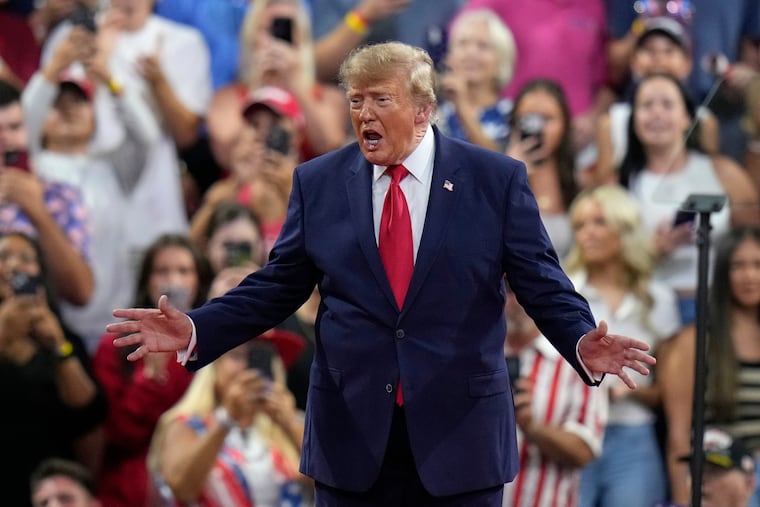
The developments Thursday prompted Mayor Cherelle L. Parker to make one of her first public comments about President Donald Trump’s mass deportation campaign, saying in a statement that her administration “understand[s] the public’s fear of the unknown as it relates to federal policy associated with immigration.”
“We have a comprehensive approach to public safety, and we will always be prepared for any emergency, as we have consistently demonstrated and will continue to demonstrate,” Parker said. “I have a great deal of faith in our public safety leaders — our subject matter experts — who I asked to be a part of this team and we’re going to do our best to work in an intergovernmental fashion, along with City Council, to keep every Philadelphian safe.”
Parker said she and her team are reviewing the legislation.
The mayor has largely avoided confrontation with Trump’s administration over immigration policy, a strategy some have speculated has helped keep Philadelphia from the National Guard deployments or surges of ICE agents seen in Minneapolis, Chicago, Los Angeles, and elsewhere.
» READ MORE: Why hasn’t Trump sent troops to Philly, the city where ‘bad things happen’? Everyone has a theory.
But the popularity of the “ICE Out” package among Council members may force her to wade into the issue. Administration officials will testify when the bills are called up for committee hearings. If they are approved, Parker will have the choice of signing the bills into law, vetoing them, or letting them become law without her signature.
Council bills require nine votes for passage, and 12 votes are needed to override mayoral vetoes. With 15 Council members already signaling their approval for the bills, chances appear strong that the city’s legislative branch has the numbers to override any opposition.
» READ MORE: Philly lawmakers want to restrict cooperation with ICE and ban agents from wearing masks
In a Council speech, Brooks addressed the debate over whether the legislation would draw Trump’s ire.
“Staying silent is not an option when people are being publicly executed in the streets and the federal government is covering up their murders,” Brooks, of the progressive Working Families Party, said. “I want to be clear: ICE is already here. We don’t want a Minneapolis situation, but I reject the claim of those who are pretending we don’t already have a problem.”
Council President Kenyatta Johnson, a centrist Democrat and an ally of Parker, shared a similar view.
“From my perspective, the Trump administration has already been looking at the city,” Johnson told reporters. “Overall, the majority of members of City Council support the legislation, and so we see this legislation being successfully voted out of committee.”
ICE agents have been arresting suspected undocumented immigrants in the city before and during Trump’s tenure, and his administration has canceled grants for the city and educational and medical institutions in Philadelphia. But the city has not seen a mass deployment of ICE agents or federalized troops.
Councilmember Anthony Phillips, also a centrist and Parker ally, represents the 9th District, from which the mayor hails.
“What the ’ICE Out’ legislation ultimately says to Donald Trump,” Phillips said, “is that no matter what you try to do to undermine the health and safety and well-being of Philadelphia citizens, we will stand up to you.”
Johnson suggested potential legal issues could be ironed out through amendments if needed.
“The reality is this: This is a moral issue, right?” he said. “And if there are any legality issues that has to be addressed as a body, we’ll work with our members to address it.”
Next, Johnson will refer the legislation to committee, where members will hold one or more hearings featuring testimony from administration officials, experts, stakeholders, and the public. Council members can also amend the bills in committee.
Supporters of the legislation packed Council chambers Thursday morning, and many spoke during public comment, ranging from leaders of advocacy organizations to a former immigration judge to immigrants who tearfully pleaded for Council to pass the package swiftly.
Several Spanish-speaking residents spoke through interpreters; other residents testified on behalf of friends or family members who are undocumented and were fearful to come to City Hall themselves. A school nurse told Council members that her students have asked her what tear gas feels like.
“The traumatic effects of these [ICE] raids on our children and our families and our communities will last for years and generations to come,” said Jeannine Cicco Barker, a South Philadelphia psychologist who said she is the daughter of immigrants. “These times call for bold, brave new measures to protect our community, and you have a chance to do some of that here. Philly urgently needs these protections.”
Ethan Tan, who said he is an immigrant and a father of two, said he is fearful for his family and community.
“To this administration, fear is the point. Alienation is the point. Isolation is the point,” he said. “The ‘ICE Out’ package says to me and immigrants that we may be afraid, but we can show solidarity and resolve anyway.”