Philly Council president says Mayor Parker was ‘strategic’ in dropping diversity contracting goals
Other City Council members were more critical of Mayor Cherelle L. Parker, with one saying she was "greatly disturbed" and another suggesting the mayor is "caving" to President Donald Trump.
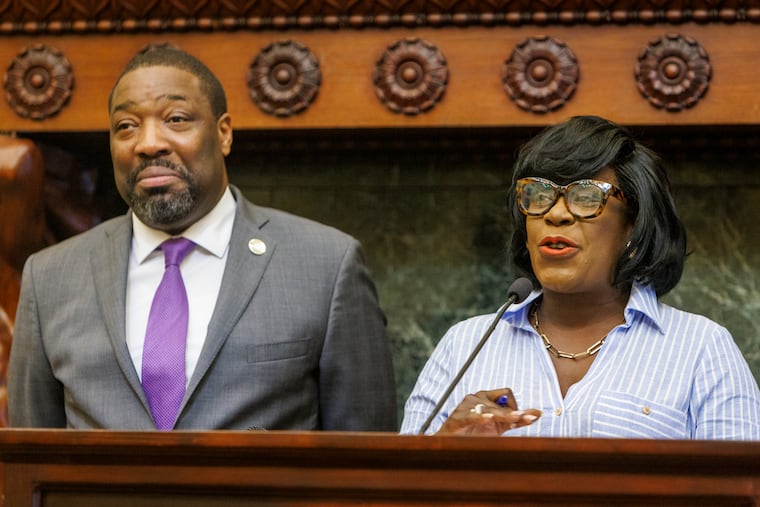
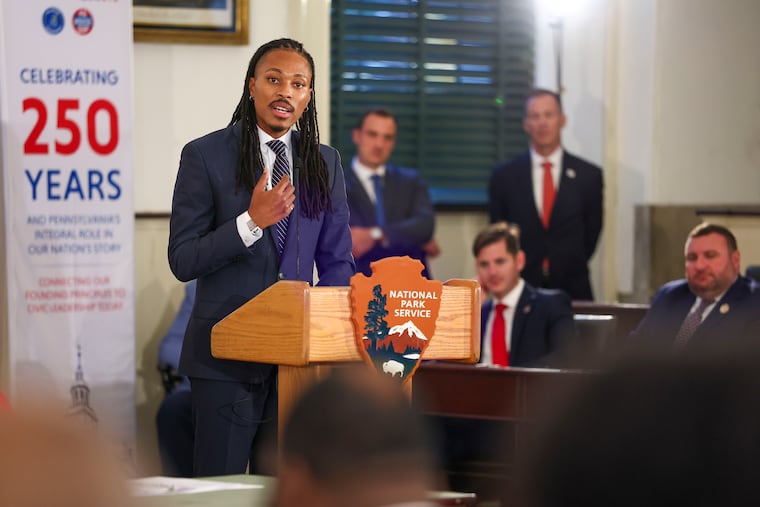
One of Philadelphia’s top lawmakers defended Mayor Cherelle L. Parker on Thursday, saying her administration’s recent decision to eliminate some diversity goals in city contracting is “strategic.”
“Our mayor’s walking a fine line in terms of making sure we’re not sued,” City Council President Kenyatta Johnson said Thursday following the legislative body’s weekly session.
Johnson — a Democrat who rarely disagrees with Parker publicly — was responding to questions from the media after The Inquirer reported Thursday that the Parker administration had quietly eliminated some diversity benchmarks in the city’s contracting programs.
» READ MORE: Philadelphia is halting the use of some diversity targets in city contracts as national DEI backlash grows
The city, among other changes, is no longer pursuing the longtime goal of allocating 35% of all contracting dollars to businesses owned by women and people of color. The administration in September also ended the city’s practice of setting benchmarks for contractors to direct a certain portion of their work to subcontractors and suppliers owned by women and people of color.
Parker’s administration said the city is removing specific diversity goals and shifting to incentivizing businesses that are “small and local,” a standard that’s been adopted in other cities. The idea is to make the city’s procurement policies race- and gender-neutral as a result of new legal precedent, including the Supreme Court’s 2023 decision that ruled affirmative action in college admissions unconstitutional.
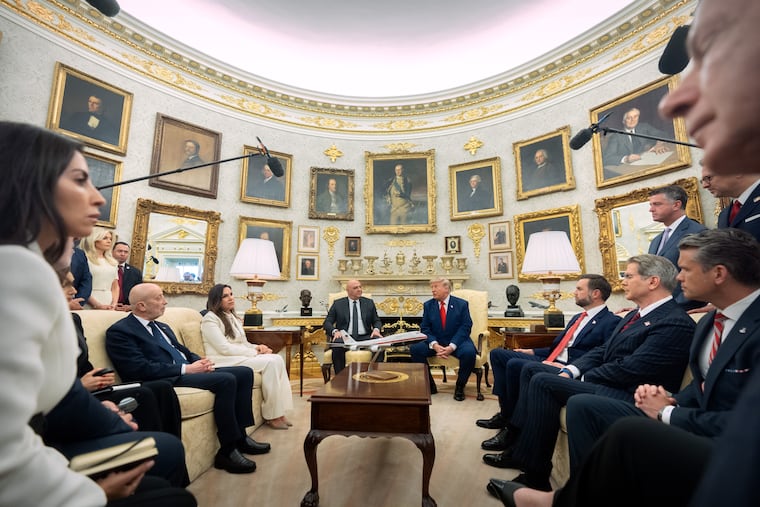
The change comes as diversity, equity, and inclusion programs have faced a broader political backlash nationwide, and as President Donald Trump has threatened to withhold federal funding from jurisdictions that have DEI programs he considers illegal.
» READ MORE: Mayor Parker’s restraint with Trump is both calculation and gamble as the president escalates against blue cities
Johnson has for years prioritized ensuring that city dollars go to diverse businesses, and last year he convened a special committee to study the city’s DEI practices.
Despite defending Parker, he suggested that he would still advocate for “Black and brown and women-owned businesses” to win contracts for projects requiring city approval in his own South Philadelphia district, saying: “In the event that it gets challenged, then we’ll see whoever challenged it in court.”
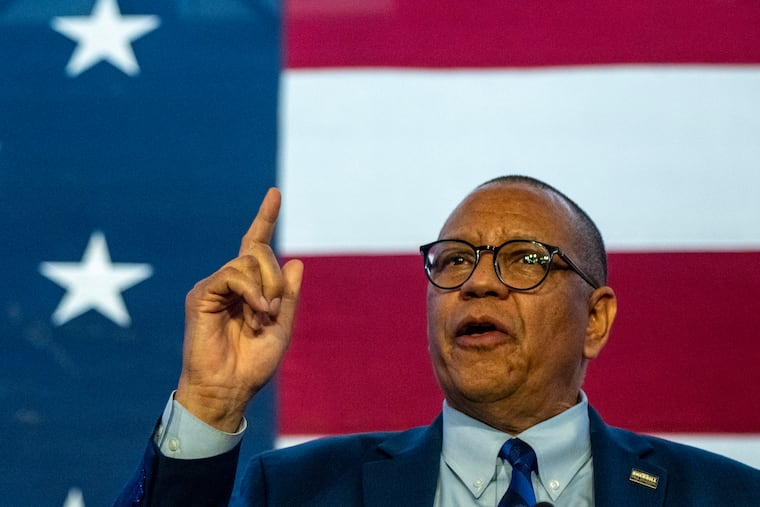
City Councilmember Cindy Bass, a Democrat who represents parts of North and Northwest Philadelphia, said Thursday that she was “greatly disturbed” by the changes quietly implemented this fall.
She said she wants to hear from the administration directly on “what they’re intending to do, how this is going to have an effect, and how we will proceed as a city to make sure that dollars are flowing into neighborhoods, and particularly to workers who are generally left out of being able to participate.”
And City Councilmember Kendra Brooks, a member of the progressive Working Families Party who has been critical of Parker’s posture toward the Trump administration, said she sees the move as “caving to Trump.”
“People want to see leaders fighting for something,” Brooks said, “and right now we don’t see our city fighting for anything.”
Asked about Brooks’ comment that the mayor is “caving,” Johnson said he disagrees.
“[Parker is] a Black woman who has been advocating commonsense, pragmatic public policies around small businesses here in the city of Philadelphia,” Johnson said. “So I can’t really give that comment any type of credence.”